




Where MSMEs should export: USA, Europe or the Middle East?
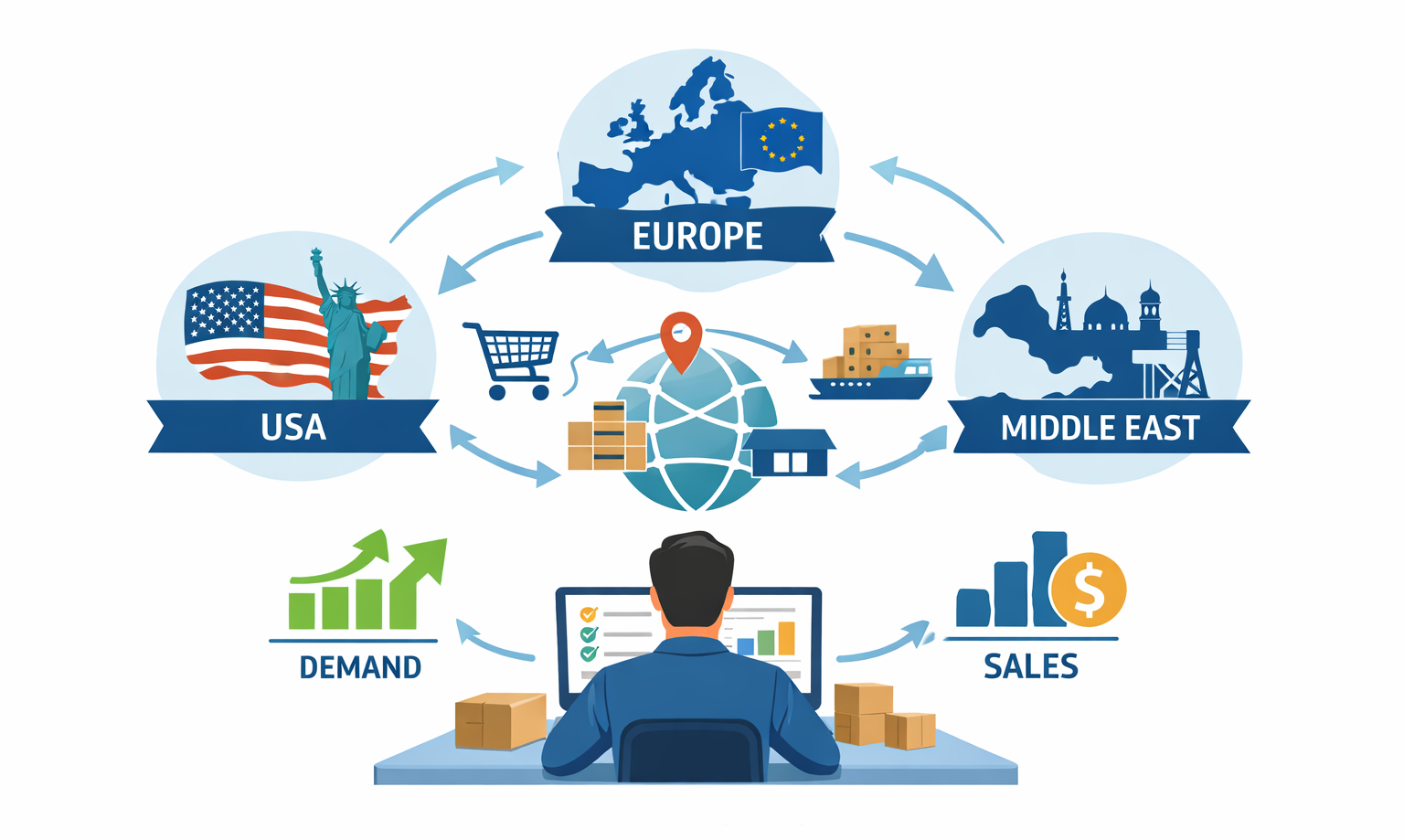
For Indian MSMEs entering e-commerce exports, deciding where MSMEs should export is just as critical as choosing the right product. The USA, Europe, and the Middle East are among the most promising regions for cross-border e-commerce, but each offers different advantages in terms of market size, customer behavior, demand patterns, and compliance expectations.
This blog compares these three regions to help MSMEs decide where to focus their export efforts and how to align market selection with business goals. MSMEs that combine market insights with professional eCommerce management services are better positioned to scale globally.
1. USA: Scale, Spending Power & Global Sales Events
The United States is the world’s largest and most mature e-commerce market, making it a high-priority destination for Indian MSMEs.
Why MSMEs Should Focus on the USA
- Massive base of online shoppers
- High annual spending per customer
- Strong acceptance of cross-border e-commerce
- Well-developed logistics and digital payment infrastructure
Best-Selling Categories
- Handicrafts and home décor
- Apparel and textiles
- Beauty, wellness, and herbal products
- Religious and festival-related items
Festival & Sales Advantage
- Black Friday
- Cyber Monday
- Christmas
- Valentine’s Day
- Mother’s Day and Father’s Day
The USA is ideal for MSMEs targeting high-volume sales, frequent demand cycles, and global brand visibility, especially when supported by end-to-end eCommerce management services.
2. Europe: Quality-Driven & Premium Markets
European markets such as the UK, Germany, and France offer stable demand and strong purchasing power, with a high emphasis on quality and compliance.
Why Europe Works for MSMEs
- High purchasing power
- Mature and reliable e-commerce ecosystem
- Strong preference for sustainable, handcrafted, and ethical products
- Willingness to pay premium prices for quality goods
Strong Product Opportunities
- Handloom and artisanal products
- Home décor and lifestyle items
- Organic and natural products
- Fashion accessories
Seasonal & Regional Sales Drivers
- Christmas
- Easter
- Black Friday
- Country-specific sales events
Europe is best suited for MSMEs focusing on premium positioning, craftsmanship, and long-term brand building, often requiring structured MSME export planning, registration & compliance support.
3. Middle East: Diaspora-Led & Fast-Growing Demand
Countries such as UAE, Saudi Arabia, and Kuwait have emerged as fast-growing e-commerce destinations for Indian MSMEs.
Why MSMEs Should Consider the Middle East
- Large Indian-origin population
- High disposable income
- Strong cultural connection with Indian products
- Rapid adoption of online shopping
High-Demand Categories
- Ethnic wear and apparel
- Beauty and personal care products
- Religious and lifestyle items
- Festive gifting products
Festival-Driven Sales
- Diwali
- Eid
- Ramadan
- National and regional shopping festivals
The Middle East is ideal for MSMEs seeking faster market entry, culturally aligned demand, and repeat buyers, particularly when execution is supported through strategic eCommerce export management services.
4. How MSMEs Should Decide Where to Focus
Choosing the right region depends on your business objective, product category, and growth strategy.
|
Business Objective |
Best Market |
| High-volume sales | USA |
| Premium pricing | Europe |
| Diaspora-driven demand | Middle East |
| Fast entry & repeat orders | Middle East |
| Global brand visibility | USA |
| Quality-focused branding | Europe |
MSMEs that align market choice with their capabilities and use professional eCommerce marketplace management services can reduce risk and improve success rates.
5. Using Festivals & Diaspora for Smarter Market Entry
Across all three regions, Indian diaspora presence and festival calendars play a crucial role in driving demand.
- Diaspora-heavy countries create year-round demand
- Global sales events boost product visibility and conversions
- Indian and international festivals offer predictable seasonal sales spikes
MSMEs that align product launches, inventory planning, and promotions with these cycles—supported by eCommerce management services—gain a strong competitive advantage.
Conclusion
There is no one-size-fits-all answer to where MSMEs should focus their e-commerce exports:
- The USA offers unmatched scale and global exposure
- Europe rewards quality, compliance, and premium craftsmanship
- The Middle East provides culturally aligned, fast-growing demand
The most successful MSMEs typically start with one focused region, understand customer behavior deeply, and then expand gradually using a structured, data-driven export strategy.
![[object Object]](/_next/image?url=https%3A%2F%2Fcms.msmestory.com%2Fwp-content%2Fuploads%2F2026%2F04%2Fog-6.webp&w=3840&q=75)
![[object Object]](/_next/image?url=https%3A%2F%2Fcms.msmestory.com%2Fwp-content%2Fuploads%2F2026%2F02%2Fog-13.jpg&w=3840&q=75)
![[object Object]](/_next/image?url=https%3A%2F%2Fcms.msmestory.com%2Fwp-content%2Fuploads%2F2026%2F01%2FMSME-export-roadmap.png&w=3840&q=75)
![[object Object]](/_next/image?url=https%3A%2F%2Fcms.msmestory.com%2Fwp-content%2Fuploads%2F2026%2F01%2Fsocial-media-for-export-orders-for-MSMEs.png&w=3840&q=75)
![[object Object]](/_next/image?url=https%3A%2F%2Fcms.msmestory.com%2Fwp-content%2Fuploads%2F2026%2F01%2Fcost-breakdown-of-selling-on-e-commerce-platforms.png&w=3840&q=75)
![[object Object]](/_next/image?url=https%3A%2F%2Fcms.msmestory.com%2Fwp-content%2Fuploads%2F2026%2F01%2Fsocial-commerce-exports-for-global-sales.png&w=3840&q=75)
![[object Object]](/_next/image?url=https%3A%2F%2Fcms.msmestory.com%2Fwp-content%2Fuploads%2F2026%2F01%2FHow-MSMEs-Can-Export-Using-Global-Marketplaces-1.png&w=3840&q=75)
![[object Object]](/_next/image?url=https%3A%2F%2Fcms.msmestory.com%2Fwp-content%2Fuploads%2F2026%2F01%2Fwrite-off-rules-for-unrealised-export-proceeds.png&w=3840&q=75)
![[object Object]](/_next/image?url=https%3A%2F%2Fcms.msmestory.com%2Fwp-content%2Fuploads%2F2026%2F01%2FHandling-Returns-And-Rejections-in-Global-E-Commerce.png&w=3840&q=75)
![[object Object]](/_next/image?url=https%3A%2F%2Fcms.msmestory.com%2Fwp-content%2Fuploads%2F2026%2F01%2FIGST-refund-process-for-e-commerce-exports.png&w=3840&q=75)
![[object Object]](/_next/image?url=https%3A%2F%2Fcms.msmestory.com%2Fwp-content%2Fuploads%2F2026%2F01%2FRBI-guidelines-for-export-payments.png&w=3840&q=75)
![[object Object]](/_next/image?url=https%3A%2F%2Fcms.msmestory.com%2Fwp-content%2Fuploads%2F2026%2F01%2Fhow-MSMEs-receive-payments-from-international-e-commerce-sales.png&w=3840&q=75)
![[object Object]](/_next/image?url=https%3A%2F%2Fcms.msmestory.com%2Fwp-content%2Fuploads%2F2026%2F01%2Fhow-to-reduce-logistics-cost-in-cross-border-e-commerce-1.png&w=3840&q=75)
![[object Object]](/_next/image?url=https%3A%2F%2Fcms.msmestory.com%2Fwp-content%2Fuploads%2F2026%2F01%2FPostal-and-courier-export-weight-limits-and-costs.png&w=3840&q=75)
![[object Object]](/_next/image?url=https%3A%2F%2Fcms.msmestory.com%2Fwp-content%2Fuploads%2F2026%2F01%2FDak-Niryat-Kendra.png&w=3840&q=75)
![[object Object]](/_next/image?url=https%3A%2F%2Fcms.msmestory.com%2Fwp-content%2Fuploads%2F2026%2F01%2FIndia-Post-vs-courier-services-for-e-commerce-exports.png&w=3840&q=75)
![[object Object]](/_next/image?url=https%3A%2F%2Fcms.msmestory.com%2Fwp-content%2Fuploads%2F2026%2F01%2FPackaging-Guidelines-for-E-Commerce-Exports-from-India.png&w=3840&q=75)
![[object Object]](/_next/image?url=https%3A%2F%2Fcms.msmestory.com%2Fwp-content%2Fuploads%2F2026%2F01%2FSEO-Friendly-Product-Descriptions-for-International-E-Commerce.png&w=3840&q=75)
![[object Object]](/_next/image?url=https%3A%2F%2Fcms.msmestory.com%2Fwp-content%2Fuploads%2F2026%2F01%2FProduct-Images-and-Descriptions-for-E-Commerce-Exports.png&w=3840&q=75)
![[object Object]](/_next/image?url=https%3A%2F%2Fcms.msmestory.com%2Fwp-content%2Fuploads%2F2026%2F01%2FHigh-converting-product-catalogue-for-global-buyers.png&w=3840&q=75)