









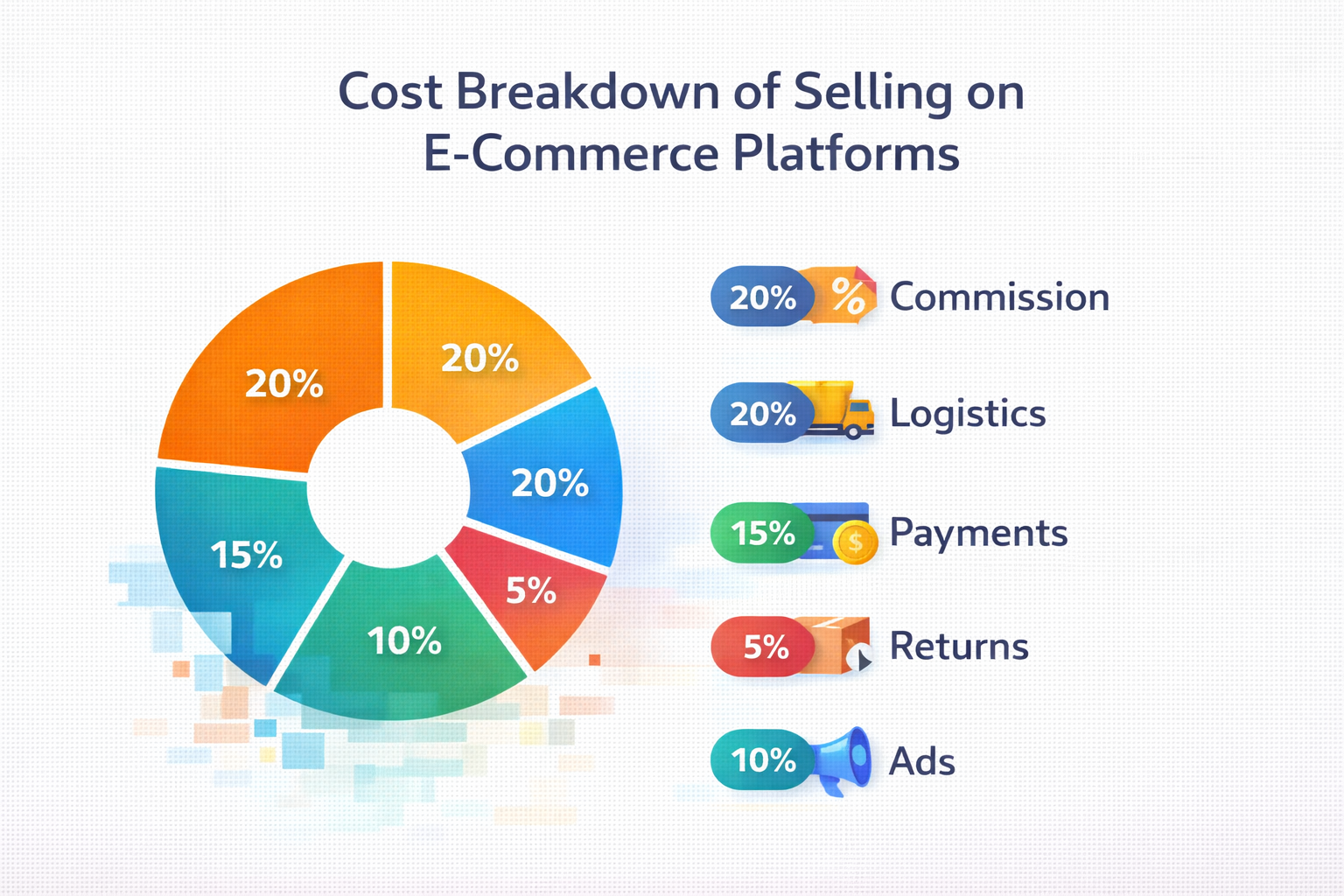
Cost Breakdown of Selling on E-Commerce Platforms
Selling through e-commerce platforms has made it easier than ever for MSMEs to reach global customers. However, while platforms simplify access to international markets, they also involve multiple cost components that directly impact profitability. Many sellers focus only on product price and shipping, but platform-based selling includes several additional expenses that must be understood clearly—often assessed during professional eCommerce management services.
This blog explains the complete cost breakdown of selling on e-commerce platforms, helping MSMEs plan pricing, manage margins, and build a sustainable export business.
Why Understanding Platform Costs Is Important
E-commerce platforms provide ready-made infrastructure—customer traffic, payment systems, and logistics support—but these services come at a cost. If sellers do not understand these expenses in advance, they may face:
- Lower profit margins than expected
- Difficulty pricing products competitively
- Cash flow pressure due to delayed settlements
- Unexpected deductions from payouts
A clear cost breakdown allows MSMEs to price products correctly and avoid surprises, a process often streamlined through end-to-end eCommerce management services.
Platform Commission Fees
One of the primary costs of selling on e-commerce platforms is the commission fee.
What Is Platform Commission?
Platform commission is a percentage charged on the selling price of each product. The rate varies based on:
- Product category
- Platform policies
- Type of seller account
Why It Matters
Commission directly reduces revenue from every sale. Higher-category commissions can significantly affect margins, especially for low-priced products—making commission analysis a key part of marketplace cost optimization.
Payment Processing and Settlement Charges
Platforms handle payment collection from buyers and transfer funds to sellers after deducting charges.
Common Payment-Related Costs
- Payment gateway or processing fees
- Currency conversion charges for international sales
- Settlement handling fees
These charges are often bundled into platform deductions but should be reviewed carefully—an area where eCommerce export management services help sellers reconcile payouts accurately.
Logistics and Fulfillment Costs
Logistics is one of the largest cost components in e-commerce selling.
Types of Logistics Costs
- Shipping charges based on weight and destination
- Packaging and handling fees
- Fulfillment or storage charges (if platform-managed)
Some platforms offer seller-managed shipping, while others provide fulfillment services. Each option has different cost implications and must be evaluated strategically.
Packaging and Labeling Costs
Proper packaging is essential for global e-commerce, but it also adds to costs.
Packaging-Related Expenses
- Boxes, envelopes, and cushioning material
- Label printing and barcoding
- Compliance-related packaging requirements
Efficient packaging helps control shipping costs but still needs to be factored into pricing—often reviewed during export cost planning for MSMEs.
Returns and Refund-Related Costs
Returns are a normal part of e-commerce, especially in international markets.
Return-Related Expenses
- Reverse logistics costs
- Refund processing charges
- Loss of original shipping cost
- Possible product damage or resale loss
Even when platforms manage returns, sellers often bear part or all of the cost. Structured return analysis is a key part of eCommerce operations management.
Advertising and Promotion Costs
While platforms bring traffic, visibility often depends on paid promotions.
Common Promotional Costs
- Sponsored product listings
- Platform advertising campaigns
- Discounting or deal participation fees
These costs are optional but often necessary to compete in crowded marketplaces.
Listing and Content Creation Costs
High-quality listings improve conversion rates but may involve additional expenses.
Possible Costs
- Product photography
- Content creation for descriptions and visuals
- Listing optimization services
Though not charged by platforms directly, these costs are essential for successful selling.
Compliance and Documentation Costs
Selling internationally requires compliance with export and tax regulations.
Compliance-Related Expenses
- Documentation preparation
- Banking and reconciliation effort
- Professional compliance support
These compliance aspects are often handled through professional eCommerce management services to avoid errors and penalties.
Understanding Payout and Cash Flow Impact
Platforms usually settle payments on a periodic basis rather than instantly.
Cash Flow Considerations
- Settlement cycles affect working capital
- Deductions are applied before payout
- Refunds or disputes may delay receipts
Understanding payout timing is as important as understanding cost structure.
How MSMEs Can Manage Platform Costs Effectively
Practical Cost-Control Strategies
- Choose product categories with reasonable commission rates
- Optimize packaging to reduce shipping weight
- Use promotions selectively and track ROI
- Monitor return reasons and reduce avoidable returns
- Regularly review platform fee statements
Active cost monitoring is key to long-term success.
Conclusion
Selling on e-commerce platforms opens powerful global opportunities for MSMEs, but it also comes with a multi-layered cost structure. Platform commissions, payment processing fees, logistics expenses, returns, promotions, and compliance costs all contribute to the final profit or loss.
By understanding the complete cost breakdown and planning pricing accordingly—often with the help of eCommerce management services—MSMEs can make informed decisions, protect margins, and scale their e-commerce export business sustainably. Successful platform selling is not just about sales volume; it is about managing costs with clarity and discipline.
![[object Object]](/_next/image?url=https%3A%2F%2Fcms.msmestory.com%2Fwp-content%2Fuploads%2F2026%2F04%2Fog-6.webp&w=3840&q=75)
![[object Object]](/_next/image?url=https%3A%2F%2Fcms.msmestory.com%2Fwp-content%2Fuploads%2F2026%2F02%2Fog-13.jpg&w=3840&q=75)
![[object Object]](/_next/image?url=https%3A%2F%2Fcms.msmestory.com%2Fwp-content%2Fuploads%2F2026%2F01%2FMSME-export-roadmap.png&w=3840&q=75)
![[object Object]](/_next/image?url=https%3A%2F%2Fcms.msmestory.com%2Fwp-content%2Fuploads%2F2026%2F01%2Fsocial-media-for-export-orders-for-MSMEs.png&w=3840&q=75)
![[object Object]](/_next/image?url=https%3A%2F%2Fcms.msmestory.com%2Fwp-content%2Fuploads%2F2026%2F01%2Fsocial-commerce-exports-for-global-sales.png&w=3840&q=75)
![[object Object]](/_next/image?url=https%3A%2F%2Fcms.msmestory.com%2Fwp-content%2Fuploads%2F2026%2F01%2FHow-MSMEs-Can-Export-Using-Global-Marketplaces-1.png&w=3840&q=75)
![[object Object]](/_next/image?url=https%3A%2F%2Fcms.msmestory.com%2Fwp-content%2Fuploads%2F2026%2F01%2Fwrite-off-rules-for-unrealised-export-proceeds.png&w=3840&q=75)
![[object Object]](/_next/image?url=https%3A%2F%2Fcms.msmestory.com%2Fwp-content%2Fuploads%2F2026%2F01%2FHandling-Returns-And-Rejections-in-Global-E-Commerce.png&w=3840&q=75)
![[object Object]](/_next/image?url=https%3A%2F%2Fcms.msmestory.com%2Fwp-content%2Fuploads%2F2026%2F01%2FIGST-refund-process-for-e-commerce-exports.png&w=3840&q=75)
![[object Object]](/_next/image?url=https%3A%2F%2Fcms.msmestory.com%2Fwp-content%2Fuploads%2F2026%2F01%2FRBI-guidelines-for-export-payments.png&w=3840&q=75)
![[object Object]](/_next/image?url=https%3A%2F%2Fcms.msmestory.com%2Fwp-content%2Fuploads%2F2026%2F01%2Fhow-MSMEs-receive-payments-from-international-e-commerce-sales.png&w=3840&q=75)
![[object Object]](/_next/image?url=https%3A%2F%2Fcms.msmestory.com%2Fwp-content%2Fuploads%2F2026%2F01%2Fhow-to-reduce-logistics-cost-in-cross-border-e-commerce-1.png&w=3840&q=75)
![[object Object]](/_next/image?url=https%3A%2F%2Fcms.msmestory.com%2Fwp-content%2Fuploads%2F2026%2F01%2FPostal-and-courier-export-weight-limits-and-costs.png&w=3840&q=75)
![[object Object]](/_next/image?url=https%3A%2F%2Fcms.msmestory.com%2Fwp-content%2Fuploads%2F2026%2F01%2FDak-Niryat-Kendra.png&w=3840&q=75)
![[object Object]](/_next/image?url=https%3A%2F%2Fcms.msmestory.com%2Fwp-content%2Fuploads%2F2026%2F01%2FIndia-Post-vs-courier-services-for-e-commerce-exports.png&w=3840&q=75)
![[object Object]](/_next/image?url=https%3A%2F%2Fcms.msmestory.com%2Fwp-content%2Fuploads%2F2026%2F01%2FPackaging-Guidelines-for-E-Commerce-Exports-from-India.png&w=3840&q=75)
![[object Object]](/_next/image?url=https%3A%2F%2Fcms.msmestory.com%2Fwp-content%2Fuploads%2F2026%2F01%2FSEO-Friendly-Product-Descriptions-for-International-E-Commerce.png&w=3840&q=75)
![[object Object]](/_next/image?url=https%3A%2F%2Fcms.msmestory.com%2Fwp-content%2Fuploads%2F2026%2F01%2FProduct-Images-and-Descriptions-for-E-Commerce-Exports.png&w=3840&q=75)
![[object Object]](/_next/image?url=https%3A%2F%2Fcms.msmestory.com%2Fwp-content%2Fuploads%2F2026%2F01%2FHigh-converting-product-catalogue-for-global-buyers.png&w=3840&q=75)