









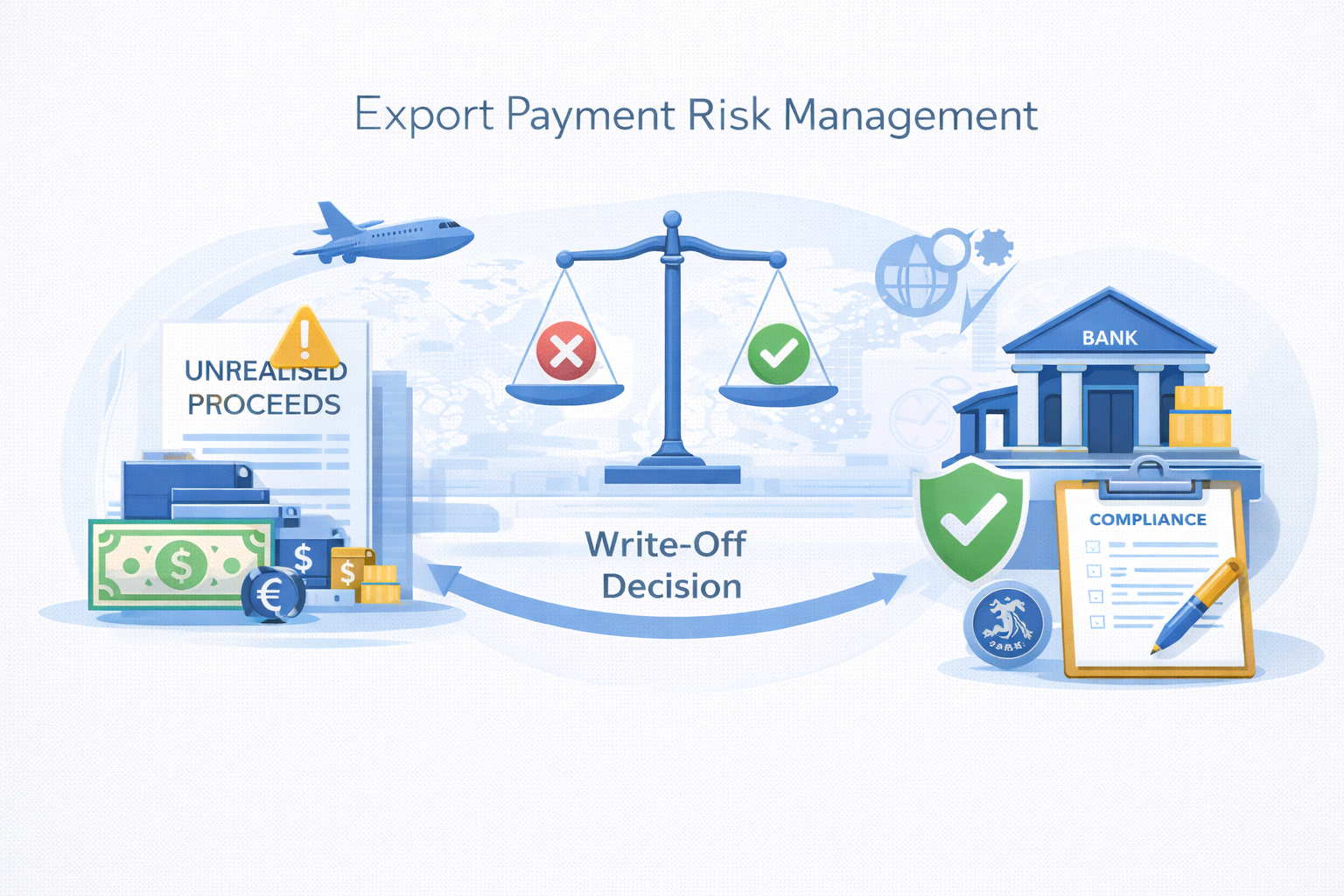
Write-Off Rules for Unrealised Export Proceeds
In international trade and e-commerce exports, exporters are required to receive payment for goods shipped abroad within prescribed timelines. However, in practical business situations, there are instances where export proceeds cannot be realised due to factors beyond the exporter’s control. These unpaid or partially unpaid amounts are known as unrealised export proceeds.
To address such genuine cases, regulatory provisions allow exporters to write off unrealised export proceeds in a compliant manner. Understanding these write-off rules is essential for MSMEs to avoid regulatory issues, maintain clean export records, and continue operations smoothly—often with the support of professional eCommerce management services.
What Are Unrealised Export Proceeds?
Unrealised export proceeds refer to export payments that are not received within the permitted time period after goods have been exported.
Common Reasons for Unrealised Proceeds
- Buyer insolvency or bankruptcy
- Buyer disputes or refusal to pay
- Goods rejected by the buyer or foreign customs
- Goods lost or damaged in transit
- Political, economic, or regulatory issues in the buyer’s country
While exporters are expected to make reasonable efforts to recover payments, certain commercial situations make recovery impossible.
Why Write-Off Rules Are Important
Export transactions are closely monitored through banking and regulatory systems. If unrealised export proceeds remain unresolved, exporters may face:
- Non-compliance with foreign exchange regulations
- Restrictions on future export transactions
- Delays or denial of export-related benefits
- Increased scrutiny from banks
Write-off rules provide a legal and structured mechanism to close such cases without penalising exporters for genuine commercial losses—an area often managed efficiently through eCommerce management services.
Who Can Apply for Write-Off of Unrealised Export Proceeds?
Exporters, including MSMEs and e-commerce sellers, can apply for write-off if:
- All reasonable recovery efforts have been made
- Non-realisation is due to genuine commercial reasons
- Complete and accurate documentation is available
Write-offs are not automatic and must comply with prescribed conditions.
Types of Write-Offs Allowed
There are two primary methods to write off unrealised export proceeds.
1. Self Write-Off by Exporters
Exporters are permitted to self-write off unrealised export proceeds within specified limits.
Key Conditions for Self Write-Off
- The exporter has a satisfactory export realisation track record
- The unrealised amount falls within the permitted percentage of total exports
- The write-off is supported by valid commercial reasons
Self write-off allows exporters to close smaller unpaid amounts without lengthy approval procedures.
2. Write-Off with Bank Approval
For cases exceeding self write-off limits, exporters must seek approval from their authorized bank.
When Bank Approval Is Required
- The unrealised amount exceeds permitted self write-off limits
- The exporter does not meet eligibility criteria for self write-off
- The case involves higher-value export transactions
Banks evaluate the documentation and decide whether the write-off request is genuine and compliant.
Documentation Required for Write-Off
Strong documentation is critical for write-off approval.
Commonly Required Documents
- Original export invoice and shipping bill
- Proof of export (shipping documents)
- Evidence of efforts made to recover payment
- Correspondence with the buyer
- Proof of buyer default, rejection, or insolvency
Incomplete documentation may result in rejection of write-off requests.
Role of Banks in the Write-Off Process
Banks play a central role in managing unrealised export proceeds.
Bank Responsibilities
- Monitor export payment realisation timelines
- Review write-off requests and supporting documents
- Update export monitoring systems after approval
- Ensure compliance with foreign exchange regulations
Exporters should maintain regular communication with banks regarding pending or disputed payments—often coordinated through eCommerce management services.
Impact of Write-Off on Export Records
Once a write-off is approved:
- The unrealised amount is closed in export monitoring systems
- The exporter is treated as compliant for that transaction
- No further payment recovery is expected
However, frequent write-offs may attract closer scrutiny, so this option should be used only for genuine cases.
Write-Offs in E-Commerce Export Scenarios
In e-commerce exports, unrealised proceeds may arise due to:
- Platform disputes
- Buyer-initiated chargebacks
- Returns and rejected shipments
- Payment reversals
Exporters must ensure alignment between platform records, bank records, and export documentation when seeking write-offs.
Write-Off and Export Incentives
Unrealised export proceeds that are written off generally do not qualify for export incentives.
Key Points to Remember
- Only realised export proceeds are eligible for incentives
- Write-off transactions are excluded from benefit claims
- Accurate reconciliation is essential to avoid mismatches
Exporters should factor this into financial planning.
Risks of Improper Write-Off Handling
Failure to follow prescribed write-off procedures can lead to:
- Regulatory penalties
- Freezing of export-related facilities
- Difficulty in opening or maintaining export accounts
- Loss of credibility with banks
Strict compliance protects exporters from these risks.
Best Practices for MSMEs
Practical Tips
- Track export payments regularly
- Follow up with buyers before timelines expire
- Maintain clear communication records
- Inform banks early if payment issues arise
- Use write-off provisions only when recovery is genuinely impossible
Proactive export payment management reduces the need for write-offs and supports long-term stability.
Conclusion
Write-off rules for unrealised export proceeds offer a structured and compliant way for exporters to close genuine non-payment cases. While exporters must make sincere efforts to recover payments, these provisions recognise that certain commercial risks are unavoidable in global trade.
For MSMEs involved in international e-commerce, understanding and applying write-off rules correctly helps maintain regulatory compliance, protect business credibility, and ensure continuity of export operations. When used responsibly—and supported by professional eCommerce management services—write-offs act as a safeguard rather than a weakness in export management.
![[object Object]](/_next/image?url=https%3A%2F%2Fcms.msmestory.com%2Fwp-content%2Fuploads%2F2026%2F04%2Fog-6.webp&w=3840&q=75)
![[object Object]](/_next/image?url=https%3A%2F%2Fcms.msmestory.com%2Fwp-content%2Fuploads%2F2026%2F02%2Fog-13.jpg&w=3840&q=75)
![[object Object]](/_next/image?url=https%3A%2F%2Fcms.msmestory.com%2Fwp-content%2Fuploads%2F2026%2F01%2FMSME-export-roadmap.png&w=3840&q=75)
![[object Object]](/_next/image?url=https%3A%2F%2Fcms.msmestory.com%2Fwp-content%2Fuploads%2F2026%2F01%2Fsocial-media-for-export-orders-for-MSMEs.png&w=3840&q=75)
![[object Object]](/_next/image?url=https%3A%2F%2Fcms.msmestory.com%2Fwp-content%2Fuploads%2F2026%2F01%2Fcost-breakdown-of-selling-on-e-commerce-platforms.png&w=3840&q=75)
![[object Object]](/_next/image?url=https%3A%2F%2Fcms.msmestory.com%2Fwp-content%2Fuploads%2F2026%2F01%2Fsocial-commerce-exports-for-global-sales.png&w=3840&q=75)
![[object Object]](/_next/image?url=https%3A%2F%2Fcms.msmestory.com%2Fwp-content%2Fuploads%2F2026%2F01%2FHow-MSMEs-Can-Export-Using-Global-Marketplaces-1.png&w=3840&q=75)
![[object Object]](/_next/image?url=https%3A%2F%2Fcms.msmestory.com%2Fwp-content%2Fuploads%2F2026%2F01%2FHandling-Returns-And-Rejections-in-Global-E-Commerce.png&w=3840&q=75)
![[object Object]](/_next/image?url=https%3A%2F%2Fcms.msmestory.com%2Fwp-content%2Fuploads%2F2026%2F01%2FIGST-refund-process-for-e-commerce-exports.png&w=3840&q=75)
![[object Object]](/_next/image?url=https%3A%2F%2Fcms.msmestory.com%2Fwp-content%2Fuploads%2F2026%2F01%2FRBI-guidelines-for-export-payments.png&w=3840&q=75)
![[object Object]](/_next/image?url=https%3A%2F%2Fcms.msmestory.com%2Fwp-content%2Fuploads%2F2026%2F01%2Fhow-MSMEs-receive-payments-from-international-e-commerce-sales.png&w=3840&q=75)
![[object Object]](/_next/image?url=https%3A%2F%2Fcms.msmestory.com%2Fwp-content%2Fuploads%2F2026%2F01%2Fhow-to-reduce-logistics-cost-in-cross-border-e-commerce-1.png&w=3840&q=75)
![[object Object]](/_next/image?url=https%3A%2F%2Fcms.msmestory.com%2Fwp-content%2Fuploads%2F2026%2F01%2FPostal-and-courier-export-weight-limits-and-costs.png&w=3840&q=75)
![[object Object]](/_next/image?url=https%3A%2F%2Fcms.msmestory.com%2Fwp-content%2Fuploads%2F2026%2F01%2FDak-Niryat-Kendra.png&w=3840&q=75)
![[object Object]](/_next/image?url=https%3A%2F%2Fcms.msmestory.com%2Fwp-content%2Fuploads%2F2026%2F01%2FIndia-Post-vs-courier-services-for-e-commerce-exports.png&w=3840&q=75)
![[object Object]](/_next/image?url=https%3A%2F%2Fcms.msmestory.com%2Fwp-content%2Fuploads%2F2026%2F01%2FPackaging-Guidelines-for-E-Commerce-Exports-from-India.png&w=3840&q=75)
![[object Object]](/_next/image?url=https%3A%2F%2Fcms.msmestory.com%2Fwp-content%2Fuploads%2F2026%2F01%2FSEO-Friendly-Product-Descriptions-for-International-E-Commerce.png&w=3840&q=75)
![[object Object]](/_next/image?url=https%3A%2F%2Fcms.msmestory.com%2Fwp-content%2Fuploads%2F2026%2F01%2FProduct-Images-and-Descriptions-for-E-Commerce-Exports.png&w=3840&q=75)
![[object Object]](/_next/image?url=https%3A%2F%2Fcms.msmestory.com%2Fwp-content%2Fuploads%2F2026%2F01%2FHigh-converting-product-catalogue-for-global-buyers.png&w=3840&q=75)