









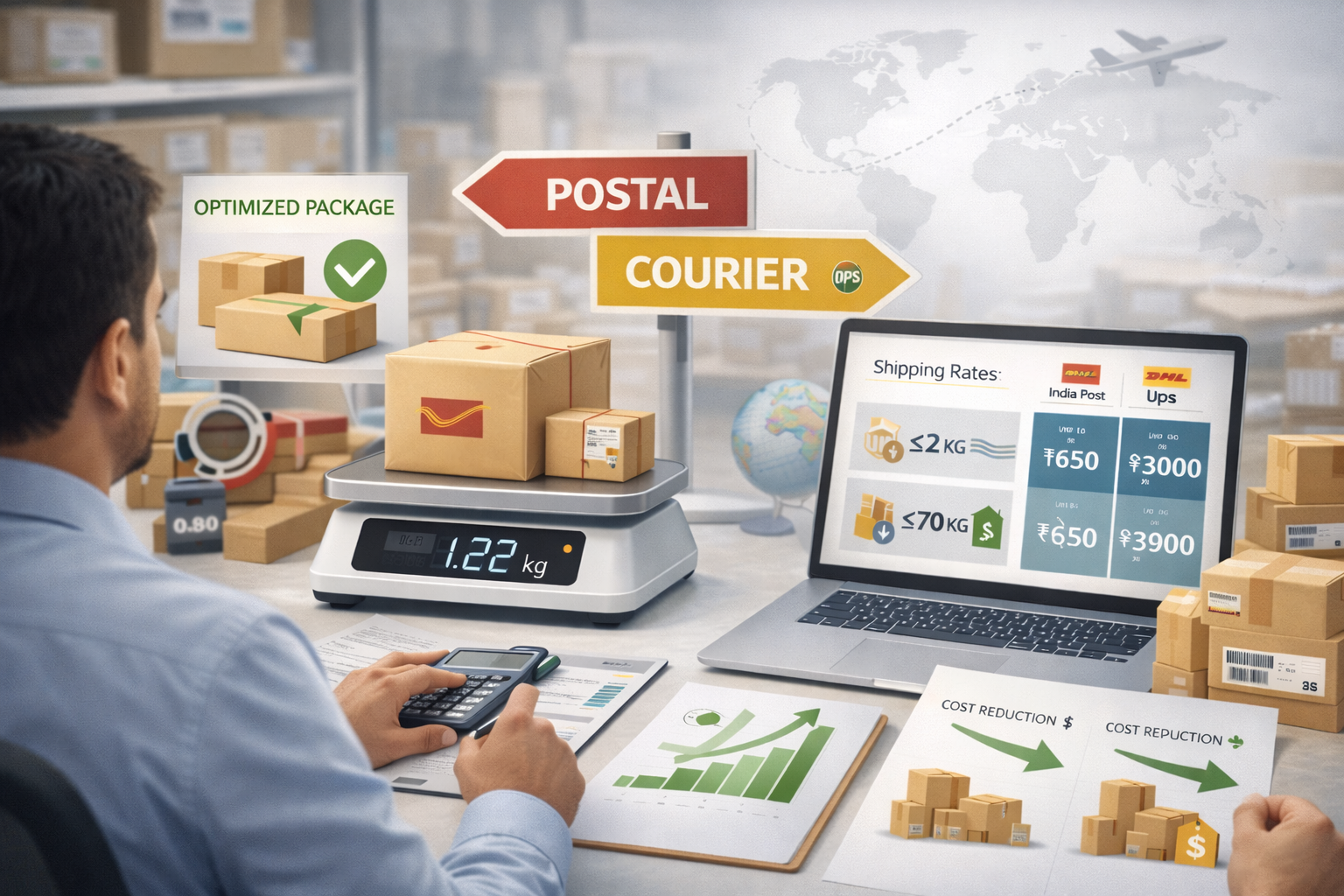
How to Reduce Logistics Cost in Cross-Border E-Commerce
Logistics cost is one of the biggest challenges in cross-border e-commerce, especially for MSMEs and small exporters. Even when a product is competitively priced, high shipping costs can reduce margins, discourage buyers, and limit repeat purchases. Managing logistics efficiently is therefore essential for sustainable export growth.
This blog explains practical ways to reduce logistics costs in cross-border e-commerce, focusing on shipment planning, route selection, packaging efficiency, and operational decisions—areas where professional eCommerce management services help exporters optimize performance.
Why Logistics Costs Matter in Cross-Border E-Commerce
In international e-commerce, logistics costs directly impact:
- Final product pricing
- Profit margins
- Buyer satisfaction
- Competitiveness in global marketplaces
Unlike domestic shipping, cross-border logistics involves customs clearance, international transportation, and multiple handling stages. Without careful planning, logistics expenses can quickly outweigh product margins—making structured eCommerce management services critical for MSMEs.
Choose the Right Export Route Based on Shipment Type
One of the most effective ways to reduce logistics costs is selecting the right export route for each shipment.
Postal Route for Cost-Sensitive Shipments
Postal services are generally more economical for:
- Lightweight parcels
- Low-value products
- Direct-to-consumer shipments
They offer wide international coverage and lower base shipping rates, making them ideal for MSMEs focused on affordability rather than speed. Many exporters adopt this route as part of a cost-led strategy designed through eCommerce management services.
Courier Route for Time-Sensitive Shipments
Courier services are better suited for:
- High-value or commercial shipments
- Time-sensitive deliveries
- Buyers who expect faster delivery and detailed tracking
Using courier services only when speed and reliability are essential helps exporters avoid unnecessary logistics expenses.
Hybrid Logistics Strategy
A mixed approach—postal services for low-cost shipments and courier services for premium orders—helps optimize overall logistics spending. This hybrid model is commonly implemented with the support of end-to-end eCommerce management services.
Optimize Shipment Weight to Control Costs
Shipping charges in cross-border e-commerce are largely weight-based. Reducing shipment weight directly lowers logistics costs.
Practical Weight Optimization Tips
- Avoid excessive packaging materials
- Use lightweight but durable packing solutions
- Pack products securely without unnecessary bulk
- Measure and verify shipment weight before dispatch
Even small reductions in weight can generate significant savings over time—especially for frequent exporters working with eCommerce management services.
Use Appropriate Packaging for Export Shipments
Proper packaging protects goods, but overpacking increases shipping costs.
Smart Packaging Practices
- Match packaging size to product dimensions
- Use cushioning only where necessary
- Avoid oversized cartons or boxes
- Ensure packaging withstands repeated handling
Well-designed packaging balances product safety with cost efficiency, reducing both shipping charges and damage-related losses.
Plan Shipments Based on Weight Limits and Service Types
Different logistics services have specific weight limits and pricing structures.
Why This Matters
- Exceeding weight limits may push shipments into higher-cost services
- Splitting shipments unnecessarily increases handling costs
- Choosing the correct service improves cost efficiency
Understanding service-specific limits helps exporters make informed decisions—often guided by eCommerce management services.
Consolidate Shipments Where Possible
Frequent small shipments can significantly increase per-unit logistics costs.
How Consolidation Helps
- Reduces per-shipment handling charges
- Improves cost efficiency for multiple orders
- Optimizes packaging and documentation
For exporters receiving multiple orders from the same destination, consolidation can substantially lower logistics expenses.
Select Destinations Strategically
Logistics costs vary significantly by destination country.
Destination-Based Cost Planning
- Some regions incur higher costs due to distance or limited services
- Exporters should prioritize markets with favorable logistics economics
- Testing markets before scaling helps manage risk
Strategic destination selection improves profitability and is often part of a broader plan developed through eCommerce management services.
Avoid Returns Through Accurate Listings and Packaging
Returns are one of the hidden costs in cross-border e-commerce.
How to Reduce Return-Related Costs
- Provide accurate product descriptions and images
- Ensure packaging adequately protects products
- Follow correct labeling and documentation practices
Reducing returns saves reverse logistics costs and operational effort—key areas addressed by eCommerce management services.
Ensure Correct Documentation to Prevent Delays
Delays caused by documentation errors often result in additional storage and handling costs.
Documentation Best Practices
- Submit complete and accurate export details
- Ensure shipment contents match documentation
- Respond promptly to customs queries
Efficient documentation ensures smoother movement of goods and lower overall logistics costs.
Use Logistics Services That Match Export Frequency
Export frequency directly affects cost efficiency.
Cost-Saving Approach
- Occasional exporters should prioritize flexible, low-cost options
- Frequent exporters may qualify for volume-based benefits
- Understanding shipment patterns improves logistics planning
Matching services to export frequency helps control long-term costs.
Monitor and Review Logistics Performance Regularly
Logistics cost optimization is an ongoing process.
Why Regular Review Is Important
- Identifies cost leakages
- Highlights inefficiencies in packaging or route selection
- Helps exporters refine strategies over time
Performance monitoring is a core element of professional eCommerce management services.
Balance Cost with Customer Expectations
While reducing logistics costs is important, it should never compromise buyer experience.
Key Balance Points
- Use slower services only when buyers are informed
- Offer multiple shipping options where possible
- Align delivery timelines with customer expectations
A balanced logistics strategy protects both margins and brand reputation.
Conclusion
Reducing logistics costs in cross-border e-commerce requires smart planning, route optimization, efficient packaging, and strategic operational decisions. By choosing the right export route, managing shipment weight, consolidating orders, and avoiding preventable delays, MSMEs can significantly improve profitability.
For MSMEs, logistics efficiency is not just about cutting costs—it is about building a scalable and sustainable export business. When supported by professional eCommerce management services, exporters can achieve competitive pricing, satisfied customers, and long-term success in global e-commerce markets.
![[object Object]](/_next/image?url=https%3A%2F%2Fcms.msmestory.com%2Fwp-content%2Fuploads%2F2026%2F04%2Fog-6.webp&w=3840&q=75)
![[object Object]](/_next/image?url=https%3A%2F%2Fcms.msmestory.com%2Fwp-content%2Fuploads%2F2026%2F02%2Fog-13.jpg&w=3840&q=75)
![[object Object]](/_next/image?url=https%3A%2F%2Fcms.msmestory.com%2Fwp-content%2Fuploads%2F2026%2F01%2FMSME-export-roadmap.png&w=3840&q=75)
![[object Object]](/_next/image?url=https%3A%2F%2Fcms.msmestory.com%2Fwp-content%2Fuploads%2F2026%2F01%2Fsocial-media-for-export-orders-for-MSMEs.png&w=3840&q=75)
![[object Object]](/_next/image?url=https%3A%2F%2Fcms.msmestory.com%2Fwp-content%2Fuploads%2F2026%2F01%2Fcost-breakdown-of-selling-on-e-commerce-platforms.png&w=3840&q=75)
![[object Object]](/_next/image?url=https%3A%2F%2Fcms.msmestory.com%2Fwp-content%2Fuploads%2F2026%2F01%2Fsocial-commerce-exports-for-global-sales.png&w=3840&q=75)
![[object Object]](/_next/image?url=https%3A%2F%2Fcms.msmestory.com%2Fwp-content%2Fuploads%2F2026%2F01%2FHow-MSMEs-Can-Export-Using-Global-Marketplaces-1.png&w=3840&q=75)
![[object Object]](/_next/image?url=https%3A%2F%2Fcms.msmestory.com%2Fwp-content%2Fuploads%2F2026%2F01%2Fwrite-off-rules-for-unrealised-export-proceeds.png&w=3840&q=75)
![[object Object]](/_next/image?url=https%3A%2F%2Fcms.msmestory.com%2Fwp-content%2Fuploads%2F2026%2F01%2FHandling-Returns-And-Rejections-in-Global-E-Commerce.png&w=3840&q=75)
![[object Object]](/_next/image?url=https%3A%2F%2Fcms.msmestory.com%2Fwp-content%2Fuploads%2F2026%2F01%2FIGST-refund-process-for-e-commerce-exports.png&w=3840&q=75)
![[object Object]](/_next/image?url=https%3A%2F%2Fcms.msmestory.com%2Fwp-content%2Fuploads%2F2026%2F01%2FRBI-guidelines-for-export-payments.png&w=3840&q=75)
![[object Object]](/_next/image?url=https%3A%2F%2Fcms.msmestory.com%2Fwp-content%2Fuploads%2F2026%2F01%2Fhow-MSMEs-receive-payments-from-international-e-commerce-sales.png&w=3840&q=75)
![[object Object]](/_next/image?url=https%3A%2F%2Fcms.msmestory.com%2Fwp-content%2Fuploads%2F2026%2F01%2FPostal-and-courier-export-weight-limits-and-costs.png&w=3840&q=75)
![[object Object]](/_next/image?url=https%3A%2F%2Fcms.msmestory.com%2Fwp-content%2Fuploads%2F2026%2F01%2FDak-Niryat-Kendra.png&w=3840&q=75)
![[object Object]](/_next/image?url=https%3A%2F%2Fcms.msmestory.com%2Fwp-content%2Fuploads%2F2026%2F01%2FIndia-Post-vs-courier-services-for-e-commerce-exports.png&w=3840&q=75)
![[object Object]](/_next/image?url=https%3A%2F%2Fcms.msmestory.com%2Fwp-content%2Fuploads%2F2026%2F01%2FPackaging-Guidelines-for-E-Commerce-Exports-from-India.png&w=3840&q=75)
![[object Object]](/_next/image?url=https%3A%2F%2Fcms.msmestory.com%2Fwp-content%2Fuploads%2F2026%2F01%2FSEO-Friendly-Product-Descriptions-for-International-E-Commerce.png&w=3840&q=75)
![[object Object]](/_next/image?url=https%3A%2F%2Fcms.msmestory.com%2Fwp-content%2Fuploads%2F2026%2F01%2FProduct-Images-and-Descriptions-for-E-Commerce-Exports.png&w=3840&q=75)
![[object Object]](/_next/image?url=https%3A%2F%2Fcms.msmestory.com%2Fwp-content%2Fuploads%2F2026%2F01%2FHigh-converting-product-catalogue-for-global-buyers.png&w=3840&q=75)