









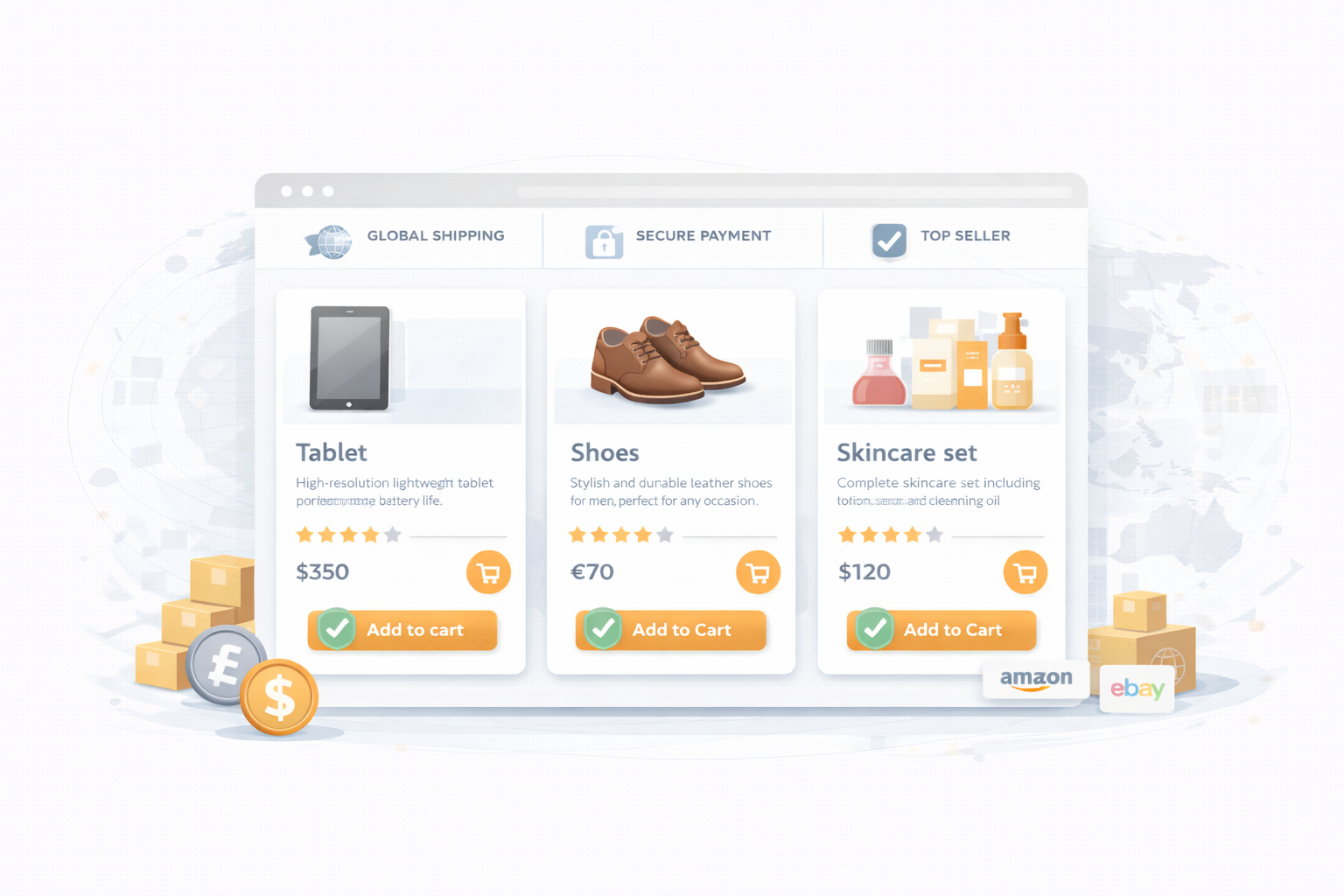
How to Create a High-Converting Product Catalogue for Global Buyers
A well-designed product catalogue is the foundation of success in e-commerce exports. For global buyers who cannot physically see or touch a product, the catalogue acts as a digital storefront. A clear, informative, and visually appealing catalogue significantly improves buyer trust and conversion rates.
This blog explains how exporters can create a high-converting product catalogue that attracts and convinces international customers, especially when supported by professional eCommerce management services.
1. Why Product Catalogues Matter in Global E-Commerce
In cross-border e-commerce, buyers rely entirely on product listings to make purchase decisions.
A strong catalogue helps:
- Showcase product value clearly
- Build buyer confidence
- Reduce customer queries and returns
- Improve search visibility on e-commerce platforms
An effective catalogue directly influences sales performance in global markets. Many exporters rely on end-to-end eCommerce management services to optimize catalogue quality across platforms.
2. Use Clear and Concise Product Descriptions
Product descriptions should be simple, accurate, and informative.
Best Practices
- Clearly explain what the product is and how it is used
- Highlight key features and benefits
- Avoid unnecessary or vague language
- Use keywords naturally to improve search visibility
Well-written descriptions help buyers quickly understand the product and make faster decisions. Exporters often refine descriptions using insights from strategic eCommerce export management services.
3. Include High-Quality Product Images
Images play a critical role in influencing buyer decisions.
Image Guidelines
- Use sharp, high-resolution images
- Show the product from multiple angles
- Ensure proper lighting and a clear background
- Accurately represent color, texture, and size
Since buyers cannot physically inspect the product, images must compensate for that limitation. High-quality visuals are a core part of eCommerce marketplace management services.
4. Organize Products with a Functional Layout
A clean and well-structured catalogue improves navigation and shopping experience.
Key Layout Tips
- Group similar products together
- Use logical categories and subcategories
- Maintain a consistent format across listings
An organized catalogue encourages buyers to explore more products and increases average order value.
5. Provide Complete and Accurate Product Information
Incomplete information can lead to confusion and returns.
Essential Details to Include
- Product name and category
- Price
- Size, weight, or dimensions
- Material or composition
- Usage or care instructions
Providing complete details reduces buyer hesitation and post-purchase dissatisfaction. Many exporters use professional eCommerce management services to ensure listing accuracy.
6. Add Frequently Asked Questions (FAQs)
FAQs address common buyer concerns upfront.
Benefits of FAQs
- Reduce repetitive customer queries
- Clarify doubts about usage, delivery, or returns
- Improve buyer confidence
Including FAQs helps buyers complete their purchase without needing additional support.
7. Use Consistent Pricing and Presentation
Consistency across the catalogue builds professionalism and trust.
What to Maintain Consistently
- Pricing format
- Image style
- Description structure
- Brand tone and messaging
A uniform catalogue enhances brand recognition and credibility in global markets.
8. Leverage Platform Tools and Templates
Exporters can use built-in tools or templates offered by e-commerce platforms and online resources.
Advantages
- Faster catalogue creation
- Standardized formatting
- Improved compliance with platform requirements
Using available tools simplifies the process and improves listing quality, especially when guided by eCommerce management services.
Conclusion
A high-converting product catalogue is more than a list of products—it is a strategic sales tool. Clear descriptions, quality images, organized layouts, and complete information together create a strong buying experience for global customers.
Exporters who invest time in building a professional and buyer-friendly catalogue—supported by expert eCommerce management services—are better positioned to succeed in international e-commerce markets.
![[object Object]](/_next/image?url=https%3A%2F%2Fcms.msmestory.com%2Fwp-content%2Fuploads%2F2026%2F04%2Fog-6.webp&w=3840&q=75)
![[object Object]](/_next/image?url=https%3A%2F%2Fcms.msmestory.com%2Fwp-content%2Fuploads%2F2026%2F02%2Fog-13.jpg&w=3840&q=75)
![[object Object]](/_next/image?url=https%3A%2F%2Fcms.msmestory.com%2Fwp-content%2Fuploads%2F2026%2F01%2FMSME-export-roadmap.png&w=3840&q=75)
![[object Object]](/_next/image?url=https%3A%2F%2Fcms.msmestory.com%2Fwp-content%2Fuploads%2F2026%2F01%2Fsocial-media-for-export-orders-for-MSMEs.png&w=3840&q=75)
![[object Object]](/_next/image?url=https%3A%2F%2Fcms.msmestory.com%2Fwp-content%2Fuploads%2F2026%2F01%2Fcost-breakdown-of-selling-on-e-commerce-platforms.png&w=3840&q=75)
![[object Object]](/_next/image?url=https%3A%2F%2Fcms.msmestory.com%2Fwp-content%2Fuploads%2F2026%2F01%2Fsocial-commerce-exports-for-global-sales.png&w=3840&q=75)
![[object Object]](/_next/image?url=https%3A%2F%2Fcms.msmestory.com%2Fwp-content%2Fuploads%2F2026%2F01%2FHow-MSMEs-Can-Export-Using-Global-Marketplaces-1.png&w=3840&q=75)
![[object Object]](/_next/image?url=https%3A%2F%2Fcms.msmestory.com%2Fwp-content%2Fuploads%2F2026%2F01%2Fwrite-off-rules-for-unrealised-export-proceeds.png&w=3840&q=75)
![[object Object]](/_next/image?url=https%3A%2F%2Fcms.msmestory.com%2Fwp-content%2Fuploads%2F2026%2F01%2FHandling-Returns-And-Rejections-in-Global-E-Commerce.png&w=3840&q=75)
![[object Object]](/_next/image?url=https%3A%2F%2Fcms.msmestory.com%2Fwp-content%2Fuploads%2F2026%2F01%2FIGST-refund-process-for-e-commerce-exports.png&w=3840&q=75)
![[object Object]](/_next/image?url=https%3A%2F%2Fcms.msmestory.com%2Fwp-content%2Fuploads%2F2026%2F01%2FRBI-guidelines-for-export-payments.png&w=3840&q=75)
![[object Object]](/_next/image?url=https%3A%2F%2Fcms.msmestory.com%2Fwp-content%2Fuploads%2F2026%2F01%2Fhow-MSMEs-receive-payments-from-international-e-commerce-sales.png&w=3840&q=75)
![[object Object]](/_next/image?url=https%3A%2F%2Fcms.msmestory.com%2Fwp-content%2Fuploads%2F2026%2F01%2Fhow-to-reduce-logistics-cost-in-cross-border-e-commerce-1.png&w=3840&q=75)
![[object Object]](/_next/image?url=https%3A%2F%2Fcms.msmestory.com%2Fwp-content%2Fuploads%2F2026%2F01%2FPostal-and-courier-export-weight-limits-and-costs.png&w=3840&q=75)
![[object Object]](/_next/image?url=https%3A%2F%2Fcms.msmestory.com%2Fwp-content%2Fuploads%2F2026%2F01%2FDak-Niryat-Kendra.png&w=3840&q=75)
![[object Object]](/_next/image?url=https%3A%2F%2Fcms.msmestory.com%2Fwp-content%2Fuploads%2F2026%2F01%2FIndia-Post-vs-courier-services-for-e-commerce-exports.png&w=3840&q=75)
![[object Object]](/_next/image?url=https%3A%2F%2Fcms.msmestory.com%2Fwp-content%2Fuploads%2F2026%2F01%2FPackaging-Guidelines-for-E-Commerce-Exports-from-India.png&w=3840&q=75)
![[object Object]](/_next/image?url=https%3A%2F%2Fcms.msmestory.com%2Fwp-content%2Fuploads%2F2026%2F01%2FSEO-Friendly-Product-Descriptions-for-International-E-Commerce.png&w=3840&q=75)
![[object Object]](/_next/image?url=https%3A%2F%2Fcms.msmestory.com%2Fwp-content%2Fuploads%2F2026%2F01%2FProduct-Images-and-Descriptions-for-E-Commerce-Exports.png&w=3840&q=75)