


Introduction
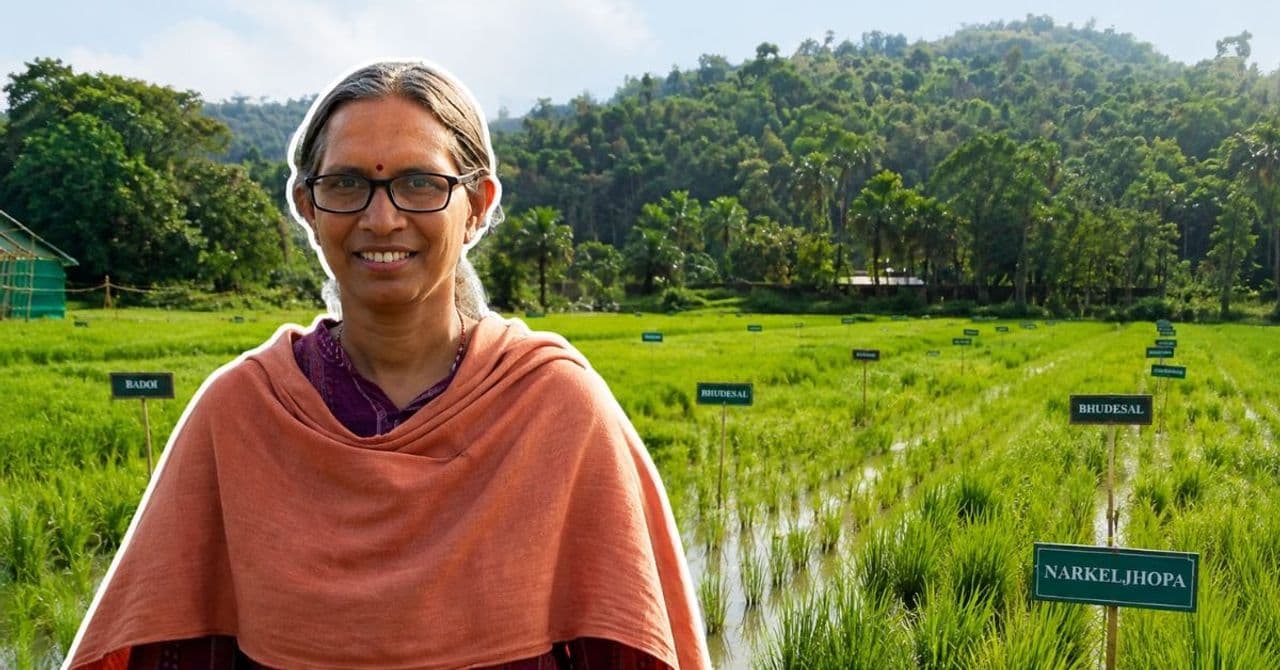
In India, the decline of traditional rice varieties threatened not only agricultural biodiversity but also cultural heritage and farmers’ livelihoods. Driven by a profound connection between farming and philosophy, one woman’s dedication sparked a widespread movement to protect and revive over 1,000 indigenous rice strains across multiple states. This article explores Usha Soolapani’s inspirational journey, the challenges faced by traditional rice cultivation, and the collective efforts to sustain rice diversity in the face of environmental and social pressures.
Finding Inspiration in Japanese Farming
In the early 1980s, amidst India’s recovery from the Bhopal gas tragedy, a young agricultural officer named Usha Soolapani from Palakkad, Kerala, found unexpected inspiration in a Japanese book titled The One-Straw Revolution by Masanobu Fukuoka. The book’s advocacy against chemical farming profoundly influenced her approach.
“It became a guiding light,” she reflects. “It encouraged me to start farming without chemicals and to connect agriculture to philosophy, not just production.” This perspective shaped Usha’s lifelong commitment to protecting India’s traditional rice varieties, leading to a revival movement that spanned six states.
Currently residing in Thiruvananthapuram with her partner Jayakumar, Usha collaborates with Thanal, an organization devoted to environmental stewardship and the welfare of farming communities.
The Journey from Kerala to India’s Rice Regions
For almost two decades, Usha observed the transformation of Kerala’s wetland rice fields. Farmers who once prospered found rising costs and stagnant grain prices threatening their livelihood. The steady conversion of paddy fields into real estate accelerated the loss of ecological traditions.
Her activism particularly focused on combating the harmful use of the pesticide Endosulfan.
Understanding Endosulfan
Sprayed extensively over cashew farms in Kerala’s Kasaragod district between 1978 and 2000, Endosulfan caused severe health issues among local communities, including birth defects and disabilities. Kerala eventually banned the pesticide, and in 2017, the Supreme Court mandated compensation of Rs 500 crore to affected victims. The chemical’s global notoriety culminated in its listing under the Stockholm Convention for phase-out.
“What I saw in Palakkad was not unique,” Usha observes. “Similar stories surfaced across India’s rice-growing areas.”
This realization propelled Usha and her team at Thanal to traverse diverse regions from 2005 to 2018, seeking farmers preserving ancient rice seeds—seeds carefully stored in clay pots or hidden in kitchen rafters, representing more than agriculture but cultural heritage.
Growing a Movement
The efforts formed part of the broader Save Our Rice Campaign (SOR), initiated in 2003 by the Pesticide Action Network Asia Pacific (PANAP). This campaign aimed to protect rice heritage, food sovereignty, and traditional farming knowledge throughout Asia.
Thanal became a pivotal partner in India, creating grassroots networks that promoted traditional rice cultivation and ecological farming. The campaign united various stakeholders around issues of food security, seed sovereignty, and sustainable agricultural futures. Today, SOR operates in multiple countries across Asia.
In India, initiatives like Rice Diversity Blocks (RDBs) and community seed banks enable farmers to cultivate and exchange traditional rice varieties, ensuring their survival in farmers’ fields rather than in museums.
Why Paddy Is More Than Just a Crop
Usha emphasizes, “Paddy is not just a crop; it is an ecosystem that supports people, communities, and wildlife. When these areas are converted to buildings, it disrupts balance and harms lives and livelihoods.”
The campaign fostered connections among seed savers, farmers, researchers, and communities to restore traditional rice farming practices. What began as shy participation at seed fairs transformed into leadership roles, with farmers becoming educators and innovators. Seed banks stock diverse rice varieties from red and black to golden grains, while annual festivals provide platforms to celebrate and share food traditions.
Rice Varieties That Almost Disappeared
Many rare rice strains were kept by a handful of farmers, cultivated in small plots. Documentation and revival efforts helped bring some notable varieties back, including:
- Mappilai Samba (Tamil Nadu)
- Mullaan Kazhama
- Raktha Sali (Kerala)
- Rajamudi (Karnataka)
The dramatic decline of paddy fields in Kerala—from approximately 760,000–800,000 hectares after Independence to about 180,000 hectares in 2023–24—is attributed to rising costs, low returns, labor shortages, and development pressures.
Kerala’s 2008 legislation to protect paddy lands and wetlands has reinstated awareness of their ecological value, though ongoing attempts threaten to dilute these protections. Climate change further compounds the challenges with erratic floods, droughts, and pest outbreaks, underscoring the need for stronger support systems.
A Shared Approach in Six States
The Save Our Rice Campaign now spans six states, each with distinctive rice traditions and environmental conditions. Collaborating with local organizations, each region develops tailored strategies emphasizing climate resilience, seed sovereignty, and enhanced nutrition.
Originally centered on seed sovereignty and cultural preservation, the campaign’s focus has evolved to prioritize adaptation to climate change. In the Sundarbans region of West Bengal, for example, farmers conserve about 192 traditional rice varieties.
Women’s Role in Seeds and Food
Gender justice is fundamental to Usha’s work. She highlights the underappreciated role of women, often involved as laborers but rarely recognized as decision-makers or seed owners. Market dynamics further marginalize their contributions.
“Women play a major role moving toward organic farming and food independence,” Usha says. Festivals like Tamil Nadu’s Nel Thiruvizha celebrate women’s contributions by providing spaces for seed exchange, storytelling, and honoring traditional food cultures neglected by industrial agriculture.
Engaging the Younger Generation
To involve youth in restoring rice ecosystems, the campaign has embraced innovative outreach, including seed festivals, food fairs, fellowships, cultural engagements, and social media. Collaborations with food vloggers, organic producers, actors, nutritionists, and medical professionals have broadened public awareness and participation.
Rice Museums and Private Collections
The movement established dedicated spaces to conserve rice diversity, illustrating a shift toward valuing traditional rice as living heritage integral to contemporary agriculture and cuisine.
Notable examples include the Rice Diversity Centre in Mandya, Karnataka, housing over 1,300 traditional types, and proposals for rice museums in West Bengal. Kerala’s Aluva State Seed Farm and Assam’s Kaziranga National Orchid and Biodiversity Park maintain valuable collections of heritage rice threatened by hybrid varieties.
Combining Science and Community Wisdom
Rice Diversity Blocks represent collaborative farms cultivating local varieties, while village-level seed banks ensure seed sovereignty remains within communities rather than large institutions.
Usha, trained as a horticulturist, bridges scientific knowledge with farmers’ experiential wisdom through workshops, policy advocacy, and co-editing publications like Paddy Through the Years. She and her team emphasize that farmers are breeders and innovators, not mere laborers.
The Wide Range of Traditional Rice
Traditional rice exhibits remarkable diversity in color, nutrition, history, and regional adaptation:
- Black rice, such as Karuppu Kavuni, is rich in anthocyanins with antioxidant properties.
- Red rice varieties like Mappillai Samba contain significant iron and zinc.
- Golden Thanga Samba offers a distinctive sweet aroma and taste.
- Jeeraga Samba is known for its unique fragrance when cooked.
Farmers developed these varieties over generations, suited to local environments and culinary preferences. Currently, more than 30,000 farmers in six states protect over 1,000 indigenous rice types through Rice Diversity Blocks.
Recognition and Impact
The campaign has received acclaim from experts including food policy analyst Devinder Sharma, who describes Usha’s work as “truly pioneering.” While many preferred high-yield hybrids unsuitable for climate variability, Usha steadfastly safeguarded traditional rice. Some varieties preserved through this movement are now stored in global seed vaults.
Looking to the Future
Usha envisions incorporating rice diversity into official farming policies that value cultural heritage alongside productivity. She advocates for a seed-to-plate approach ensuring diverse rice availability for vulnerable groups like children and pregnant women, complemented by multi-cropping and crop rotation.
Building resilient rice ecosystems also requires enhanced funding, robust institutions, and stronger farmer representation in policymaking. For Usha, preserving a seed symbolizes safeguarding knowledge, food security, livelihoods, and environments nurtured over generations.
Her journey, sparked by a modest Japanese book, demonstrates how one idea or seed can ignite a revolution.