









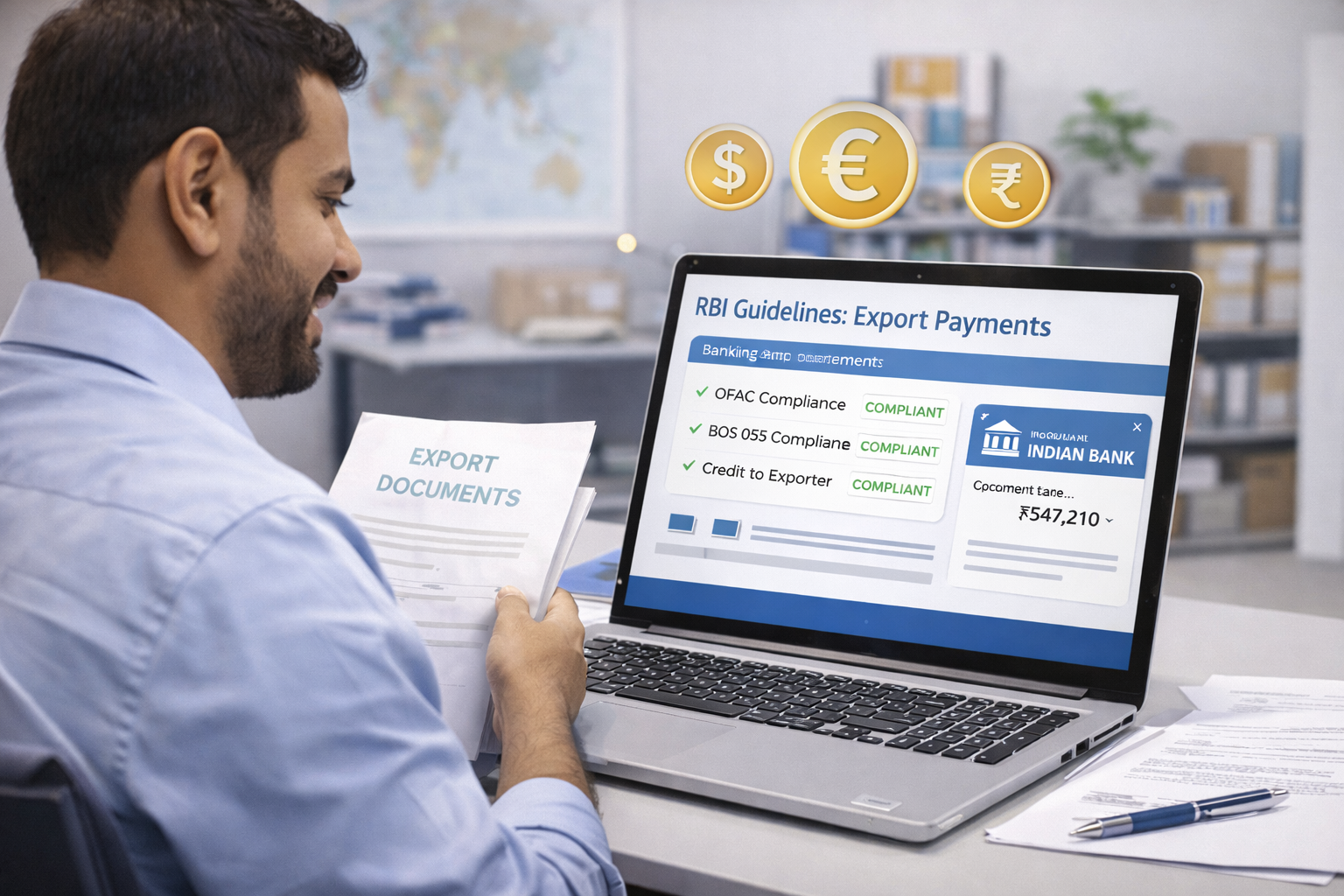
RBI Guidelines for Export Payments Explained in Simple Words
For MSMEs and small exporters engaged in international e-commerce, understanding RBI guidelines for export payments is essential. These rules ensure that foreign exchange earned through exports is received in India on time, through approved channels, and in a fully compliant manner. While the regulations may appear complex, their purpose is straightforward: to ensure transparency, timely payment realization, and financial discipline in cross-border trade.
This blog explains RBI guidelines for export payments in simple and practical terms, helping MSMEs manage international payments confidently—often with the support of professional eCommerce management services that streamline compliance and payment workflows.
Why RBI Guidelines Matter for Export Payments
When Indian exporters sell products to overseas buyers, payments are received in foreign currency. RBI guidelines ensure that:
- Export earnings are brought back into India
- Payments are received only through authorized channels
- Export transactions are properly tracked and monitored
- Foreign exchange inflow remains regulated and transparent
Following these rules protects exporters from penalties and ensures smooth coordination with banks—an area where eCommerce management services add significant value for MSMEs.
Approved Ways to Receive Export Payments
Export payments must be received only through permitted methods under RBI and FEMA regulations.
Commonly Allowed Payment Methods
- Payments received through international e-commerce platforms
- Payments via authorized online payment gateways
- Payments received through banks or permitted money transfer services
All payment channels must comply with Indian foreign exchange rules and be routed through authorized banking systems. Choosing the right payment method is a key part of structured eCommerce management services.
Realization of Export Proceeds: Time Limits Explained
One of the most critical RBI rules relates to how quickly export payments must be received in India.
Standard Time Limit
- Exporters must receive the full value of exported goods within 9 months from the date of export
Special Situation: Warehouse-Based Exports
- If goods are exported to warehouses located outside India, payment must be realized within 15 months
These timelines apply to all exporters, including MSMEs and e-commerce sellers, and are closely monitored by banks.
Why Timely Payment Realization Is Important
Timely realization of export proceeds is essential because:
- It ensures legal and regulatory compliance
- It helps banks track foreign exchange inflows
- It keeps exporters eligible for export incentives and benefits
Delays without proper approval can lead to regulatory issues—risks that can be reduced through proactive eCommerce management services.
Role of Banks in Export Payment Monitoring
Authorized banks play a central role in handling and monitoring export payments.
What Banks Do
- Credit export proceeds to the exporter’s bank account
- Monitor whether payments are received within RBI timelines
- Record export transactions in monitoring systems
- Issue proof of payment realization
Exporters must maintain an active bank account for export operations and keep banks informed of any payment-related issues.
Export Monitoring Through Digital Systems
Export payments are tracked using centralized digital systems maintained by banks.
Why This Is Important
- Links export shipments with payment receipts
- Tracks pending or overdue export proceeds
- Enables banks to report compliance status
These systems ensure transparency and accountability for every export transaction, especially for courier and e-commerce exports.
Electronic Bank Realisation Certificate (e-BRC)
Once export proceeds are received, banks issue an Electronic Bank Realisation Certificate (e-BRC).
Why e-BRC Is Important
- Serves as official proof of receipt of export payments
- Required to claim export incentives or benefits
- Helps reconcile export and payment records
Exporters should regularly review their e-BRCs to avoid mismatches—something often handled efficiently through eCommerce management services.
Handling Delayed or Unrealized Export Payments
Sometimes exporters may face delayed or unrealized payments due to buyer disputes, returns, or financial issues.
RBI Provisions for Such Cases
- Exporters may self-write off unrealized amounts within prescribed limits
- Banks may approve write-offs for higher amounts based on documentary evidence
- Limits depend on exporter category and transaction history
Proper documentation is essential when seeking approval for any write-off.
Export Payments and Returns or Refunds
Returns and rejected shipments are common in international e-commerce.
How RBI Rules Apply
- Returned goods must be properly accounted for
- Payment reversals or refunds should match original export records
- Re-imported goods must follow prescribed procedures
Accurate documentation helps exporters manage returns without compliance complications.
Transaction Limits for Certain Payment Channels
Some digital payment methods are subject to transaction value limits.
What Exporters Should Know
- Online payment gateways have maximum permissible transaction values
- Exporters must ensure payments stay within allowed limits
- High-value exports should use appropriate banking channels
Using the correct payment method prevents regulatory violations.
Currency Conversion and Charges
Export payments are usually received in foreign currency and converted to Indian Rupees.
Points to Consider
- Exchange rates applied by banks or payment service providers
- Processing or conversion charges
- Impact on the final realized amount
Exporters should review settlement details carefully to understand actual earnings.
Importance of Compliance for MSMEs
Compliance with RBI guidelines is mandatory for all exporters.
Benefits of Compliance
- Avoids penalties and regulatory action
- Ensures eligibility for export incentives
- Builds credibility with banks and marketplaces
- Enables smoother scaling of export operations
Compliant exporters experience fewer disruptions and smoother payment flows.
Simple Checklist for MSMEs
To stay compliant with RBI export payment rules:
- Use only permitted payment channels
- Track payment realization timelines
- Maintain accurate export and payment records
- Regularly check e-BRCs
- Inform banks promptly about delays or disputes
Conclusion
RBI guidelines for export payments are designed to ensure that Indian exporters receive their earnings safely, on time, and through authorized channels. While the rules may seem technical, they are straightforward when understood step by step.
For MSMEs involved in international e-commerce, understanding and following these guidelines helps manage cash flow, avoid compliance issues, and build a strong foundation for global growth. With proper planning—and support from expert eCommerce management services—export payments can be handled smoothly, confidently, and compliantly.
![[object Object]](/_next/image?url=https%3A%2F%2Fcms.msmestory.com%2Fwp-content%2Fuploads%2F2026%2F04%2Fog-6.webp&w=3840&q=75)
![[object Object]](/_next/image?url=https%3A%2F%2Fcms.msmestory.com%2Fwp-content%2Fuploads%2F2026%2F02%2Fog-13.jpg&w=3840&q=75)
![[object Object]](/_next/image?url=https%3A%2F%2Fcms.msmestory.com%2Fwp-content%2Fuploads%2F2026%2F01%2FMSME-export-roadmap.png&w=3840&q=75)
![[object Object]](/_next/image?url=https%3A%2F%2Fcms.msmestory.com%2Fwp-content%2Fuploads%2F2026%2F01%2Fsocial-media-for-export-orders-for-MSMEs.png&w=3840&q=75)
![[object Object]](/_next/image?url=https%3A%2F%2Fcms.msmestory.com%2Fwp-content%2Fuploads%2F2026%2F01%2Fcost-breakdown-of-selling-on-e-commerce-platforms.png&w=3840&q=75)
![[object Object]](/_next/image?url=https%3A%2F%2Fcms.msmestory.com%2Fwp-content%2Fuploads%2F2026%2F01%2Fsocial-commerce-exports-for-global-sales.png&w=3840&q=75)
![[object Object]](/_next/image?url=https%3A%2F%2Fcms.msmestory.com%2Fwp-content%2Fuploads%2F2026%2F01%2FHow-MSMEs-Can-Export-Using-Global-Marketplaces-1.png&w=3840&q=75)
![[object Object]](/_next/image?url=https%3A%2F%2Fcms.msmestory.com%2Fwp-content%2Fuploads%2F2026%2F01%2Fwrite-off-rules-for-unrealised-export-proceeds.png&w=3840&q=75)
![[object Object]](/_next/image?url=https%3A%2F%2Fcms.msmestory.com%2Fwp-content%2Fuploads%2F2026%2F01%2FHandling-Returns-And-Rejections-in-Global-E-Commerce.png&w=3840&q=75)
![[object Object]](/_next/image?url=https%3A%2F%2Fcms.msmestory.com%2Fwp-content%2Fuploads%2F2026%2F01%2FIGST-refund-process-for-e-commerce-exports.png&w=3840&q=75)
![[object Object]](/_next/image?url=https%3A%2F%2Fcms.msmestory.com%2Fwp-content%2Fuploads%2F2026%2F01%2Fhow-MSMEs-receive-payments-from-international-e-commerce-sales.png&w=3840&q=75)
![[object Object]](/_next/image?url=https%3A%2F%2Fcms.msmestory.com%2Fwp-content%2Fuploads%2F2026%2F01%2Fhow-to-reduce-logistics-cost-in-cross-border-e-commerce-1.png&w=3840&q=75)
![[object Object]](/_next/image?url=https%3A%2F%2Fcms.msmestory.com%2Fwp-content%2Fuploads%2F2026%2F01%2FPostal-and-courier-export-weight-limits-and-costs.png&w=3840&q=75)
![[object Object]](/_next/image?url=https%3A%2F%2Fcms.msmestory.com%2Fwp-content%2Fuploads%2F2026%2F01%2FDak-Niryat-Kendra.png&w=3840&q=75)
![[object Object]](/_next/image?url=https%3A%2F%2Fcms.msmestory.com%2Fwp-content%2Fuploads%2F2026%2F01%2FIndia-Post-vs-courier-services-for-e-commerce-exports.png&w=3840&q=75)
![[object Object]](/_next/image?url=https%3A%2F%2Fcms.msmestory.com%2Fwp-content%2Fuploads%2F2026%2F01%2FPackaging-Guidelines-for-E-Commerce-Exports-from-India.png&w=3840&q=75)
![[object Object]](/_next/image?url=https%3A%2F%2Fcms.msmestory.com%2Fwp-content%2Fuploads%2F2026%2F01%2FSEO-Friendly-Product-Descriptions-for-International-E-Commerce.png&w=3840&q=75)
![[object Object]](/_next/image?url=https%3A%2F%2Fcms.msmestory.com%2Fwp-content%2Fuploads%2F2026%2F01%2FProduct-Images-and-Descriptions-for-E-Commerce-Exports.png&w=3840&q=75)
![[object Object]](/_next/image?url=https%3A%2F%2Fcms.msmestory.com%2Fwp-content%2Fuploads%2F2026%2F01%2FHigh-converting-product-catalogue-for-global-buyers.png&w=3840&q=75)