









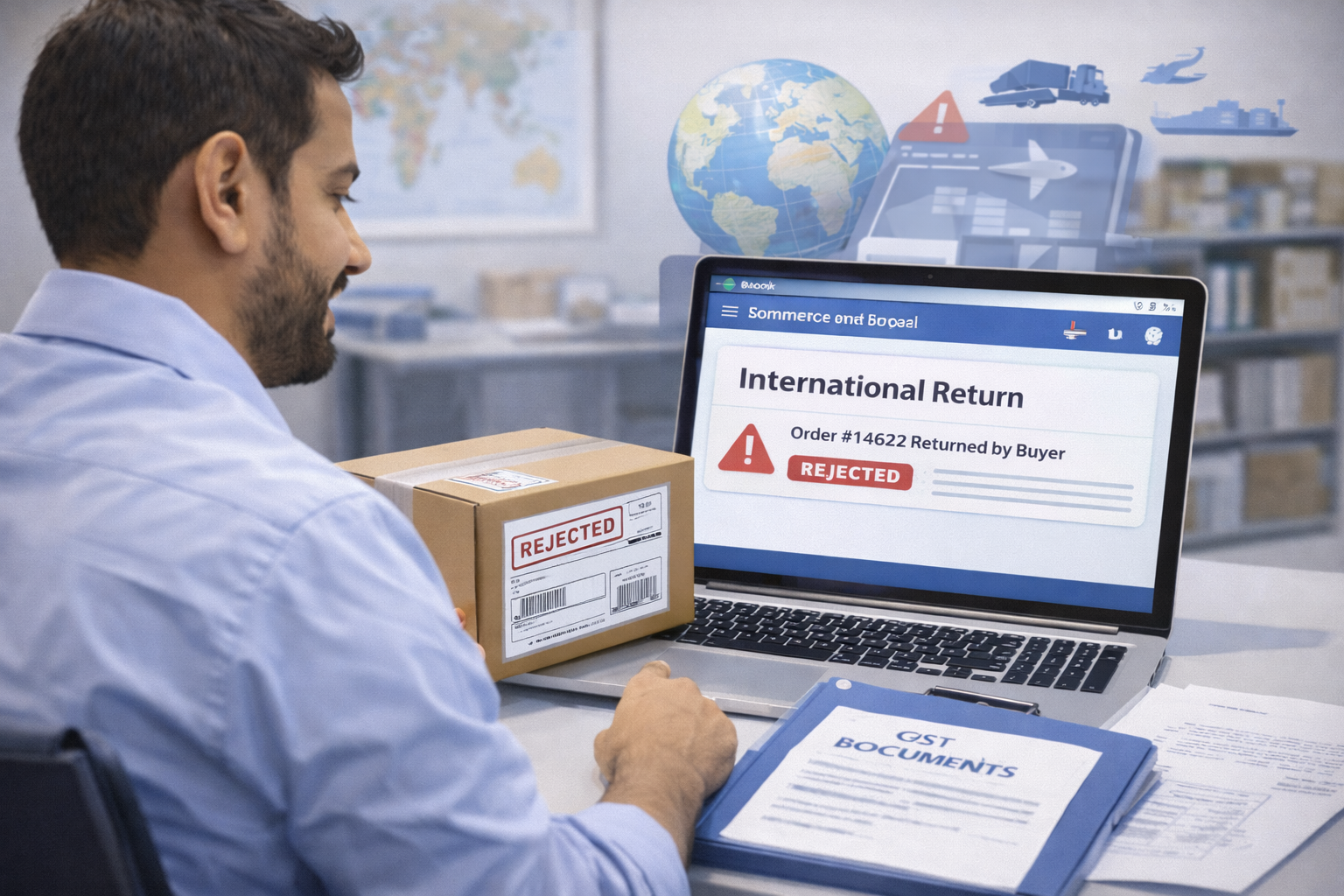
Handling Returns And Rejections in Global E-Commerce
In global e-commerce, returns and rejections are an unavoidable reality. International buyers may reject shipments due to quality issues, incorrect specifications, delivery delays, or regulatory problems in the destination country. For MSMEs and small exporters, handling these situations correctly is essential to avoid financial loss, compliance risks, and disruption of export operations.
This blog explains how exporters should manage returns and rejections in global e-commerce, covering payment implications, regulatory requirements, and operational best practices—often supported through structured eCommerce management services.
Understanding Returns and Rejections in Cross-Border Trade
In international e-commerce, a return or rejection may occur when:
- The buyer refuses delivery
- Goods are returned after delivery
- Shipments are rejected by foreign customs
- Products fail to meet buyer expectations or regulatory requirements
Unlike domestic returns, international returns involve customs procedures, foreign exchange compliance, and detailed documentation, making them far more complex. Exporters must handle these carefully to remain compliant.
Common Reasons for Returns and Rejections
Identifying the causes of returns helps exporters reduce their frequency.
Frequent Causes
- Product damage or quality issues during transit
- Mismatch between product description and actual product
- Incorrect sizing, specifications, or labeling
- Regulatory non-compliance in the importing country
- Delivery delays or logistics failures
Preventing these issues through better planning and quality control—often part of professional eCommerce management services—is more cost-effective than managing returns later.
Impact of Returns on Export Payments
Returns directly affect export payment realization, which is closely monitored under foreign exchange regulations.
Payment Scenarios
- Payment may not be received if the buyer rejects the shipment
- Payment may need to be refunded if goods are returned
- Partial payments may require adjustments
Exporters must ensure that payment records reflect the final transaction outcome to avoid compliance issues.
Handling Unrealized Export Proceeds
When a shipment is rejected and payment is not received, exporters face unrealized export proceeds.
What Exporters Should Do
- Maintain clear documentation of rejection or return
- Inform the bank about non-realization of export proceeds
- Follow prescribed procedures to adjust or close the transaction
In genuine cases, exporters may be allowed to write off unrealized amounts within permitted limits, subject to conditions and bank approval.
Re-Import of Returned Goods
Rejected or returned goods are often sent back to India.
Key Points for Re-Import
- Returned goods must be declared correctly at customs
- Re-import documentation should reference the original export
- Quantity and value must match original shipment records
Proper documentation ensures that re-imports do not create customs or GST compliance issues.
Export Payments and Refund Adjustments
If payment has already been received and goods are later returned, exporters must manage refunds carefully.
Important Considerations
- Refunds should align with the original export value
- Banks must be informed of payment reversals
- Adjustments should be reflected in export monitoring systems
Clear coordination between the exporter, bank, and e-commerce platform—often facilitated by eCommerce management services—is essential.
Documentation Is the Key to Smooth Handling
Accurate documentation is the foundation of managing returns and rejections.
Essential Documents
- Original export invoice and shipping bill
- Proof of rejection or return
- Re-import documents (if applicable)
- Written communication with the buyer
These records help justify payment adjustments and ensure regulatory reporting is accurate.
Role of Banks in Handling Returns
Banks play a critical role in the financial handling of returns.
How Banks Help
- Track export payment realization
- Record write-offs or adjustments
- Update export monitoring systems
Exporters should proactively communicate with banks whenever returns or rejections occur.
Managing Returns for E-Commerce Platform Sales
For exporters selling through global e-commerce platforms, return handling often follows platform-specific rules.
Platform-Related Aspects
- Platforms may hold, reverse, or delay payments
- Return timelines vary by platform
- Dispute resolution mechanisms may apply
Exporters must understand platform policies and align them with Indian regulatory requirements.
Reducing Returns Through Preventive Measures
The most effective strategy is to minimize returns before they happen.
Preventive Best Practices
- Use accurate product descriptions and images
- Invest in high-quality, export-grade packaging
- Comply with destination country regulations
- Verify buyer requirements before shipping
Reducing returns protects margins and improves customer satisfaction.
Financial and Operational Impact of Returns
Returns increase costs beyond logistics alone.
Hidden Costs Include
- Reverse logistics expenses
- Customs handling and re-import charges
- Payment processing and refund fees
- Administrative and compliance effort
Factoring these costs into pricing and export planning is essential for sustainability.
Compliance Risks If Returns Are Mishandled
Improper handling of returns can lead to serious regulatory issues.
Potential Risks
- Non-compliance with foreign exchange regulations
- Mismatch between export and payment records
- Loss of eligibility for export incentives
- Increased scrutiny from banks or authorities
Following prescribed procedures and maintaining transparency helps exporters avoid these risks.
Best Practices for MSMEs Handling Global Returns
Practical Checklist
- Track every export shipment and payment
- Act promptly when a return or rejection occurs
- Maintain complete and accurate documentation
- Inform banks without delay
- Reconcile export and payment records regularly
A disciplined approach—often supported through eCommerce management services—ensures smoother operations.
Conclusion
Returns and rejections are an inevitable part of global e-commerce, but they do not have to derail export operations. By understanding payment implications, following correct re-import and documentation procedures, and maintaining transparency with banks and platforms, MSMEs can manage returns effectively.
Proper handling of returns protects cash flow, ensures regulatory compliance, and supports long-term sustainability in international e-commerce. For exporters, being prepared for returns is just as important as planning for sales.
![[object Object]](/_next/image?url=https%3A%2F%2Fcms.msmestory.com%2Fwp-content%2Fuploads%2F2026%2F04%2Fog-6.webp&w=3840&q=75)
![[object Object]](/_next/image?url=https%3A%2F%2Fcms.msmestory.com%2Fwp-content%2Fuploads%2F2026%2F02%2Fog-13.jpg&w=3840&q=75)
![[object Object]](/_next/image?url=https%3A%2F%2Fcms.msmestory.com%2Fwp-content%2Fuploads%2F2026%2F01%2FMSME-export-roadmap.png&w=3840&q=75)
![[object Object]](/_next/image?url=https%3A%2F%2Fcms.msmestory.com%2Fwp-content%2Fuploads%2F2026%2F01%2Fsocial-media-for-export-orders-for-MSMEs.png&w=3840&q=75)
![[object Object]](/_next/image?url=https%3A%2F%2Fcms.msmestory.com%2Fwp-content%2Fuploads%2F2026%2F01%2Fcost-breakdown-of-selling-on-e-commerce-platforms.png&w=3840&q=75)
![[object Object]](/_next/image?url=https%3A%2F%2Fcms.msmestory.com%2Fwp-content%2Fuploads%2F2026%2F01%2Fsocial-commerce-exports-for-global-sales.png&w=3840&q=75)
![[object Object]](/_next/image?url=https%3A%2F%2Fcms.msmestory.com%2Fwp-content%2Fuploads%2F2026%2F01%2FHow-MSMEs-Can-Export-Using-Global-Marketplaces-1.png&w=3840&q=75)
![[object Object]](/_next/image?url=https%3A%2F%2Fcms.msmestory.com%2Fwp-content%2Fuploads%2F2026%2F01%2Fwrite-off-rules-for-unrealised-export-proceeds.png&w=3840&q=75)
![[object Object]](/_next/image?url=https%3A%2F%2Fcms.msmestory.com%2Fwp-content%2Fuploads%2F2026%2F01%2FIGST-refund-process-for-e-commerce-exports.png&w=3840&q=75)
![[object Object]](/_next/image?url=https%3A%2F%2Fcms.msmestory.com%2Fwp-content%2Fuploads%2F2026%2F01%2FRBI-guidelines-for-export-payments.png&w=3840&q=75)
![[object Object]](/_next/image?url=https%3A%2F%2Fcms.msmestory.com%2Fwp-content%2Fuploads%2F2026%2F01%2Fhow-MSMEs-receive-payments-from-international-e-commerce-sales.png&w=3840&q=75)
![[object Object]](/_next/image?url=https%3A%2F%2Fcms.msmestory.com%2Fwp-content%2Fuploads%2F2026%2F01%2Fhow-to-reduce-logistics-cost-in-cross-border-e-commerce-1.png&w=3840&q=75)
![[object Object]](/_next/image?url=https%3A%2F%2Fcms.msmestory.com%2Fwp-content%2Fuploads%2F2026%2F01%2FPostal-and-courier-export-weight-limits-and-costs.png&w=3840&q=75)
![[object Object]](/_next/image?url=https%3A%2F%2Fcms.msmestory.com%2Fwp-content%2Fuploads%2F2026%2F01%2FDak-Niryat-Kendra.png&w=3840&q=75)
![[object Object]](/_next/image?url=https%3A%2F%2Fcms.msmestory.com%2Fwp-content%2Fuploads%2F2026%2F01%2FIndia-Post-vs-courier-services-for-e-commerce-exports.png&w=3840&q=75)
![[object Object]](/_next/image?url=https%3A%2F%2Fcms.msmestory.com%2Fwp-content%2Fuploads%2F2026%2F01%2FPackaging-Guidelines-for-E-Commerce-Exports-from-India.png&w=3840&q=75)
![[object Object]](/_next/image?url=https%3A%2F%2Fcms.msmestory.com%2Fwp-content%2Fuploads%2F2026%2F01%2FSEO-Friendly-Product-Descriptions-for-International-E-Commerce.png&w=3840&q=75)
![[object Object]](/_next/image?url=https%3A%2F%2Fcms.msmestory.com%2Fwp-content%2Fuploads%2F2026%2F01%2FProduct-Images-and-Descriptions-for-E-Commerce-Exports.png&w=3840&q=75)
![[object Object]](/_next/image?url=https%3A%2F%2Fcms.msmestory.com%2Fwp-content%2Fuploads%2F2026%2F01%2FHigh-converting-product-catalogue-for-global-buyers.png&w=3840&q=75)