








How MSMEs Can Export Using Amazon, Etsy And Global Marketplaces
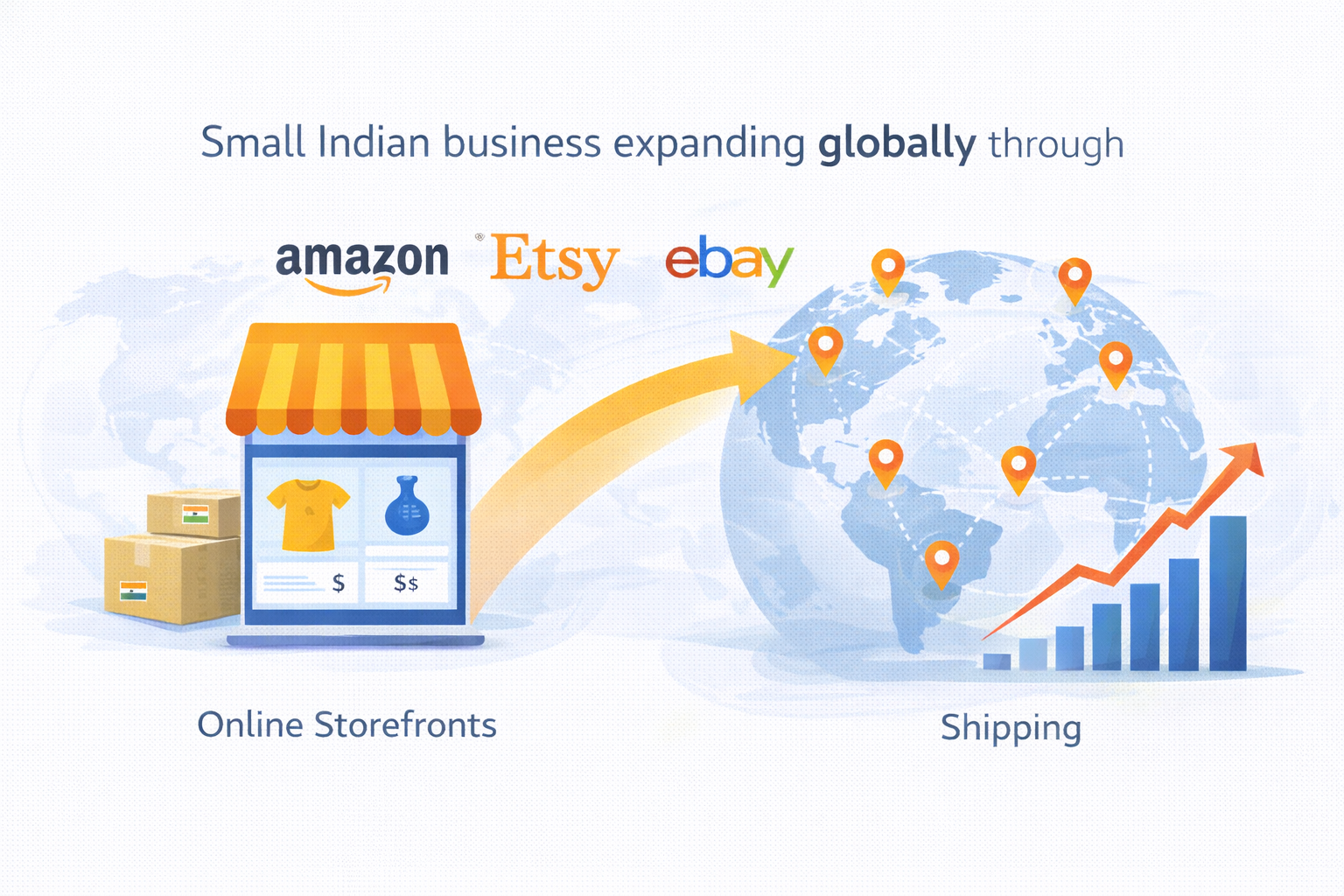
Global e-commerce marketplaces have transformed the way MSMEs access international customers. Today, small businesses in India can sell directly to buyers across the world without setting up overseas offices, distributors, or warehouses. Platforms such as Amazon and Etsy provide ready-made infrastructure for payments, logistics, and customer reach—making exports more accessible than ever before.
This blog explains how MSMEs can export using global marketplaces, the key steps involved, and what exporters should keep in mind to succeed—often with the support of professional eCommerce management services that simplify compliance and operations.
Why Global Marketplaces Are Ideal for MSMEs
Traditional exports often require large volumes, complex negotiations, and high upfront investment. Global marketplaces remove many of these barriers.
Key Advantages for MSMEs
- Direct access to international customers
- Low entry barriers compared to traditional exports
- Built-in trust and visibility through established platforms
- Support for payments, logistics, and customer communication
For MSMEs, marketplaces act as a ready-made export channel, especially when integrated with structured eCommerce management services.
Choosing the Right Marketplace for Your Product
Popular Use Cases
- Amazon: Suitable for a wide range of products, including consumer goods, lifestyle items, and private-label brands
- Etsy: Ideal for handmade, handcrafted, artistic, and customized products
- Other global marketplaces may focus on niche categories or specific regions
MSMEs should select platforms that align with their product type, pricing, and long-term export strategy.
Seller Registration and Onboarding
The first step to exporting through a marketplace is seller registration.
Typical Onboarding Requirements
- Business and identity details
- Bank account information
- Product category selection
- Tax and compliance details
Once approved, sellers gain access to the marketplace dashboard, where they can manage listings, orders, and payments—often coordinated more efficiently through eCommerce management services.
Creating Export-Ready Product Listings
Product listings are the foundation of success on global marketplaces.
Best Practices for Listings
- Clear and accurate product titles
- Detailed descriptions explaining features and usage
- High-quality product images
- Transparent pricing and delivery timelines
Since international buyers rely entirely on listings, accuracy and clarity are critical for conversions and reduced returns.
Handling International Payments Through Marketplaces
One of the biggest advantages of global marketplaces is simplified payment collection.
How Payments Work
- The marketplace collects payment from the buyer
- Payments are settled periodically with the seller
- Currency conversion is handled through approved channels
This eliminates the need for MSMEs to manage complex international payment systems on their own, especially when supported by end-to-end eCommerce management services.
Managing Export Proceeds and Compliance
Payments received from marketplaces must comply with foreign exchange and banking regulations.
What MSMEs Should Ensure
- Export proceeds are received within prescribed timelines
- Bank accounts are correctly linked to marketplace profiles
- Transaction records are properly maintained
Marketplaces provide detailed transaction reports, which help exporters stay compliant and reconcile payments efficiently.
Logistics and Shipping Options
Global marketplaces offer multiple logistics models.
Common Logistics Options
- Seller-managed shipping: MSMEs ship orders themselves using postal or courier services
- Marketplace-assisted logistics: Platforms help with shipping coordination and tracking
Exporters can choose logistics options based on cost, delivery speed, and product value, often optimizing decisions with eCommerce management services.
Customs and Documentation Support
For cross-border shipments, customs clearance is mandatory.
Marketplace Role
- Shipping documentation is integrated into order workflows
- Labels and invoices are generated automatically
- Export details are standardized to reduce errors
This simplifies customs processing, particularly for first-time exporters.
Handling Returns and Customer Support
Returns are a normal part of global e-commerce.
How Marketplaces Help
- Defined return and refund policies
- Structured dispute resolution processes
- Built-in customer communication tools
While returns may affect margins, marketplaces provide clear systems to manage them efficiently.
Pricing and Competitiveness in Global Markets
Pricing plays a key role in marketplace success.
Factors MSMEs Should Consider
- Shipping and logistics costs
- Marketplace commissions and fees
- Currency conversion impact
- Competitive pricing in target markets
A well-planned pricing strategy ensures profitability while remaining competitive internationally.
Scaling Exports Through Marketplaces
Once MSMEs gain traction, marketplaces allow easy scaling.
Growth Opportunities
- Expanding to new countries using the same platform
- Adding more products to the catalogue
- Leveraging seasonal and festive demand
Marketplaces provide analytics and performance insights that support informed growth decisions.
Common Challenges MSMEs Should Prepare For
While marketplaces simplify exports, challenges still exist.
Potential Challenges
- Intense competition from global sellers
- Platform fees affecting margins
- Dependence on marketplace policies
Understanding platform rules and planning accordingly helps MSMEs mitigate these risks.
Best Practices for MSMEs Using Global Marketplaces
Practical Tips
- Start with a limited product range
- Focus on product quality and presentation
- Monitor payments and compliance regularly
- Use customer feedback to improve listings
Consistency and compliance are key to long-term success.
Conclusion
Global marketplaces have made exporting accessible, scalable, and less complex for MSMEs. By leveraging platforms like Amazon and Etsy, small businesses can reach international buyers, receive payments through regulated channels, and manage logistics efficiently.
For MSMEs, marketplace-based exports offer a practical pathway to global growth. With the right product selection, compliance awareness, and customer focus—supported by professional eCommerce management services—global e-commerce platforms can become a powerful engine for sustainable export success.
![[object Object]](/_next/image?url=https%3A%2F%2Fcms.msmestory.com%2Fwp-content%2Fuploads%2F2026%2F04%2Fog-6.webp&w=3840&q=75)
![[object Object]](/_next/image?url=https%3A%2F%2Fcms.msmestory.com%2Fwp-content%2Fuploads%2F2026%2F02%2Fog-13.jpg&w=3840&q=75)
![[object Object]](/_next/image?url=https%3A%2F%2Fcms.msmestory.com%2Fwp-content%2Fuploads%2F2026%2F01%2FMSME-export-roadmap.png&w=3840&q=75)
![[object Object]](/_next/image?url=https%3A%2F%2Fcms.msmestory.com%2Fwp-content%2Fuploads%2F2026%2F01%2Fsocial-media-for-export-orders-for-MSMEs.png&w=3840&q=75)
![[object Object]](/_next/image?url=https%3A%2F%2Fcms.msmestory.com%2Fwp-content%2Fuploads%2F2026%2F01%2Fcost-breakdown-of-selling-on-e-commerce-platforms.png&w=3840&q=75)
![[object Object]](/_next/image?url=https%3A%2F%2Fcms.msmestory.com%2Fwp-content%2Fuploads%2F2026%2F01%2Fsocial-commerce-exports-for-global-sales.png&w=3840&q=75)
![[object Object]](/_next/image?url=https%3A%2F%2Fcms.msmestory.com%2Fwp-content%2Fuploads%2F2026%2F01%2Fwrite-off-rules-for-unrealised-export-proceeds.png&w=3840&q=75)
![[object Object]](/_next/image?url=https%3A%2F%2Fcms.msmestory.com%2Fwp-content%2Fuploads%2F2026%2F01%2FHandling-Returns-And-Rejections-in-Global-E-Commerce.png&w=3840&q=75)
![[object Object]](/_next/image?url=https%3A%2F%2Fcms.msmestory.com%2Fwp-content%2Fuploads%2F2026%2F01%2FIGST-refund-process-for-e-commerce-exports.png&w=3840&q=75)
![[object Object]](/_next/image?url=https%3A%2F%2Fcms.msmestory.com%2Fwp-content%2Fuploads%2F2026%2F01%2FRBI-guidelines-for-export-payments.png&w=3840&q=75)
![[object Object]](/_next/image?url=https%3A%2F%2Fcms.msmestory.com%2Fwp-content%2Fuploads%2F2026%2F01%2Fhow-MSMEs-receive-payments-from-international-e-commerce-sales.png&w=3840&q=75)
![[object Object]](/_next/image?url=https%3A%2F%2Fcms.msmestory.com%2Fwp-content%2Fuploads%2F2026%2F01%2Fhow-to-reduce-logistics-cost-in-cross-border-e-commerce-1.png&w=3840&q=75)
![[object Object]](/_next/image?url=https%3A%2F%2Fcms.msmestory.com%2Fwp-content%2Fuploads%2F2026%2F01%2FPostal-and-courier-export-weight-limits-and-costs.png&w=3840&q=75)
![[object Object]](/_next/image?url=https%3A%2F%2Fcms.msmestory.com%2Fwp-content%2Fuploads%2F2026%2F01%2FDak-Niryat-Kendra.png&w=3840&q=75)
![[object Object]](/_next/image?url=https%3A%2F%2Fcms.msmestory.com%2Fwp-content%2Fuploads%2F2026%2F01%2FIndia-Post-vs-courier-services-for-e-commerce-exports.png&w=3840&q=75)
![[object Object]](/_next/image?url=https%3A%2F%2Fcms.msmestory.com%2Fwp-content%2Fuploads%2F2026%2F01%2FPackaging-Guidelines-for-E-Commerce-Exports-from-India.png&w=3840&q=75)
![[object Object]](/_next/image?url=https%3A%2F%2Fcms.msmestory.com%2Fwp-content%2Fuploads%2F2026%2F01%2FSEO-Friendly-Product-Descriptions-for-International-E-Commerce.png&w=3840&q=75)
![[object Object]](/_next/image?url=https%3A%2F%2Fcms.msmestory.com%2Fwp-content%2Fuploads%2F2026%2F01%2FProduct-Images-and-Descriptions-for-E-Commerce-Exports.png&w=3840&q=75)
![[object Object]](/_next/image?url=https%3A%2F%2Fcms.msmestory.com%2Fwp-content%2Fuploads%2F2026%2F01%2FHigh-converting-product-catalogue-for-global-buyers.png&w=3840&q=75)