







How MSMEs Receive Payments from International Sales
Receiving payments smoothly and compliantly is one of the most critical aspects of international e-commerce for MSMEs. Even when products sell well, delays or errors in payment realization can impact cash flow, profitability, and long-term business sustainability. Understanding how international payments work—and the regulations governing them—helps MSMEs manage exports with confidence.
This blog explains how MSMEs receive payments from international e-commerce sales, the available payment modes, realization timelines, and key compliance requirements—areas often streamlined with the support of professional eCommerce management services.
Understanding Payment Flow in International E-Commerce
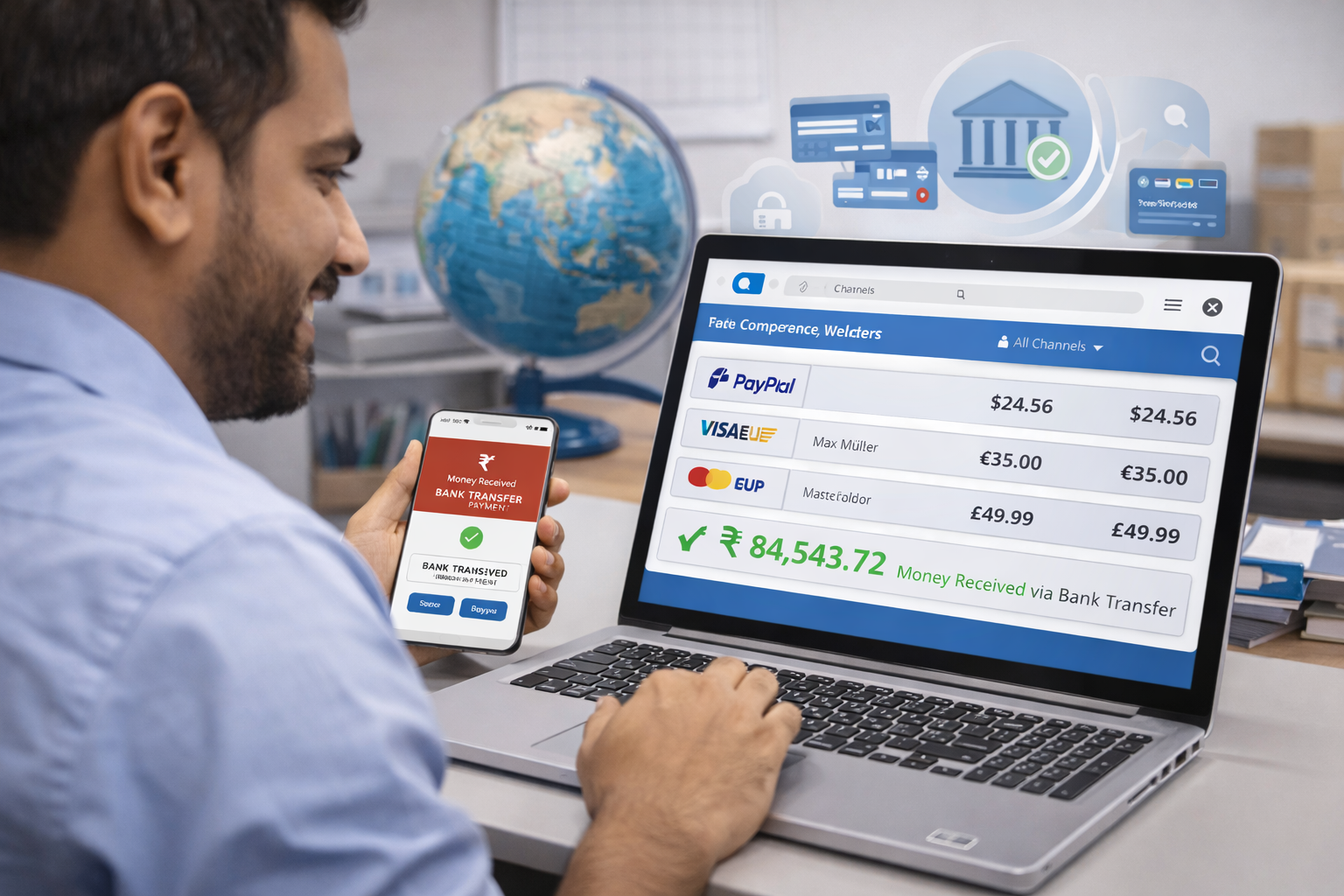
In cross-border e-commerce, payments flow from international buyers to Indian exporters through regulated banking and payment systems. These transactions must comply with foreign exchange regulations and banking norms.
Typically, the payment journey involves:
- Buyer makes payment in foreign currency
- Payment is processed through a platform or service provider
- Funds are credited to the exporter’s Indian bank account
- Transaction details are recorded for regulatory compliance
The choice of payment method directly affects speed, cost, reconciliation, and compliance—factors carefully evaluated under end-to-end eCommerce management services.
Common Payment Modes for International E-Commerce Exports
MSMEs exporting through e-commerce can receive payments using three broad categories of payment methods.
1. E-Commerce Platform Integrated Payment Systems
Many global e-commerce platforms offer integrated payment solutions for exporters.
How This Works
- The platform collects payment from the international buyer
- Funds are settled periodically with the exporter
- Currency conversion is handled by the platform or its payment partner
Advantages
- Simple and convenient for MSMEs
- No need to manage multiple payment gateways
- Platform manages buyer-side payment issues
This method is commonly used by exporters selling through established global marketplaces and is often managed seamlessly through eCommerce management services.
2. Online Payment Gateway Service Providers (OPGSPs)
Online payment gateways allow exporters to receive payments directly from international buyers through digital channels.
Key Features
- Payments are received digitally
- Suitable for smaller-value export transactions
- Faster settlement compared to traditional banking channels
There are transaction value limits applicable to OPGSPs. Exporters must ensure compliance with permitted thresholds—an area where eCommerce management services help MSMEs avoid regulatory issues.
3. International Money Transfer Services
Some MSMEs receive export payments through authorized international money transfer services.
When This Is Used
- For flexibility in receiving payments
- When buyers prefer specific transfer methods
- For certain regions or customer segments
Exporters must ensure the service provider complies with Indian foreign exchange regulations and RBI guidelines.
Realization of Export Proceeds: Timelines MSMEs Must Know
Export proceeds must be realized and repatriated to India within prescribed timelines.
Standard Realization Period
- Exporters must realize the full value of goods within 9 months from the date of export
Special Cases
- For goods exported to overseas warehouses, proceeds must be realized within 15 months
- Authorized banks may allow extensions in certain cases, subject to conditions
Timely realization is mandatory and closely monitored, making proper planning through eCommerce management services highly beneficial.
Role of Banks in Export Payment Processing
Indian banks play a central role in managing export payments.
Key Responsibilities of Banks
- Credit export proceeds to the exporter’s account
- Monitor realization timelines
- Record transactions in export monitoring systems
- Issue electronic realization certificates
Exporters must maintain an active bank account linked to their export operations.
Export Data Processing and Monitoring System (EDPMS)
Export payment details are recorded in a centralized system maintained by banks.
Why This Matters
- Tracks whether export proceeds are realized on time
- Links shipping documents with payment receipts
- Ensures regulatory compliance
Courier exports are typically recorded in EDPMS, while certain postal exports follow a different reporting mechanism—details often managed through eCommerce management services.
Electronic Bank Realisation Certificate (e-BRC)
Once export proceeds are realized, banks generate an Electronic Bank Realisation Certificate (e-BRC).
Importance of e-BRC
- Acts as proof of receipt of export payments
- Required for claiming export benefits and incentives
- Used for reconciliation of export transactions
Exporters should regularly review and reconcile e-BRCs to avoid discrepancies.
Handling Unrealized Export Payments
In some cases, exporters may not realize export proceeds due to disputes, returns, or buyer defaults.
Write-Off Provisions
- Exporters may self-write off unrealized amounts within prescribed limits
- Banks may approve write-offs based on documentary evidence
- Limits depend on exporter status and transaction history
Proper documentation and bank coordination are essential when handling unrealized payments.
Payment Considerations MSMEs Should Keep in Mind
When choosing a payment method, exporters should evaluate:
Key Factors
- Exchange rates applied
- Transfer and processing fees
- Speed of fund transfer
- Transaction limits
- Safety and regulatory compliance
Comparing these factors helps MSMEs select the most reliable and cost-effective payment option—often with guidance from eCommerce management services.
Managing Returns and Refund-Linked Payments
International e-commerce frequently involves returns or rejected shipments.
Payment Impact
- Returned goods may require reversal of export payments
- Re-import processes must align with original export records
- Accurate documentation ensures smooth refunds and adjustments
Maintaining clear records helps exporters manage these scenarios efficiently.
Importance of Compliance in Export Payments
Payment compliance is mandatory in international trade.
Why Compliance Matters
- Avoids penalties and regulatory issues
- Ensures eligibility for export incentives
- Builds credibility with banks and e-commerce platforms
MSMEs must ensure all payment receipts follow prescribed foreign exchange and banking regulations.
Conclusion
Receiving payments from international e-commerce sales involves much more than collecting money—it requires adherence to defined payment channels, timelines, and compliance systems. By understanding payment modes, realization requirements, and banking processes, MSMEs can manage cash flow effectively and reduce operational risks.
A well-structured payment strategy—supported by professional eCommerce management services—ensures timely receipts, regulatory compliance, and smoother export operations, laying a strong foundation for long-term success in global e-commerce.
![[object Object]](/_next/image?url=https%3A%2F%2Fcms.msmestory.com%2Fwp-content%2Fuploads%2F2026%2F04%2Fog-6.webp&w=3840&q=75)
![[object Object]](/_next/image?url=https%3A%2F%2Fcms.msmestory.com%2Fwp-content%2Fuploads%2F2026%2F02%2Fog-13.jpg&w=3840&q=75)
![[object Object]](/_next/image?url=https%3A%2F%2Fcms.msmestory.com%2Fwp-content%2Fuploads%2F2026%2F01%2FMSME-export-roadmap.png&w=3840&q=75)
![[object Object]](/_next/image?url=https%3A%2F%2Fcms.msmestory.com%2Fwp-content%2Fuploads%2F2026%2F01%2Fsocial-media-for-export-orders-for-MSMEs.png&w=3840&q=75)
![[object Object]](/_next/image?url=https%3A%2F%2Fcms.msmestory.com%2Fwp-content%2Fuploads%2F2026%2F01%2Fcost-breakdown-of-selling-on-e-commerce-platforms.png&w=3840&q=75)
![[object Object]](/_next/image?url=https%3A%2F%2Fcms.msmestory.com%2Fwp-content%2Fuploads%2F2026%2F01%2Fsocial-commerce-exports-for-global-sales.png&w=3840&q=75)
![[object Object]](/_next/image?url=https%3A%2F%2Fcms.msmestory.com%2Fwp-content%2Fuploads%2F2026%2F01%2FHow-MSMEs-Can-Export-Using-Global-Marketplaces-1.png&w=3840&q=75)
![[object Object]](/_next/image?url=https%3A%2F%2Fcms.msmestory.com%2Fwp-content%2Fuploads%2F2026%2F01%2Fwrite-off-rules-for-unrealised-export-proceeds.png&w=3840&q=75)
![[object Object]](/_next/image?url=https%3A%2F%2Fcms.msmestory.com%2Fwp-content%2Fuploads%2F2026%2F01%2FHandling-Returns-And-Rejections-in-Global-E-Commerce.png&w=3840&q=75)
![[object Object]](/_next/image?url=https%3A%2F%2Fcms.msmestory.com%2Fwp-content%2Fuploads%2F2026%2F01%2FIGST-refund-process-for-e-commerce-exports.png&w=3840&q=75)
![[object Object]](/_next/image?url=https%3A%2F%2Fcms.msmestory.com%2Fwp-content%2Fuploads%2F2026%2F01%2FRBI-guidelines-for-export-payments.png&w=3840&q=75)
![[object Object]](/_next/image?url=https%3A%2F%2Fcms.msmestory.com%2Fwp-content%2Fuploads%2F2026%2F01%2Fhow-to-reduce-logistics-cost-in-cross-border-e-commerce-1.png&w=3840&q=75)
![[object Object]](/_next/image?url=https%3A%2F%2Fcms.msmestory.com%2Fwp-content%2Fuploads%2F2026%2F01%2FPostal-and-courier-export-weight-limits-and-costs.png&w=3840&q=75)
![[object Object]](/_next/image?url=https%3A%2F%2Fcms.msmestory.com%2Fwp-content%2Fuploads%2F2026%2F01%2FDak-Niryat-Kendra.png&w=3840&q=75)
![[object Object]](/_next/image?url=https%3A%2F%2Fcms.msmestory.com%2Fwp-content%2Fuploads%2F2026%2F01%2FIndia-Post-vs-courier-services-for-e-commerce-exports.png&w=3840&q=75)
![[object Object]](/_next/image?url=https%3A%2F%2Fcms.msmestory.com%2Fwp-content%2Fuploads%2F2026%2F01%2FPackaging-Guidelines-for-E-Commerce-Exports-from-India.png&w=3840&q=75)
![[object Object]](/_next/image?url=https%3A%2F%2Fcms.msmestory.com%2Fwp-content%2Fuploads%2F2026%2F01%2FSEO-Friendly-Product-Descriptions-for-International-E-Commerce.png&w=3840&q=75)
![[object Object]](/_next/image?url=https%3A%2F%2Fcms.msmestory.com%2Fwp-content%2Fuploads%2F2026%2F01%2FProduct-Images-and-Descriptions-for-E-Commerce-Exports.png&w=3840&q=75)
![[object Object]](/_next/image?url=https%3A%2F%2Fcms.msmestory.com%2Fwp-content%2Fuploads%2F2026%2F01%2FHigh-converting-product-catalogue-for-global-buyers.png&w=3840&q=75)