









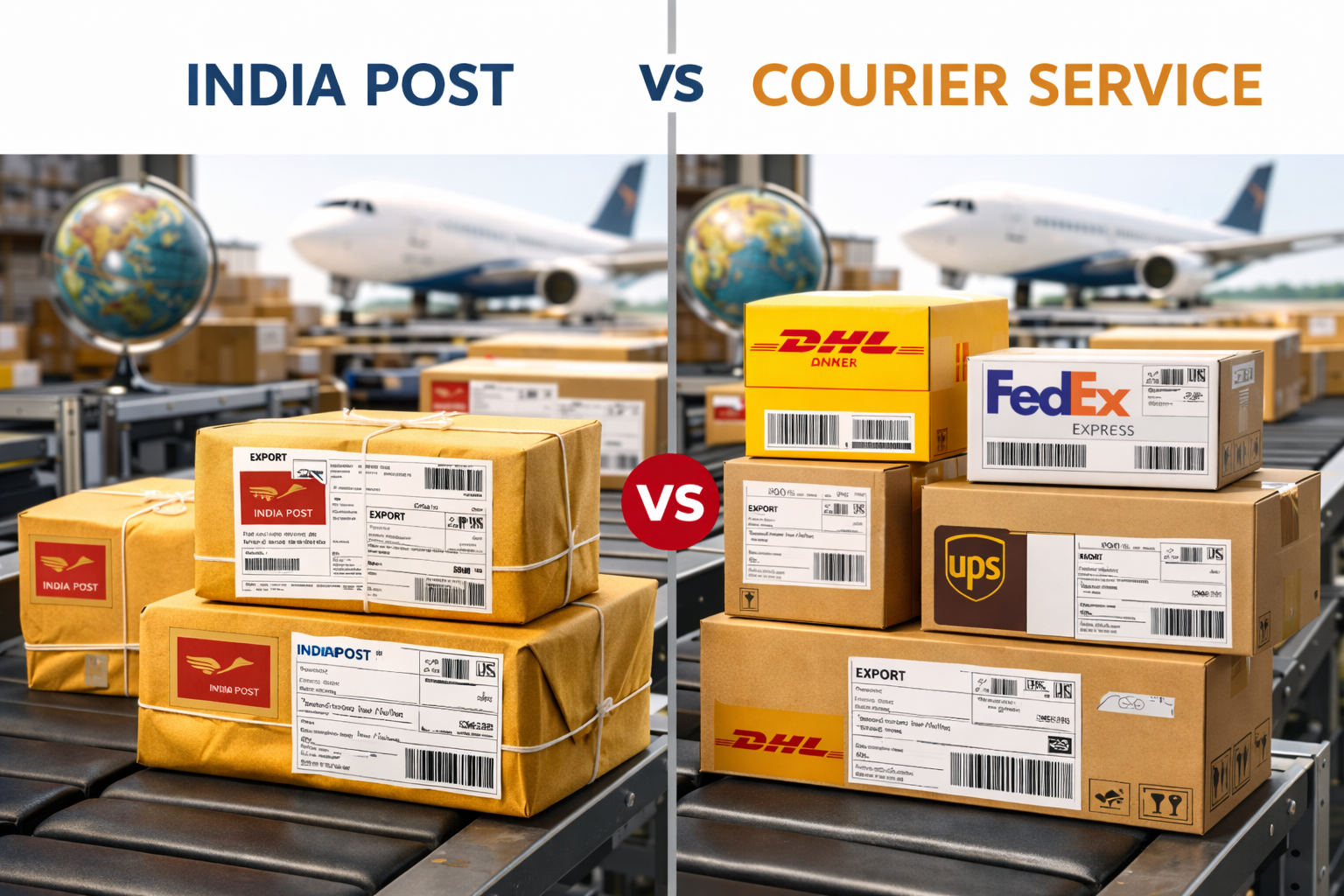
India Post vs Courier Services for E-Commerce Exports: Best Shipping Choice for MSMEs
For Indian MSMEs entering cross-border trade, choosing between India Post vs courier services for e-commerce exports is a critical operational decision. The selected export route has a direct impact on shipping costs, delivery timelines, tracking visibility, customer satisfaction, and long-term repeat sales.
Each route offers unique advantages and limitations. The best choice depends on factors such as product value, shipment weight, delivery urgency, target market expectations, and export frequency. This blog provides a detailed comparison of India Post and courier export routes to help MSMEs choose the option that best fits their export strategy. Many exporters make this decision with the support of professional eCommerce management services that evaluate cost, speed, and compliance together.
Understanding Export Routes for E-Commerce Shipments
E-commerce exports typically involve shipping small parcels directly to international consumers. Unlike bulk exports, these shipments are frequent, order-driven, and highly customer-centric. Every parcel must pass through customs, comply with export documentation requirements, and reach the buyer safely and within an acceptable delivery timeframe.
Both India Post and courier services support cross-border e-commerce exports, but they operate through different logistics networks, clearance mechanisms, and tracking systems. Understanding how these routes function is a key component of structured eCommerce export management services, especially for MSMEs aiming for long-term scalability.
India Post: A Cost-Effective Export Route for MSMEs
India Post plays a critical role in enabling small exporters to access international markets. Through its international postal services and export facilitation infrastructure, it provides MSMEs with a relatively low-cost and accessible entry point into global e-commerce.
Key Features of India Post Exports
- Wide International Reach
India Post connects exporters to a large number of countries, helping MSMEs explore multiple global markets without complex logistics arrangements. - Affordable Shipping for Small Parcels
Postal services are generally cost-effective for lightweight and low-value shipments, making them suitable for price-sensitive products. - Integration with Export Facilitation Centers
Dedicated export facilitation centers support smoother processing and digital clearance of postal export shipments. - Ideal for First-Time Exporters
The postal route is especially suitable for MSMEs that are new to exports and want to test international demand before scaling.
Postal exports are commonly used for low-weight, low-value, and direct-to-consumer shipments such as handicrafts, accessories, small home décor items, and textiles. This route is often recommended during early-stage MSME export planning and compliance setup.
Limitations of India Post
While India Post offers affordability and reach, it also has certain operational limitations that exporters must consider.
Common Challenges
- Longer Delivery Timelines
Postal shipments usually take longer to reach international buyers compared to courier services. - Limited Tracking Visibility
Tracking updates may be partial or delayed in some destination countries. - Weight and Size Restrictions
Different postal services have specific limits on parcel weight and dimensions. - Slower Issue Resolution
Query resolution and shipment support may take longer than private courier networks.
MSMEs exporting time-sensitive, premium, or customized products should carefully evaluate these trade-offs before choosing the postal route.
Courier Services: Speed and Reliability for E-Commerce Exports
Authorized courier services are widely used by exporters who prioritize faster delivery, detailed tracking, and professional logistics support. These services are especially popular among MSMEs that export frequently or handle commercial shipments.
Key Features of Courier Exports
- Faster international transit times
- End-to-end shipment tracking
- Doorstep pickup and delivery
- Better customer support and query resolution
Courier services are particularly suitable for exporters supported by structured eCommerce marketplace management services, where operational efficiency and buyer experience are critical.
Documentation and Compliance Considerations
Both India Post and courier exports require strict compliance with export documentation and customs procedures.
Key Compliance Aspects
- Submission of accurate export documentation
- Customs assessment and clearance
- Shipping bill or postal export clearance
Courier exports typically involve electronic shipping bills filed through designated systems, while postal exports follow a digital clearance process through authorized postal export centers. Many MSMEs rely on end-to-end eCommerce management services to avoid documentation errors and shipment delays.
Which Export Route Should MSMEs Choose?
There is no single “best” export route for all MSMEs. The right choice depends on business goals, product type, and operational priorities.
Choose India Post If:
- You are a first-time exporter
- Your products are lightweight and low-value
- Cost control is a top priority
- Delivery timelines are flexible
Choose Courier Services If:
- Faster delivery is required
- You ship higher-value or commercial goods
- Tracking and reliability are critical for buyers
- You export frequently and at scale
Many MSMEs start with India Post to enter global markets and gradually shift to courier services as order volumes increase and customer expectations evolve.
Conclusion
There is no one-size-fits-all answer when choosing between India Post and courier services for e-commerce exports. India Post offers affordability and accessibility, making it ideal for early-stage and low-value exports, while courier services provide speed, transparency, and reliability for growing businesses.
For MSMEs, aligning the export route with product value, customer expectations, and long-term growth plans—often with the help of professional eCommerce management services—can significantly improve operational efficiency and global customer satisfaction.
![[object Object]](/_next/image?url=https%3A%2F%2Fcms.msmestory.com%2Fwp-content%2Fuploads%2F2026%2F04%2Fog-6.webp&w=3840&q=75)
![[object Object]](/_next/image?url=https%3A%2F%2Fcms.msmestory.com%2Fwp-content%2Fuploads%2F2026%2F02%2Fog-13.jpg&w=3840&q=75)
![[object Object]](/_next/image?url=https%3A%2F%2Fcms.msmestory.com%2Fwp-content%2Fuploads%2F2026%2F01%2FMSME-export-roadmap.png&w=3840&q=75)
![[object Object]](/_next/image?url=https%3A%2F%2Fcms.msmestory.com%2Fwp-content%2Fuploads%2F2026%2F01%2Fsocial-media-for-export-orders-for-MSMEs.png&w=3840&q=75)
![[object Object]](/_next/image?url=https%3A%2F%2Fcms.msmestory.com%2Fwp-content%2Fuploads%2F2026%2F01%2Fcost-breakdown-of-selling-on-e-commerce-platforms.png&w=3840&q=75)
![[object Object]](/_next/image?url=https%3A%2F%2Fcms.msmestory.com%2Fwp-content%2Fuploads%2F2026%2F01%2Fsocial-commerce-exports-for-global-sales.png&w=3840&q=75)
![[object Object]](/_next/image?url=https%3A%2F%2Fcms.msmestory.com%2Fwp-content%2Fuploads%2F2026%2F01%2FHow-MSMEs-Can-Export-Using-Global-Marketplaces-1.png&w=3840&q=75)
![[object Object]](/_next/image?url=https%3A%2F%2Fcms.msmestory.com%2Fwp-content%2Fuploads%2F2026%2F01%2Fwrite-off-rules-for-unrealised-export-proceeds.png&w=3840&q=75)
![[object Object]](/_next/image?url=https%3A%2F%2Fcms.msmestory.com%2Fwp-content%2Fuploads%2F2026%2F01%2FHandling-Returns-And-Rejections-in-Global-E-Commerce.png&w=3840&q=75)
![[object Object]](/_next/image?url=https%3A%2F%2Fcms.msmestory.com%2Fwp-content%2Fuploads%2F2026%2F01%2FIGST-refund-process-for-e-commerce-exports.png&w=3840&q=75)
![[object Object]](/_next/image?url=https%3A%2F%2Fcms.msmestory.com%2Fwp-content%2Fuploads%2F2026%2F01%2FRBI-guidelines-for-export-payments.png&w=3840&q=75)
![[object Object]](/_next/image?url=https%3A%2F%2Fcms.msmestory.com%2Fwp-content%2Fuploads%2F2026%2F01%2Fhow-MSMEs-receive-payments-from-international-e-commerce-sales.png&w=3840&q=75)
![[object Object]](/_next/image?url=https%3A%2F%2Fcms.msmestory.com%2Fwp-content%2Fuploads%2F2026%2F01%2Fhow-to-reduce-logistics-cost-in-cross-border-e-commerce-1.png&w=3840&q=75)
![[object Object]](/_next/image?url=https%3A%2F%2Fcms.msmestory.com%2Fwp-content%2Fuploads%2F2026%2F01%2FPostal-and-courier-export-weight-limits-and-costs.png&w=3840&q=75)
![[object Object]](/_next/image?url=https%3A%2F%2Fcms.msmestory.com%2Fwp-content%2Fuploads%2F2026%2F01%2FDak-Niryat-Kendra.png&w=3840&q=75)
![[object Object]](/_next/image?url=https%3A%2F%2Fcms.msmestory.com%2Fwp-content%2Fuploads%2F2026%2F01%2FPackaging-Guidelines-for-E-Commerce-Exports-from-India.png&w=3840&q=75)
![[object Object]](/_next/image?url=https%3A%2F%2Fcms.msmestory.com%2Fwp-content%2Fuploads%2F2026%2F01%2FSEO-Friendly-Product-Descriptions-for-International-E-Commerce.png&w=3840&q=75)
![[object Object]](/_next/image?url=https%3A%2F%2Fcms.msmestory.com%2Fwp-content%2Fuploads%2F2026%2F01%2FProduct-Images-and-Descriptions-for-E-Commerce-Exports.png&w=3840&q=75)
![[object Object]](/_next/image?url=https%3A%2F%2Fcms.msmestory.com%2Fwp-content%2Fuploads%2F2026%2F01%2FHigh-converting-product-catalogue-for-global-buyers.png&w=3840&q=75)