




In the face of India’s growing waste management challenges, a young innovator from Delhi has developed an AI-driven robot that identifies and sorts waste with remarkable efficiency. This breakthrough aims to transform how communities handle litter, blending technology with environmental responsibility.
Spotting a Problem During a School Trip
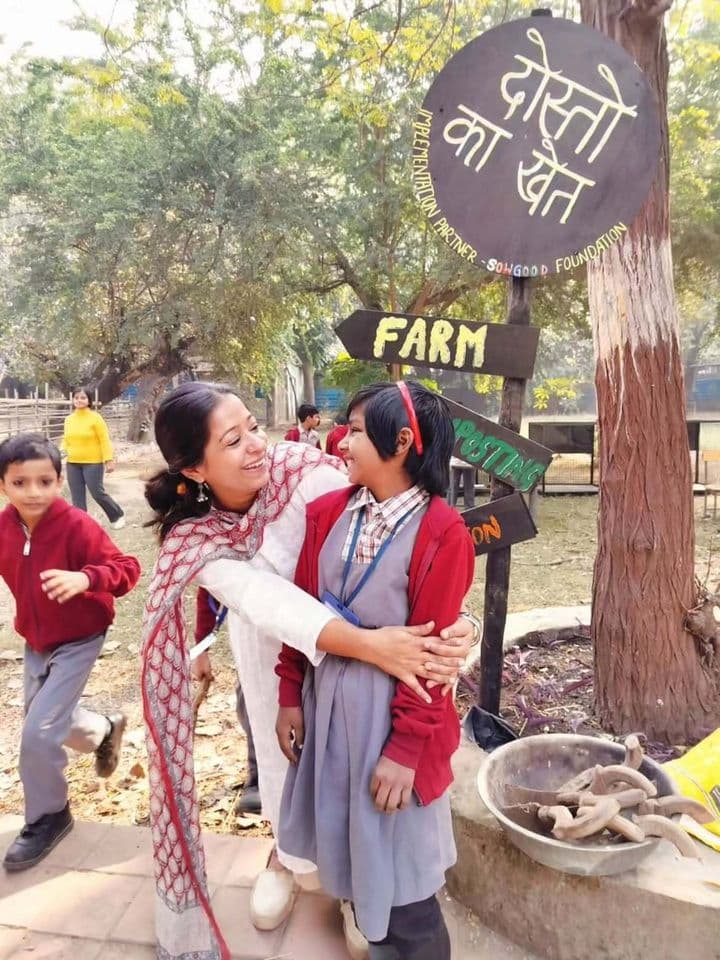
In 2023, 17-year-old Mahi Malhani visited Sundar Nursery, a heritage park in Delhi. While learning about the park’s history and restoration, she noticed litter such as wrappers, bottles, and food waste scattered on the ground, even near dustbins.
“I saw trash everywhere, even close to bins,” Mahi recalls. “People often take the easy way and throw waste wherever they want. I wanted to use technology to help fix this, not just tell people to clean up.”
India’s Huge Waste Challenge
India faces a significant challenge with solid waste management. According to a 2024 Press Information Bureau release citing the Central Pollution Control Board’s 2021-22 report, the country produces approximately 170,338 tonnes of solid waste daily, but only 91,512 tonnes are treated.
For Mahi, a Class 12 student at Amity International School in Mayur Vihar, Delhi, this pressing issue became the foundation of a creative solution.
From Observation to Inspiration
“It was our annual school trip, usually to heritage parks to learn history,” Mahi explains. “Even when bins were present, waste didn’t always make it into them. That made me realise the problem had two parts: littering, and the balance between convenience and responsibility. There had to be a way to bring these together, or maybe get rid of the problem altogether.”
Early Interest in Technology
Mahi has been passionate about technology from a young age. She enjoyed dismantling small gadgets and old electronics, alongside learning programming languages such as Python, C++, and JavaScript.
“I wanted to know how machines think and move. If I could teach them to act smartly — like humans but better — they could help solve everyday problems, like handling waste efficiently.”
Turning Ideas into a Working Robot
Motivated by her observations, Mahi began sketching solutions and conducting research aimed at creating a device that could automate waste collection and sorting while combining convenience with responsibility.
Her idea culminated in the creation of TRASHbot — an autonomous robot designed to identify, collect, and sort waste independently.
Between August and September 2023, Mahi thoroughly analyzed the challenges and determined that the solution needed to be intelligent, self-operating, and user-friendly.
Getting Expert Help
To convert her concept into a tangible product, Mahi reached out to Rancho Labs, a robotics and IoT centre at IIT Delhi. During a summer workshop in August 2024, she engaged with experts at the IIT campus, gaining valuable technical mentorship from Rancho Labs instructors and her school computer teacher, Mrs. Deepshikha Sethi.
“They helped and guided us,” says Mahi. “They explained practical things about robotics and the Internet of Things.” Their advice refined her ideas while she developed the prototype independently, a source of pride for her.
How TRASHbot Works
Mahi envisioned something beyond a mere moving dustbin. TRASHbot is designed to detect trash, navigate toward it, sort it accurately, and engage users to encourage usage.
“I wanted it to feel alive — like a companion that helps keep things clean,” explains Mahi.
The robot performs two main functions: safe movement and precise waste sorting.
- Movement: TRASHbot can be controlled via a smartphone app or operate autonomously. It employs ultrasonic sensors, akin to car parking sensors, that emit sound waves to detect nearby obstacles, enabling it to avoid collisions.
- Sorting: Using a camera paired with an AI model called YOLOv3, the robot captures images of waste items and compares them to stored references to classify them as biodegradable or non-biodegradable. Actuated motors then direct the waste into the appropriate compartment.
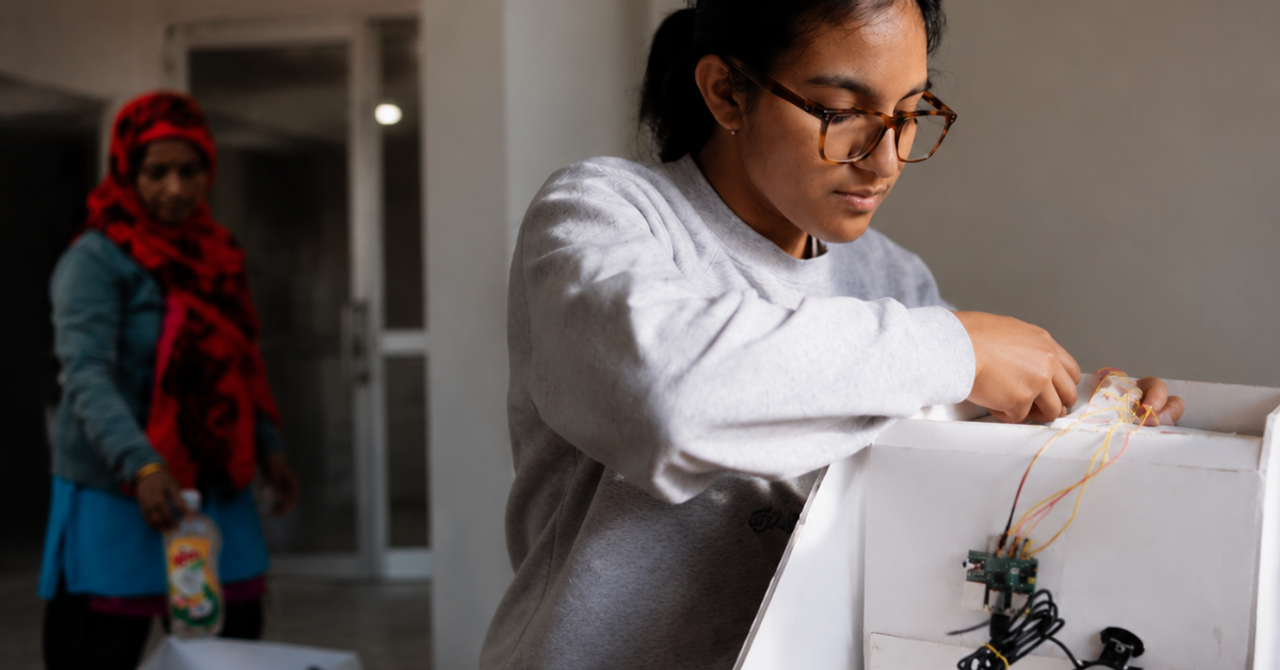
The robot houses two miniature computers: a Raspberry Pi for brain-like image recognition and decision-making, and an Arduino Uno managing movement. Six small motors control mobility, while two others operate the waste compartments—all within a lightweight frame designed for balance and agility.
“It sees, recognizes, and sorts just like a person, but faster and without mistakes,” says Mahi.
Testing TRASHbot at Home and School
Initial trials took place at Mahi’s home and subsequently in her school cafeteria during lunch hours. Dr SK Singhal, Head of Physics at Amity International, noted, “Watching it move between tables collecting wrappers was amazing. It engages students with its lights and sensors, making them feel part of cleaning without effort.”
Bringing TRASHbot to Residential Societies
Following school testing, TRASHbot was introduced to residential societies. Gita Nath, joint secretary of Lotus Boulevard Society, remarked, “The robot sorts waste automatically. You just throw it in, and it puts it in the right bin. It’s convenient and innovative, making waste management easy.”
Yash, a 17-year-old resident, added, “At events with food stalls, the robot was very helpful. It automatically sorted all waste, helping people dispose responsibly.”
Making Cleanliness Easy as Using an App
From March 2025 onwards, TRASHbot has been deployed in societies in Noida and with a municipal corporation in Udaipur, with 15 to 20 direct users so far. The robot identifies waste correctly about 85% of the time, sorts it accurately 90% of the time, and avoids obstacles 98% of the time. It operates for roughly two and a half hours on a single charge, sufficient for multiple collection rounds.
Users can manually control TRASHbot via its app or set it to automatic mode to roam freely, encouraging proper waste disposal without needing to reach traditional dustbins.
“I wanted anyone, even first-time users, to feel comfortable with it fast,” Mahi explains.
Challenges in Building TRASHbot
The project encountered several obstacles. Early versions experienced voltage drops causing reboots and Bluetooth delays slowing waste identification and sorting. Initial costs were high — nearly Rs 20,000 — but improvements reduced this to Rs 7,000, and potentially Rs 4,000 with better parts.
Real-world conditions such as rough terrain, rain, crowds, and continuous movement required sensor and mobility refinements.
Each challenge became a problem for Mahi to solve to enhance the robot’s strength, safety, and efficiency.
Recognition and Awards
What started as a school project gained significant recognition. In 2025, Mahi ranked first in Delhi and second nationally at the World Robot Olympiad virtual championship.
She was a finalist at the Inter-Amity Science Fair, Vasudha, and TRASHbot was selected among the top 50 AI projects out of over 3,500 entries at the India AI Impact Summit.
“The judges’ questions helped me improve TRASHbot and think about real uses. Competitions also introduced me to other young innovators, inspiring better design and functions,” Mahi shares.
Changing Habits and Environments
Residents report TRASHbot has influenced daily routines. Gita notes, “We don’t have to sort waste by hand anymore; it does it automatically. Cleanliness has improved in our society.”
Dr Singhal adds, “At school, the robot keeps cafeterias clean during busy hours. Students learn about recycling, AI, and responsibility without even noticing.”
Yash observes, “It’s teaching people habits while picking up trash. Students and neighbors are more aware because the robot makes cleaning visible and fun.”
The design incorporates LED lights signaling readiness to accept waste, with robot movements drawing attention and encouraging engagement. “People react positively when they see it moving. It’s like it’s inviting them to join,” says Mahi.
Plans for the Future
Mahi envisions expanding TRASHbot’s capabilities. Currently sorting waste into biodegradable and non-biodegradable categories, she plans to add five classifications: plastic, metal, glass, biodegradable, and non-biodegradable.
Additional upgrades under consideration include Wi-Fi connectivity for monitoring waste collection remotely, solar panels to extend battery life, and app adjustments tailored for larger public spaces.
“Rural areas have unique challenges, such as rough terrain and fewer facilities. The goal is to make TRASHbot work well everywhere, not just cities,” she explains.
A Simple Solution to a Big Question
TRASHbot originated from one simple question: why do people still drop waste on the ground despite nearby dustbins?
Now, Mahi’s innovative answer is a robot that approaches trash, simplifies disposal, and gently reminds people that maintaining cleanliness begins with small actions.
Since its first test in March, TRASHbot has demonstrated the impact of a teenager’s creativity harnessed to solve an everyday challenge.
All images courtesy of Mahi Malhani.