







Mandatory Licenses and Certifications for E-Commerce Exports
Cross-border e-commerce has opened global markets for Indian sellers, allowing MSMEs to reach international customers directly through online platforms. However, before products are listed on global marketplaces or shipped overseas, exporters must ensure they meet all mandatory licensing, certification, and regulatory requirements.
Failure to comply with these requirements can result in customs delays, penalties, shipment rejection, or even suspension from international e-commerce platforms. This article explains the key licenses, export policy checks, and certifications required for e-commerce exports from India, with a special focus on MSMEs and first-time exporters.
Understanding Product Classification for E-Commerce Exports
The foundation of compliant e-commerce exporting begins with identifying the correct ITC (HS) code for each product. Product classification determines how a product is treated under export regulations and what approvals may apply.
The ITC-HS (Indian Trade Classification – Harmonised System) code helps authorities determine:
- Whether a product is eligible for export
- If any license or authorization is required
- Whether product-specific certifications apply
- If the product is restricted or prohibited
Incorrect classification can lead to regulatory violations, customs queries, or shipment issues in India or the destination country. Exporters should verify product classification carefully before initiating exports or onboarding products on global platforms. Many MSMEs rely on eCommerce management services to avoid classification-related risks.
Export Policy Compliance: Free, Restricted, and Prohibited Goods
Export policy compliance is closely linked to product classification. Based on the ITC-HS code, products fall into one of three export policy categories:
Free Export Goods
These goods can be exported without obtaining special permission. Most consumer products sold through e-commerce channels fall under this category, provided other regulatory conditions are met.
Restricted Export Goods
Restricted goods require prior authorization from the relevant authority. Export is allowed only after specific conditions and approvals are fulfilled.
Prohibited Export Goods
Prohibited goods cannot be exported under any circumstances due to environmental, security, or legal restrictions.
Before listing products on international marketplaces, exporters must confirm that their goods are permitted under the applicable export policy. MSMEs often seek MSME export planning, registration & compliance support at this stage to avoid costly mistakes.
Importer-Exporter Code (IEC): A Mandatory Requirement
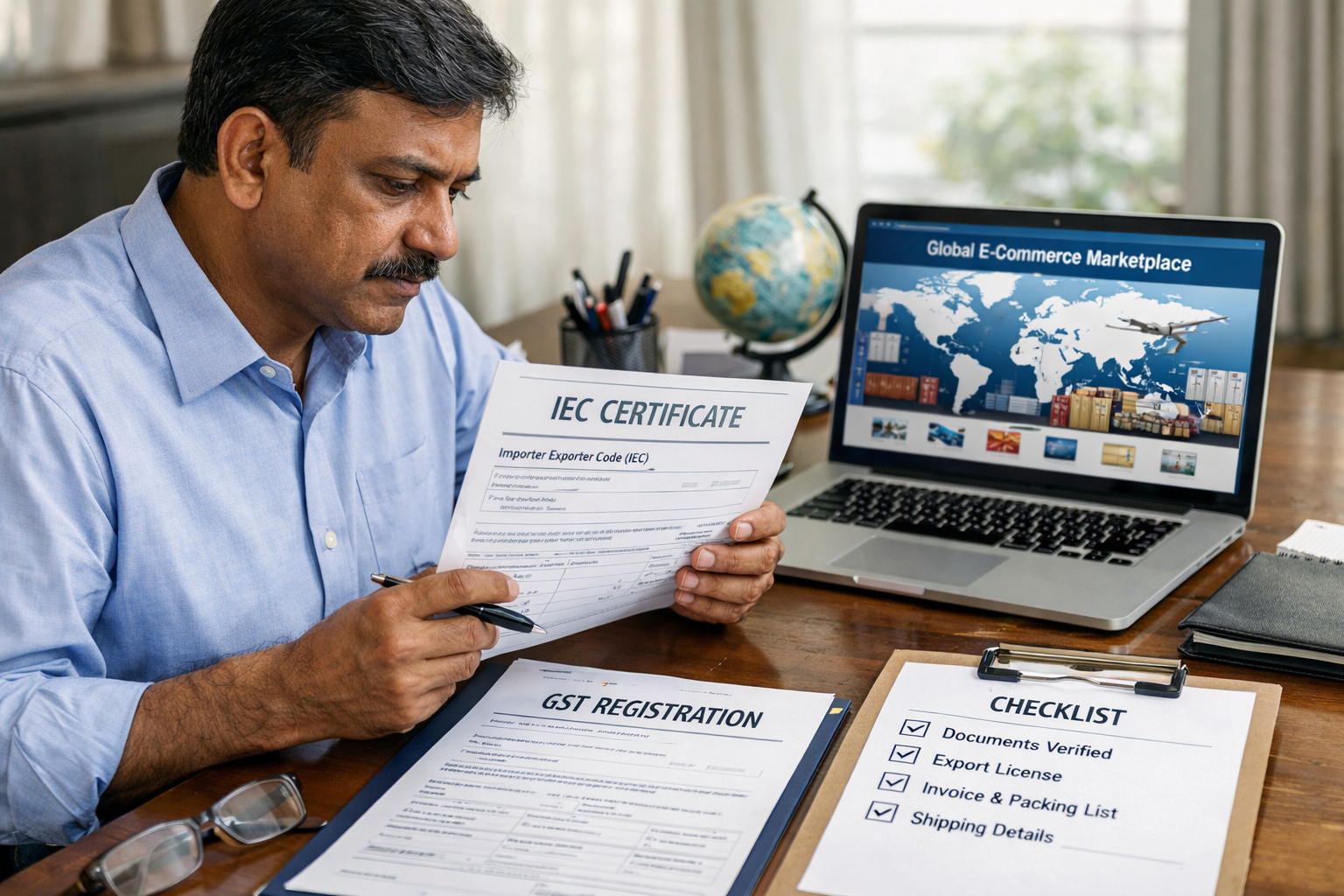
An Importer-Exporter Code (IEC) is mandatory for all businesses exporting goods from India, including those using e-commerce channels.
The IEC:
- Acts as a unique business identification number
- Is required for customs clearance and shipping bills
- Is necessary for receiving foreign exchange payments
- Applies to courier and postal exports as well
IEC is issued electronically and remains valid for the lifetime of the business. Without an IEC, exporters cannot legally complete export transactions.
GST Registration for E-Commerce Exports
GST registration is another essential requirement for exporters. Even though exports are treated as zero-rated supplies, a valid GSTIN is required for:
- Filing shipping and export documents
- Claiming IGST refunds
- Complying with customs and courier procedures
Exporting without GST registration is not permitted. Proper GST compliance ensures smoother customs processing and financial reconciliation.
Product-Specific Certifications and Regulatory Approvals
Certain product categories require additional certifications or approvals from designated government bodies before export. These certifications ensure product quality, safety, and compliance with international standards.
Examples include:
- Pharmaceutical products requiring approval from drug regulatory authorities
- Organic products certified by designated agricultural agencies
- Food and agricultural products subject to safety and phytosanitary norms
- AYUSH, herbal, and wellness products requiring regulatory clearance
- Cosmetics and personal care products complying with ingredient and labeling standards
Exporters should identify product-specific requirements well in advance. Many businesses manage these complexities through end-to-end eCommerce management services that integrate compliance into export operations.
Compliance with Destination Country Regulations
E-commerce exporters must also comply with the import regulations of the buyer’s country. These may include:
- Product safety and quality standards
- Labeling and packaging rules
- Country-specific certifications
- Environmental or health-related regulations
Failure to meet destination-country requirements can result in shipment rejection, product returns, or financial losses. Aligning domestic compliance with international regulations is critical for smooth cross-border e-commerce.
Why Regulatory Due Diligence Matters
Before starting e-commerce exports, MSMEs should ensure:
- Accurate ITC-HS classification
- Clear export policy eligibility
- Valid IEC and GST registration
- Applicable product-specific certifications
- Awareness of destination-country compliance norms
Strong regulatory preparedness reduces risk, speeds up customs clearance, and builds confidence among international buyers and e-commerce platforms. This is why many exporters work with strategic eCommerce management support instead of handling compliance reactively.
Conclusion
E-commerce exports present immense growth opportunities for Indian MSMEs, but success depends on strict regulatory compliance. Licenses, certifications, and export policy adherence are not optional—they are the foundation of sustainable international trade.
By understanding product classification, securing mandatory registrations, and meeting certification requirements, exporters can confidently scale their cross-border e-commerce operations while avoiding regulatory setbacks. A compliance-first approach not only reduces risk but also strengthens credibility in global markets.
![[object Object]](/_next/image?url=https%3A%2F%2Fcms.msmestory.com%2Fwp-content%2Fuploads%2F2026%2F04%2Fog-6.webp&w=3840&q=75)
![[object Object]](/_next/image?url=https%3A%2F%2Fcms.msmestory.com%2Fwp-content%2Fuploads%2F2026%2F02%2Fog-13.jpg&w=3840&q=75)
![[object Object]](/_next/image?url=https%3A%2F%2Fcms.msmestory.com%2Fwp-content%2Fuploads%2F2026%2F01%2FMSME-export-roadmap.png&w=3840&q=75)
![[object Object]](/_next/image?url=https%3A%2F%2Fcms.msmestory.com%2Fwp-content%2Fuploads%2F2026%2F01%2Fsocial-media-for-export-orders-for-MSMEs.png&w=3840&q=75)
![[object Object]](/_next/image?url=https%3A%2F%2Fcms.msmestory.com%2Fwp-content%2Fuploads%2F2026%2F01%2Fcost-breakdown-of-selling-on-e-commerce-platforms.png&w=3840&q=75)
![[object Object]](/_next/image?url=https%3A%2F%2Fcms.msmestory.com%2Fwp-content%2Fuploads%2F2026%2F01%2Fsocial-commerce-exports-for-global-sales.png&w=3840&q=75)
![[object Object]](/_next/image?url=https%3A%2F%2Fcms.msmestory.com%2Fwp-content%2Fuploads%2F2026%2F01%2FHow-MSMEs-Can-Export-Using-Global-Marketplaces-1.png&w=3840&q=75)
![[object Object]](/_next/image?url=https%3A%2F%2Fcms.msmestory.com%2Fwp-content%2Fuploads%2F2026%2F01%2Fwrite-off-rules-for-unrealised-export-proceeds.png&w=3840&q=75)
![[object Object]](/_next/image?url=https%3A%2F%2Fcms.msmestory.com%2Fwp-content%2Fuploads%2F2026%2F01%2FHandling-Returns-And-Rejections-in-Global-E-Commerce.png&w=3840&q=75)
![[object Object]](/_next/image?url=https%3A%2F%2Fcms.msmestory.com%2Fwp-content%2Fuploads%2F2026%2F01%2FIGST-refund-process-for-e-commerce-exports.png&w=3840&q=75)
![[object Object]](/_next/image?url=https%3A%2F%2Fcms.msmestory.com%2Fwp-content%2Fuploads%2F2026%2F01%2FRBI-guidelines-for-export-payments.png&w=3840&q=75)
![[object Object]](/_next/image?url=https%3A%2F%2Fcms.msmestory.com%2Fwp-content%2Fuploads%2F2026%2F01%2Fhow-MSMEs-receive-payments-from-international-e-commerce-sales.png&w=3840&q=75)
![[object Object]](/_next/image?url=https%3A%2F%2Fcms.msmestory.com%2Fwp-content%2Fuploads%2F2026%2F01%2Fhow-to-reduce-logistics-cost-in-cross-border-e-commerce-1.png&w=3840&q=75)
![[object Object]](/_next/image?url=https%3A%2F%2Fcms.msmestory.com%2Fwp-content%2Fuploads%2F2026%2F01%2FPostal-and-courier-export-weight-limits-and-costs.png&w=3840&q=75)
![[object Object]](/_next/image?url=https%3A%2F%2Fcms.msmestory.com%2Fwp-content%2Fuploads%2F2026%2F01%2FDak-Niryat-Kendra.png&w=3840&q=75)
![[object Object]](/_next/image?url=https%3A%2F%2Fcms.msmestory.com%2Fwp-content%2Fuploads%2F2026%2F01%2FIndia-Post-vs-courier-services-for-e-commerce-exports.png&w=3840&q=75)
![[object Object]](/_next/image?url=https%3A%2F%2Fcms.msmestory.com%2Fwp-content%2Fuploads%2F2026%2F01%2FPackaging-Guidelines-for-E-Commerce-Exports-from-India.png&w=3840&q=75)
![[object Object]](/_next/image?url=https%3A%2F%2Fcms.msmestory.com%2Fwp-content%2Fuploads%2F2026%2F01%2FSEO-Friendly-Product-Descriptions-for-International-E-Commerce.png&w=3840&q=75)
![[object Object]](/_next/image?url=https%3A%2F%2Fcms.msmestory.com%2Fwp-content%2Fuploads%2F2026%2F01%2FProduct-Images-and-Descriptions-for-E-Commerce-Exports.png&w=3840&q=75)
![[object Object]](/_next/image?url=https%3A%2F%2Fcms.msmestory.com%2Fwp-content%2Fuploads%2F2026%2F01%2FHigh-converting-product-catalogue-for-global-buyers.png&w=3840&q=75)