








Trademark Classes Explained in Simple Terms
When businesses apply for trademark registration, one of the most confusing parts of the process is selecting the correct trademark class. Many entrepreneurs assume that registering a trademark automatically protects their brand everywhere, but trademark protection actually depends on the category of goods or services associated with the business.
This is where trademark classes come into play. Understanding trademark classes explained in simple terms helps business owners file their applications correctly and ensure their brand receives proper legal protection.
What Are Trademark Classes?
Trademark classes are categories used by trademark authorities to organize goods and services. When you register a trademark, you must specify the class that represents the products or services your business offers.
The international classification system used for trademarks is known as the Nice Classification, which divides trademarks into 45 different classes.
These classes help the trademark registry determine whether a new trademark conflicts with an existing one in the same industry.
Why Trademark Classes Matter
Trademark classes play a critical role in protecting brand identity. Registering a trademark under the correct class ensures that your brand is legally protected for the products or services you provide.
For example:
- A clothing brand registering its name should apply under Class 25.
- A restaurant business would typically apply under Class 43.
Even if two businesses use similar names, they may coexist legally if they operate in completely different trademark classes and do not create customer confusion.
Choosing the correct class is essential to ensure your trademark protection applies to your business activities.
The Two Main Categories of Trademark Classes
The 45 trademark classes are divided into two major groups.
Goods Classes (Class 1–34)
These classes cover physical products and manufactured goods.
Examples include:
- chemicals
- pharmaceuticals
- clothing
- electronics
- food products
Businesses that sell tangible products usually register their trademarks within these classes.
Services Classes (Class 35–45)
These classes apply to businesses that provide services instead of physical goods.
Examples include:
- advertising and marketing services
- education and training
- legal services
- restaurant and hospitality services
- software and technology services
Service-based companies typically choose classes within this range.
Examples of Popular Trademark Classes
Many startups and small businesses fall into a few commonly used trademark classes.
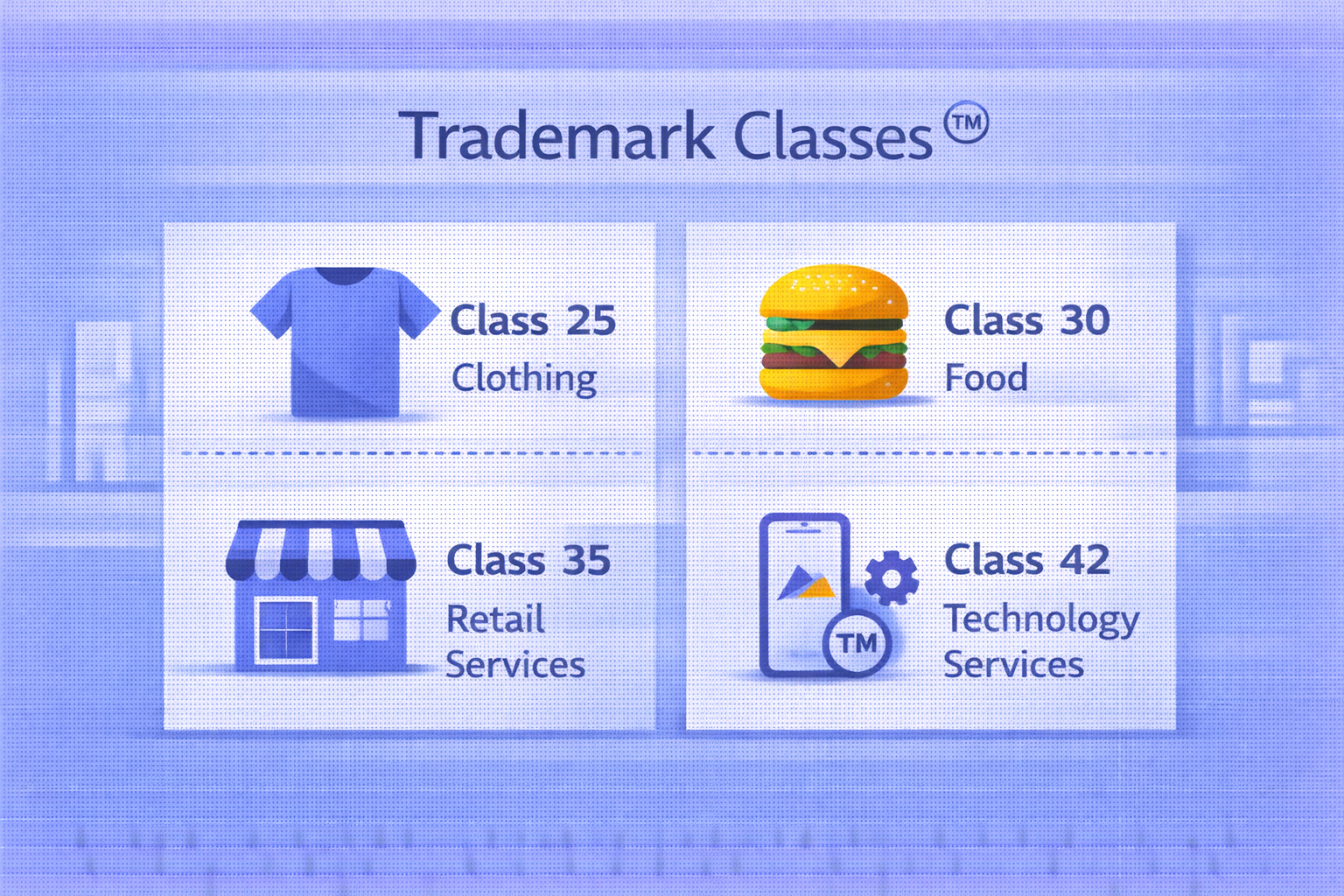
Class 25 – Clothing and Apparel
This class includes:
- clothing
- footwear
- headwear
Fashion brands and apparel startups commonly register under this category.
Class 30 – Food Products
This class covers many food items such as:
- coffee
- tea
- bakery items
- spices
- confectionery
Food brands often register their trademarks in this class.
Class 35 – Advertising and Retail Services
Class 35 includes services related to:
- marketing
- online retail
- advertising
- business management
Many e-commerce businesses register trademarks under this class.
Class 42 – Technology and Software Services
Technology companies providing services like:
- software development
- cloud computing
- website design
- IT consulting
typically apply under this class.
Class 43 – Restaurants and Hospitality
Restaurants, cafés, hotels, and catering services generally register under Class 43.
Can a Trademark Be Registered in Multiple Classes?
Yes. Businesses can register their trademark in more than one class if their activities span multiple categories.
For example:
A clothing brand that also sells products through its own online store may register in:
- Class 25 for clothing
- Class 35 for retail services
Registering multiple classes provides broader protection.
However, each additional class requires a separate government filing fee.
How to Choose the Right Trademark Class
Selecting the correct trademark class is one of the most important steps in the trademark registration process.
Here are some practical steps to help.
Identify Your Core Business Activity
Focus on the main product or service your business provides.
Consider Future Expansion
If you plan to expand into related products or services, you may consider registering additional classes.
Review Existing Trademarks
Studying how similar businesses classify their trademarks can provide useful guidance.
Seek Professional Advice
Trademark professionals can help determine the most appropriate classes and reduce the risk of filing errors.
Common Mistakes When Choosing Trademark Classes
Many trademark applications face issues because the wrong class was selected.
Common mistakes include:
❌ selecting a class that does not match the business activity
❌ choosing only one class when multiple are needed
❌ misunderstanding the difference between goods and services
❌ failing to consider future product expansion
Choosing the correct class early prevents these problems.
What Happens If You Choose the Wrong Class?
If a trademark is registered under the wrong class, it may not protect your business effectively.
This can lead to situations where:
- competitors register similar trademarks in the correct class
- legal disputes arise
- additional applications become necessary
In some cases, businesses must file new trademark applications to obtain proper protection.
How Trademark Classes Help Prevent Conflicts
Trademark classes help maintain fairness in the marketplace.
For example:
Two companies may legally use similar names if they operate in completely unrelated industries.
Example:
- “Lotus” for a car brand
- “Lotus” for a restaurant
Because these businesses belong to different trademark classes, they may coexist without causing confusion.
Why Trademark Classes Are Important for Startups
Startups often build strong brands quickly through marketing and social media. Choosing the right trademark classes ensures that the brand identity remains protected as the business grows.
Proper classification helps startups:
✔ protect their brand in relevant industries
✔ prevent competitors from copying the name
✔ expand safely into new markets
✔ build a valuable intellectual property asset
Understanding trademark classes early can save businesses time, money, and legal complications.
Final Thoughts
Understanding trademark classes explained in simple terms helps business owners navigate the trademark registration process with confidence. By choosing the correct class, businesses ensure that their brand name, logo, or slogan receives proper legal protection.
Trademark registration is more than just filing paperwork — it is a strategic step in protecting the identity and reputation of your business.
Choosing the right trademark class is an essential step in protecting your brand. If you’re planning to register your trademark and want expert guidance on the process, explore the complete trademark registration process in India and learn how to secure your brand properly.
![[object Object]](/_next/image?url=https%3A%2F%2Fcms.msmestory.com%2Fwp-content%2Fuploads%2F2026%2F03%2Fmistakes-to-avoid-when-filing-a-trademark-application.png&w=3840&q=75)
![[object Object]](/_next/image?url=https%3A%2F%2Fcms.msmestory.com%2Fwp-content%2Fuploads%2F2026%2F03%2Fonline-trademark-registration.png&w=3840&q=75)
![[object Object]](/_next/image?url=https%3A%2F%2Fcms.msmestory.com%2Fwp-content%2Fuploads%2F2026%2F03%2Fapply-for-trademark-without-a-lawyer.png&w=3840&q=75)
![[object Object]](/_next/image?url=https%3A%2F%2Fcms.msmestory.com%2Fwp-content%2Fuploads%2F2026%2F03%2Findividual-vs-company-trademark-application.png&w=3840&q=75)
![[object Object]](/_next/image?url=https%3A%2F%2Fcms.msmestory.com%2Fwp-content%2Fuploads%2F2026%2F03%2Ftrademark-classes-explained-in-simple-terms-1.png&w=3840&q=75)
![[object Object]](/_next/image?url=https%3A%2F%2Fcms.msmestory.com%2Fwp-content%2Fuploads%2F2026%2F03%2Fhow-long-does-it-take-to-get-a-trademark-registered.png&w=3840&q=75)
![[object Object]](/_next/image?url=https%3A%2F%2Fcms.msmestory.com%2Fwp-content%2Fuploads%2F2026%2F03%2Fhow-much-does-trademark-registration-cost.png&w=3840&q=75)
![[object Object]](/_next/image?url=https%3A%2F%2Fcms.msmestory.com%2Fwp-content%2Fuploads%2F2026%2F03%2Fdocuments-required-for-trademark-registration1.png&w=3840&q=75)
![[object Object]](/_next/image?url=https%3A%2F%2Fcms.msmestory.com%2Fwp-content%2Fuploads%2F2026%2F03%2FStep-by-step-trademark-registration-process-for-startups.png&w=3840&q=75)
![[object Object]](/_next/image?url=https%3A%2F%2Fcms.msmestory.com%2Fwp-content%2Fuploads%2F2026%2F03%2Fdifference-between-trademark-and-company-registration.png&w=3840&q=75)
![[object Object]](/_next/image?url=https%3A%2F%2Fcms.msmestory.com%2Fwp-content%2Fuploads%2F2026%2F03%2Fmyths-about-trademark-protection.png&w=3840&q=75)
![[object Object]](/_next/image?url=https%3A%2F%2Fcms.msmestory.com%2Fwp-content%2Fuploads%2F2026%2F03%2FIs-a-logo-automatically-protected.png&w=3840&q=75)
![[object Object]](/_next/image?url=https%3A%2F%2Fcms.msmestory.com%2Fwp-content%2Fuploads%2F2026%2F02%2Fwhen-should-a-startup-apply-for-a-trademark.png&w=3840&q=75)
![[object Object]](/_next/image?url=https%3A%2F%2Fcms.msmestory.com%2Fwp-content%2Fuploads%2F2026%2F02%2FWhat-happens-if-I-dont-trademark-my-brand-name.png&w=3840&q=75)
![[object Object]](/_next/image?url=https%3A%2F%2Fcms.msmestory.com%2Fwp-content%2Fuploads%2F2026%2F02%2FHow-to-Check-If-a-Brand-Name-Is-Already-Taken.png&w=3840&q=75)
![[object Object]](/_next/image?url=https%3A%2F%2Fcms.msmestory.com%2Fwp-content%2Fuploads%2F2026%2F02%2FCan-I-Use-a-Business-Name-Without-Trademark-Registration.png&w=3840&q=75)
![[object Object]](/_next/image?url=https%3A%2F%2Fcms.msmestory.com%2Fwp-content%2Fuploads%2F2026%2F02%2FDo-Startups-Need-Trademark-Registration.png&w=3840&q=75)
![[object Object]](/_next/image?url=https%3A%2F%2Fcms.msmestory.com%2Fwp-content%2Fuploads%2F2026%2F02%2FTrademark-registration-for-small-businesses.png&w=3840&q=75)
![[object Object]](/_next/image?url=https%3A%2F%2Fcms.msmestory.com%2Fwp-content%2Fuploads%2F2026%2F02%2FTrademark-rejection-reasons-in-India.png&w=3840&q=75)