








Online Trademark Registration – How It Works
In today’s digital world, many legal and business processes have moved online, and trademark registration is no exception. Entrepreneurs, startups, and established businesses can now file trademark applications digitally through official government portals. This makes the process faster, more transparent, and easier to track.
If you’re building a brand, you may be wondering how online trademark registration works and whether it is difficult to complete. The good news is that the online system is designed to simplify the process and allow businesses to secure brand protection without excessive paperwork.
This guide explains the online trademark registration process step by step, helping you understand how to protect your brand efficiently.
What Is Online Trademark Registration?
Online trademark registration is the process of filing a trademark application through the official trademark registry portal rather than submitting physical paperwork.
In India, applications are filed through the IP India trademark portal, which allows applicants to:
- conduct trademark searches
- submit trademark applications
- upload required documents
- track application status online
- respond to examination reports digitally
The digital process has significantly improved efficiency compared to traditional offline filing.
Why Businesses Prefer Online Trademark Registration
Online filing offers several advantages over traditional paper-based applications.
Faster Application Processing
Digital submissions reach the trademark registry immediately, reducing delays caused by manual paperwork.
Lower Government Fees
In India, online trademark filing typically offers reduced government fees compared to offline submissions.
Easy Application Tracking
Applicants receive a unique application number and can monitor the status of their trademark through the online portal.
Simplified Documentation
Documents such as logos, identity proof, and authorization forms can be uploaded digitally.
Step-by-Step Online Trademark Registration Process
Understanding the steps involved helps ensure a smoother application process.
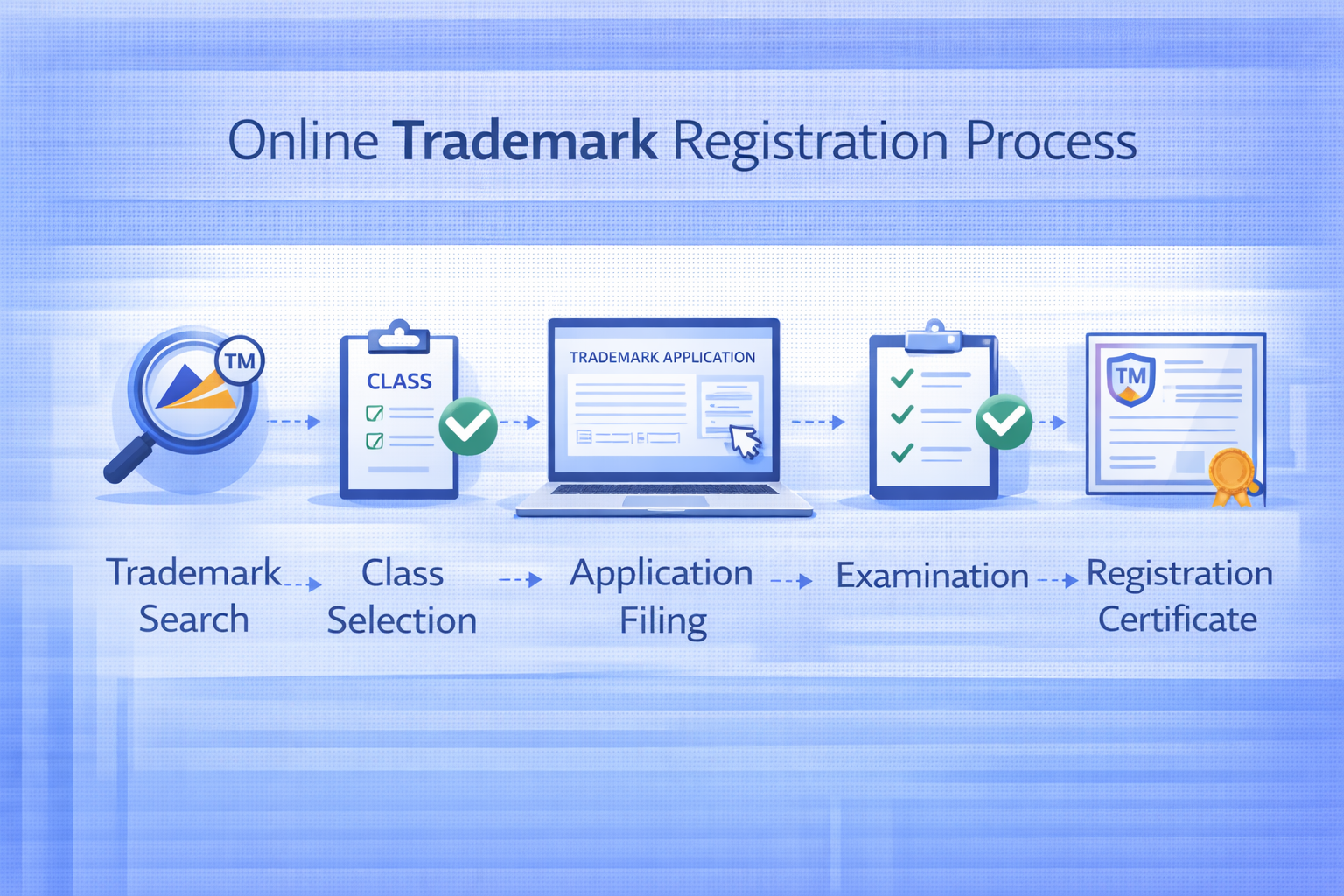
Step 1: Conduct a Trademark Search
Before filing an application, it is important to check whether similar trademarks already exist.
The trademark search helps determine:
- if the brand name is unique
- whether similar marks are already registered
- potential conflicts with existing trademarks
Conducting a proper search reduces the risk of rejection or objections.
Step 2: Choose the Correct Trademark Class
Trademarks are registered under specific categories known as trademark classes. These classes represent different types of goods and services.
For example:
- Class 25 – clothing
- Class 30 – food products
- Class 35 – advertising and retail services
- Class 42 – software and technology services
Choosing the correct class ensures your brand receives proper protection.
Step 3: Prepare the Required Documents
Before submitting the online application, certain documents must be prepared.
Typical documents include:
- applicant identity proof
- address proof
- brand logo or word mark
- business registration certificate (if applicable)
- authorization letter if filing through an agent
Preparing these documents in advance helps avoid delays during filing.
Step 4: Submit the Online Application
The trademark application is filed through the trademark registry portal using Form TM-A.
The applicant must provide details such as:
- brand name or logo
- trademark class
- description of goods or services
- applicant information
Once the application is submitted and the fee is paid, the system generates an application number.
Step 5: Use the ™ Symbol
After filing the trademark application, the applicant may start using the ™ symbol with the brand name or logo.
This symbol indicates that the trademark is under application and signals an intent to claim ownership.
Step 6: Examination by the Trademark Office
The trademark registry examines the application to ensure it complies with trademark law.
The examiner checks whether:
- the trademark is distinctive
- similar trademarks already exist
- the application meets legal requirements
If no issues are found, the application proceeds to publication.
If objections are raised, the applicant must submit a response explaining why the trademark should be approved.
Step 7: Trademark Journal Publication
If the application passes examination, the trademark is published in the Trademark Journal.
This allows other businesses to review the trademark and raise opposition if they believe it conflicts with their existing marks.
The opposition period generally lasts four months.
Step 8: Trademark Registration Certificate
If no opposition is filed during the publication period, the trademark is registered.
The trademark owner receives a Trademark Registration Certificate, which grants exclusive rights to use the mark.
At this stage, the owner may use the ® symbol.
How Long Does Online Trademark Registration Take?
Although the application is filed instantly online, the full registration process may take time because of examination and opposition procedures.
In most cases, the complete trademark registration timeline ranges from 12 to 24 months.
However, legal protection begins from the application filing date, making early filing beneficial.
Common Mistakes to Avoid During Online Filing
Even though the online process is straightforward, mistakes can still occur.
Common errors include:
❌ selecting the wrong trademark class
❌ submitting incomplete applications
❌ choosing descriptive or generic brand names
❌ failing to conduct a proper trademark search
❌ ignoring examination reports
Avoiding these mistakes improves the chances of successful registration.
Is Online Trademark Registration Safe?
Yes. Online filing through the official trademark registry portal is secure and widely used by businesses across the country.
The digital system allows applicants to:
- access official records
- track application progress
- submit responses electronically
- maintain digital documentation
This makes the process transparent and reliable.
Why Startups Should Register Trademarks Early
Many startups delay trademark registration until their brand grows. However, filing early provides important benefits.
Early trademark registration helps:
✔ prevent competitors from using similar names
✔ secure brand ownership
✔ avoid rebranding costs
✔ strengthen brand credibility
Because trademark protection begins from the application date, early filing offers valuable legal advantages.
Final Thoughts
Understanding how online trademark registration works helps entrepreneurs protect their brand efficiently in the digital era. The online system simplifies filing, reduces paperwork, and provides better transparency during the trademark registration process.
For startups and businesses building a strong brand identity, registering a trademark online is an important step toward long-term brand protection and business growth.
If you’re ready to secure your brand name and want step-by-step guidance on the filing process, explore the complete online trademark registration process in India and learn how to protect your brand properly.
![[object Object]](/_next/image?url=https%3A%2F%2Fcms.msmestory.com%2Fwp-content%2Fuploads%2F2026%2F03%2Fmistakes-to-avoid-when-filing-a-trademark-application.png&w=3840&q=75)
![[object Object]](/_next/image?url=https%3A%2F%2Fcms.msmestory.com%2Fwp-content%2Fuploads%2F2026%2F03%2Fapply-for-trademark-without-a-lawyer.png&w=3840&q=75)
![[object Object]](/_next/image?url=https%3A%2F%2Fcms.msmestory.com%2Fwp-content%2Fuploads%2F2026%2F03%2Findividual-vs-company-trademark-application.png&w=3840&q=75)
![[object Object]](/_next/image?url=https%3A%2F%2Fcms.msmestory.com%2Fwp-content%2Fuploads%2F2026%2F03%2Ftrademark-classes-explained-in-simple-terms-1.png&w=3840&q=75)
![[object Object]](/_next/image?url=https%3A%2F%2Fcms.msmestory.com%2Fwp-content%2Fuploads%2F2026%2F03%2Ftrademark-classes-explained-in-simple-terms.png&w=3840&q=75)
![[object Object]](/_next/image?url=https%3A%2F%2Fcms.msmestory.com%2Fwp-content%2Fuploads%2F2026%2F03%2Fhow-long-does-it-take-to-get-a-trademark-registered.png&w=3840&q=75)
![[object Object]](/_next/image?url=https%3A%2F%2Fcms.msmestory.com%2Fwp-content%2Fuploads%2F2026%2F03%2Fhow-much-does-trademark-registration-cost.png&w=3840&q=75)
![[object Object]](/_next/image?url=https%3A%2F%2Fcms.msmestory.com%2Fwp-content%2Fuploads%2F2026%2F03%2Fdocuments-required-for-trademark-registration1.png&w=3840&q=75)
![[object Object]](/_next/image?url=https%3A%2F%2Fcms.msmestory.com%2Fwp-content%2Fuploads%2F2026%2F03%2FStep-by-step-trademark-registration-process-for-startups.png&w=3840&q=75)
![[object Object]](/_next/image?url=https%3A%2F%2Fcms.msmestory.com%2Fwp-content%2Fuploads%2F2026%2F03%2Fdifference-between-trademark-and-company-registration.png&w=3840&q=75)
![[object Object]](/_next/image?url=https%3A%2F%2Fcms.msmestory.com%2Fwp-content%2Fuploads%2F2026%2F03%2Fmyths-about-trademark-protection.png&w=3840&q=75)
![[object Object]](/_next/image?url=https%3A%2F%2Fcms.msmestory.com%2Fwp-content%2Fuploads%2F2026%2F03%2FIs-a-logo-automatically-protected.png&w=3840&q=75)
![[object Object]](/_next/image?url=https%3A%2F%2Fcms.msmestory.com%2Fwp-content%2Fuploads%2F2026%2F02%2Fwhen-should-a-startup-apply-for-a-trademark.png&w=3840&q=75)
![[object Object]](/_next/image?url=https%3A%2F%2Fcms.msmestory.com%2Fwp-content%2Fuploads%2F2026%2F02%2FWhat-happens-if-I-dont-trademark-my-brand-name.png&w=3840&q=75)
![[object Object]](/_next/image?url=https%3A%2F%2Fcms.msmestory.com%2Fwp-content%2Fuploads%2F2026%2F02%2FHow-to-Check-If-a-Brand-Name-Is-Already-Taken.png&w=3840&q=75)
![[object Object]](/_next/image?url=https%3A%2F%2Fcms.msmestory.com%2Fwp-content%2Fuploads%2F2026%2F02%2FCan-I-Use-a-Business-Name-Without-Trademark-Registration.png&w=3840&q=75)
![[object Object]](/_next/image?url=https%3A%2F%2Fcms.msmestory.com%2Fwp-content%2Fuploads%2F2026%2F02%2FDo-Startups-Need-Trademark-Registration.png&w=3840&q=75)
![[object Object]](/_next/image?url=https%3A%2F%2Fcms.msmestory.com%2Fwp-content%2Fuploads%2F2026%2F02%2FTrademark-registration-for-small-businesses.png&w=3840&q=75)
![[object Object]](/_next/image?url=https%3A%2F%2Fcms.msmestory.com%2Fwp-content%2Fuploads%2F2026%2F02%2FTrademark-rejection-reasons-in-India.png&w=3840&q=75)