









How to Choose the Correct Trademark Class
Choosing a brand name or logo is an exciting step when building a business. However, protecting that brand legally requires more than just filing a trademark application. One of the most important steps in the process is selecting the correct trademark class.
Many businesses face delays, objections, or weak protection simply because they filed under the wrong class. Understanding how to choose the correct trademark class helps ensure your brand is protected in the industries where your products or services actually operate.
This guide explains trademark classes in simple terms and provides practical tips to help startups and businesses choose the right class when registering a trademark.
What Is a Trademark Class?
A trademark class is a category that groups similar goods or services together. Trademark authorities use these classes to organize trademark registrations and prevent conflicts between businesses operating in the same industry.
Globally, trademarks are classified using the Nice Classification System, which divides goods and services into 45 different classes.
- Classes 1–34 cover physical goods
- Classes 35–45 cover services
When filing a trademark application, businesses must choose the class that best represents the goods or services associated with their brand.
Why Choosing the Right Trademark Class Is Important
Selecting the correct class is critical because trademark protection only applies within the classes you register.
For example:
- A clothing brand may register under Class 25
- A restaurant may register under Class 43
If a clothing brand mistakenly registers in the wrong class, competitors could still legally use a similar name within the correct class.
Choosing the correct class helps ensure:
✔ stronger brand protection
✔ fewer legal conflicts
✔ smoother trademark approval
✔ long-term brand security
Understanding the Structure of Trademark Classes
The trademark classification system divides goods and services into two main categories.
Goods Classes (Class 1–34)
These classes apply to physical products such as:
- chemicals and pharmaceuticals
- machinery and electronics
- clothing and footwear
- food products
- cosmetics
Businesses that manufacture or sell products typically file under these classes.
Service Classes (Class 35–45)
Service-based businesses fall under this category, including:
- advertising and marketing services
- education and training
- software and technology services
- hospitality and restaurant services
- legal and consulting services
Service providers must choose the class that best reflects the services they offer.
Examples of Common Trademark Classes
Many startups and businesses commonly register under the following classes.
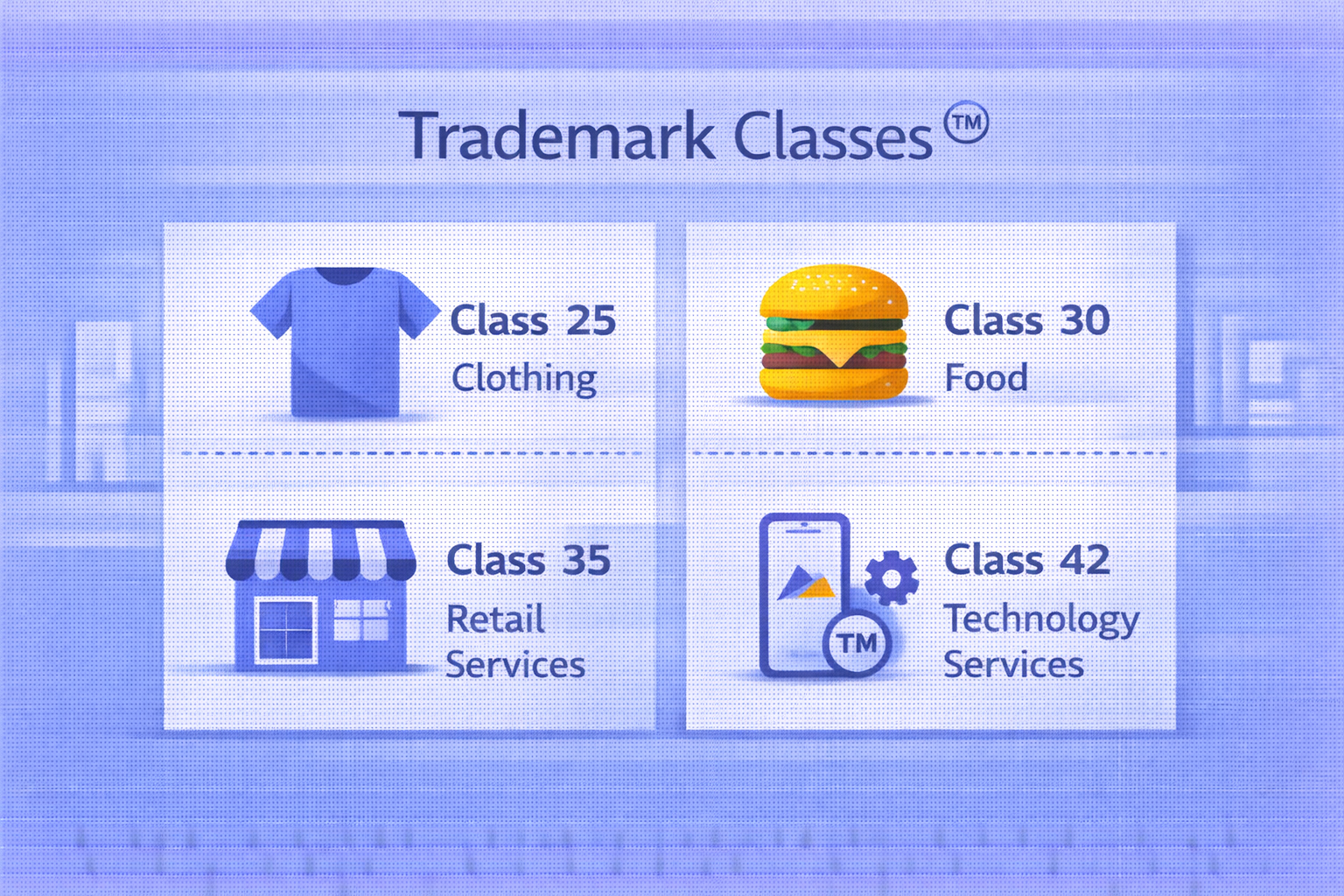
Class 25 – Clothing and Apparel
This class covers clothing items such as:
- shirts and jackets
- footwear
- headwear
Fashion brands typically register their trademarks under this category.
Class 30 – Food Products
This class includes items such as:
- coffee and tea
- bakery goods
- confectionery
- spices and sauces
Food brands often register trademarks here.
Class 35 – Advertising and Retail Services
Class 35 includes services such as:
- retail store services
- online marketplaces
- advertising and marketing
Many e-commerce businesses register trademarks under this class.
Class 42 – Technology Services
Technology companies offering services like:
- software development
- cloud computing
- website design
- IT consulting
generally file under Class 42.
Class 43 – Restaurant and Hospitality Services
Restaurants, cafes, catering businesses, and hotels typically register under this class.
Steps to Choose the Correct Trademark Class
Choosing the right trademark class requires careful evaluation of your business activities.
1. Identify Your Core Products or Services
Start by clearly defining what your business offers. Your trademark class should reflect your main product or service category.
For example:
- selling clothing → Class 25
- running a digital marketing agency → Class 35
2. Review the Trademark Classification List
The official trademark class list provides detailed descriptions of what each class includes. Reviewing this list helps identify the correct category.
Understanding these definitions prevents filing errors.
3. Study Competitor Trademarks
Examining how similar businesses have registered their trademarks can provide helpful insights.
Looking at competitor registrations helps identify common industry classes.
4. Consider Future Business Expansion
If you plan to expand into new products or services, you may want to register your trademark in multiple classes.
For example:
A clothing brand launching its own online store might register in:
- Class 25 (clothing)
- Class 35 (retail services)
This ensures broader protection.
5. Seek Professional Guidance
Trademark professionals can help analyze your business model and determine the most suitable classes.
Their expertise helps avoid filing mistakes and improves approval chances.
Can You Register a Trademark in Multiple Classes?
Yes. Businesses can file for trademark protection in more than one class if they offer products or services in different categories.
However, each additional class requires a separate government filing fee.
Many growing businesses choose multiple classes to ensure broader protection.
Common Mistakes When Choosing Trademark Classes
Many trademark applications encounter problems due to incorrect classification.
Common mistakes include:
❌ choosing a class unrelated to the business activity
❌ selecting only one class when multiple are required
❌ misunderstanding the difference between goods and services
❌ ignoring future expansion plans
Avoiding these mistakes ensures stronger trademark protection.
What Happens If the Wrong Class Is Selected?
Registering a trademark under the wrong class can create gaps in protection.
Possible consequences include:
- competitors using similar names in the correct class
- legal disputes over brand ownership
- the need to file additional applications
Correct classification helps prevent these issues.
Why Trademark Class Selection Matters for Startups
Startups often build strong brands quickly through marketing and social media. Choosing the correct trademark class ensures that the brand is protected as the business grows.
Proper classification helps startups:
✔ protect their brand in the correct industry
✔ prevent competitors from copying the name
✔ support future expansion
✔ build a valuable intellectual property asset
Taking time to select the correct class is a strategic investment in brand security.
Final Thoughts
Understanding how to choose the correct trademark class is a crucial step in the trademark registration process. Filing under the right class ensures that your brand name, logo, or slogan receives the legal protection it deserves.
For startups and growing businesses, correct trademark classification helps safeguard brand identity, reduce legal risks, and support long-term business growth.
Protecting your brand properly today can save significant time, money, and complications in the future.
Choosing the correct trademark class is an important step toward protecting your brand identity. If you’re ready to register your trademark and want expert guidance on the process, explore the complete trademark registration process in India and learn how to secure your brand properly.
![[object Object]](/_next/image?url=https%3A%2F%2Fcms.msmestory.com%2Fwp-content%2Fuploads%2F2026%2F03%2Fmistakes-to-avoid-when-filing-a-trademark-application.png&w=3840&q=75)
![[object Object]](/_next/image?url=https%3A%2F%2Fcms.msmestory.com%2Fwp-content%2Fuploads%2F2026%2F03%2Fonline-trademark-registration.png&w=3840&q=75)
![[object Object]](/_next/image?url=https%3A%2F%2Fcms.msmestory.com%2Fwp-content%2Fuploads%2F2026%2F03%2Fapply-for-trademark-without-a-lawyer.png&w=3840&q=75)
![[object Object]](/_next/image?url=https%3A%2F%2Fcms.msmestory.com%2Fwp-content%2Fuploads%2F2026%2F03%2Findividual-vs-company-trademark-application.png&w=3840&q=75)
![[object Object]](/_next/image?url=https%3A%2F%2Fcms.msmestory.com%2Fwp-content%2Fuploads%2F2026%2F03%2Ftrademark-classes-explained-in-simple-terms.png&w=3840&q=75)
![[object Object]](/_next/image?url=https%3A%2F%2Fcms.msmestory.com%2Fwp-content%2Fuploads%2F2026%2F03%2Fhow-long-does-it-take-to-get-a-trademark-registered.png&w=3840&q=75)
![[object Object]](/_next/image?url=https%3A%2F%2Fcms.msmestory.com%2Fwp-content%2Fuploads%2F2026%2F03%2Fhow-much-does-trademark-registration-cost.png&w=3840&q=75)
![[object Object]](/_next/image?url=https%3A%2F%2Fcms.msmestory.com%2Fwp-content%2Fuploads%2F2026%2F03%2Fdocuments-required-for-trademark-registration1.png&w=3840&q=75)
![[object Object]](/_next/image?url=https%3A%2F%2Fcms.msmestory.com%2Fwp-content%2Fuploads%2F2026%2F03%2FStep-by-step-trademark-registration-process-for-startups.png&w=3840&q=75)
![[object Object]](/_next/image?url=https%3A%2F%2Fcms.msmestory.com%2Fwp-content%2Fuploads%2F2026%2F03%2Fdifference-between-trademark-and-company-registration.png&w=3840&q=75)
![[object Object]](/_next/image?url=https%3A%2F%2Fcms.msmestory.com%2Fwp-content%2Fuploads%2F2026%2F03%2Fmyths-about-trademark-protection.png&w=3840&q=75)
![[object Object]](/_next/image?url=https%3A%2F%2Fcms.msmestory.com%2Fwp-content%2Fuploads%2F2026%2F03%2FIs-a-logo-automatically-protected.png&w=3840&q=75)
![[object Object]](/_next/image?url=https%3A%2F%2Fcms.msmestory.com%2Fwp-content%2Fuploads%2F2026%2F02%2Fwhen-should-a-startup-apply-for-a-trademark.png&w=3840&q=75)
![[object Object]](/_next/image?url=https%3A%2F%2Fcms.msmestory.com%2Fwp-content%2Fuploads%2F2026%2F02%2FWhat-happens-if-I-dont-trademark-my-brand-name.png&w=3840&q=75)
![[object Object]](/_next/image?url=https%3A%2F%2Fcms.msmestory.com%2Fwp-content%2Fuploads%2F2026%2F02%2FHow-to-Check-If-a-Brand-Name-Is-Already-Taken.png&w=3840&q=75)
![[object Object]](/_next/image?url=https%3A%2F%2Fcms.msmestory.com%2Fwp-content%2Fuploads%2F2026%2F02%2FCan-I-Use-a-Business-Name-Without-Trademark-Registration.png&w=3840&q=75)
![[object Object]](/_next/image?url=https%3A%2F%2Fcms.msmestory.com%2Fwp-content%2Fuploads%2F2026%2F02%2FDo-Startups-Need-Trademark-Registration.png&w=3840&q=75)
![[object Object]](/_next/image?url=https%3A%2F%2Fcms.msmestory.com%2Fwp-content%2Fuploads%2F2026%2F02%2FTrademark-registration-for-small-businesses.png&w=3840&q=75)
![[object Object]](/_next/image?url=https%3A%2F%2Fcms.msmestory.com%2Fwp-content%2Fuploads%2F2026%2F02%2FTrademark-rejection-reasons-in-India.png&w=3840&q=75)