








Step-by-Step Trademark Registration Process for Startups
Building a startup is an exciting journey. Founders invest time and energy into developing products, designing logos, building websites, and marketing their brand. But one critical step that many startups overlook in the early stages is trademark registration.
A trademark protects your brand name, logo, tagline, or symbol that distinguishes your business from competitors. Without trademark protection, another business may use a similar name, which could create confusion or even force you to change your brand identity.
Understanding the step-by-step trademark registration process for startups helps founders protect their brand early and avoid future legal complications.
What Is a Trademark?
A trademark is a legally recognized sign, symbol, word, phrase, or design that identifies the source of goods or services. It helps customers distinguish your products or services from those offered by competitors.
Common examples of trademarks include:
- brand names
- company logos
- product names
- slogans or taglines
- unique packaging elements
Once registered, the owner receives exclusive rights to use the trademark within specific classes of goods or services.
Why Trademark Registration Matters for Startups
Startups often invest heavily in branding. From logos and websites to marketing campaigns and packaging, brand identity becomes a key asset.
Trademark registration helps startups:
✔ protect their brand from copycats
✔ build credibility with customers
✔ avoid costly rebranding
✔ create a valuable intellectual property asset
✔ expand safely into new markets
Early protection ensures your brand remains uniquely associated with your business.
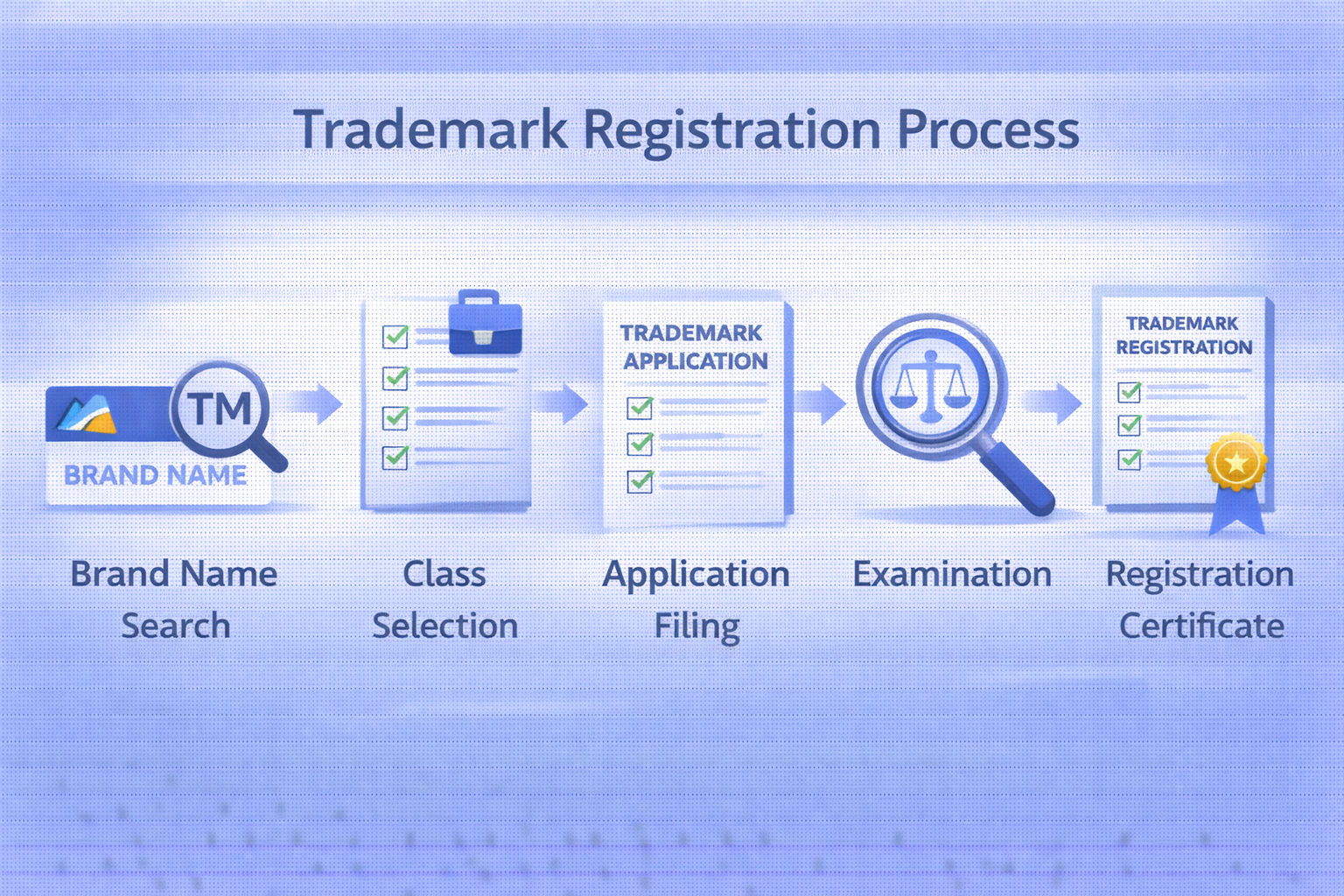
Step-by-Step Trademark Registration Process
Step 1: Choose a Unique Brand Name
The first step is selecting a brand name that is distinctive and not already in use.
Strong trademarks are usually:
- unique or invented words
- creative combinations of words
- distinctive logos or symbols
Generic or descriptive names are harder to protect and more likely to face objections during the registration process.
Step 2: Conduct a Trademark Search
Before filing an application, it is important to check whether a similar trademark already exists.
A trademark search helps you:
- identify identical or similar marks
- reduce the risk of objections
- avoid future disputes
- choose a safer brand name
Startups can search the IP India trademark database to review registered and pending trademarks.
Step 3: Identify the Correct Trademark Class
Trademarks are registered under specific classes based on the goods or services offered by a business. The classification system includes 45 trademark classes.
For example:
- Class 25 – Clothing and apparel
- Class 30 – Food products
- Class 35 – Advertising and retail services
- Class 42 – Technology and software services
Choosing the correct class ensures the trademark protects the relevant business activity.
Step 4: Prepare the Trademark Application
Once the search and class selection are complete, the next step is preparing the trademark application.
Key details required include:
- applicant name and address
- trademark representation (logo or word mark)
- description of goods or services
- relevant trademark class
- supporting documents
Accurate application preparation reduces delays and objections.
Step 5: File the Trademark Application
The application is filed with the Indian Trademark Registry using Form TM-A.
After filing, you receive an application number, which allows you to track the status of the trademark.
At this stage, the applicant can begin using the ™ symbol with the brand name or logo.
Step 6: Examination by the Trademark Office
After submission, the trademark registry examines the application.
The examiner checks whether:
- the trademark is distinctive
- similar trademarks already exist
- the mark complies with legal requirements
If no issues are found, the application proceeds to publication. If objections arise, the applicant must respond.
Step 7: Trademark Journal Publication
If the application passes examination, the trademark is published in the Trademark Journal.
This allows the public to review the trademark and raise opposition if they believe it conflicts with an existing mark.
The opposition period typically lasts four months.
Step 8: Registration and Certificate Issuance
If no opposition is filed during the publication period, the trademark proceeds to registration.
The applicant receives a Trademark Registration Certificate, and the trademark is officially protected.
At this stage, the owner can use the ® symbol.
How Long Does Trademark Registration Take?
Trademark registration is not immediate. The complete process may take 12 to 24 months, depending on:
- examination timelines
- objections or oppositions
- registry workload
However, legal protection begins from the application filing date, which is why early filing is recommended.
Trademark Validity and Renewal
Once registered, a trademark remains valid for 10 years.
To maintain protection, the trademark must be renewed every ten years. There is no limit on renewals, meaning a trademark can last indefinitely if maintained properly.
Common Mistakes Startups Should Avoid
Many trademark applications face delays because of avoidable mistakes.
Common issues include:
❌ choosing generic or descriptive names
❌ failing to conduct a trademark search
❌ selecting the wrong trademark class
❌ submitting incomplete applications
❌ ignoring examination reports
Understanding the process helps startups avoid these problems.
Why Startups Should Register Early
Many founders delay trademark registration until the business grows. However, waiting can increase risk.
Registering early helps:
✔ prevent competitors from claiming similar names
✔ protect marketing investments
✔ avoid rebranding costs
✔ strengthen brand ownership
Early trademark registration provides peace of mind as the startup scales.
Final Thoughts
For startups, brand identity is one of the most valuable assets. A strong brand helps customers recognize your products, trust your services, and differentiate your business from competitors.
Understanding the step-by-step trademark registration process for startups helps founders protect their brand early, reduce legal risks, and build long-term business value.
Trademark registration is not just a legal requirement — it is a strategic step in building a sustainable business.
Protecting your startup’s brand is easier when you follow the right process from the beginning. If you’re ready to secure your brand name and avoid future conflicts, explore the complete trademark registration process for startups in India and learn how to file your trademark correctly.
![[object Object]](/_next/image?url=https%3A%2F%2Fcms.msmestory.com%2Fwp-content%2Fuploads%2F2026%2F03%2Fmistakes-to-avoid-when-filing-a-trademark-application.png&w=3840&q=75)
![[object Object]](/_next/image?url=https%3A%2F%2Fcms.msmestory.com%2Fwp-content%2Fuploads%2F2026%2F03%2Fonline-trademark-registration.png&w=3840&q=75)
![[object Object]](/_next/image?url=https%3A%2F%2Fcms.msmestory.com%2Fwp-content%2Fuploads%2F2026%2F03%2Fapply-for-trademark-without-a-lawyer.png&w=3840&q=75)
![[object Object]](/_next/image?url=https%3A%2F%2Fcms.msmestory.com%2Fwp-content%2Fuploads%2F2026%2F03%2Findividual-vs-company-trademark-application.png&w=3840&q=75)
![[object Object]](/_next/image?url=https%3A%2F%2Fcms.msmestory.com%2Fwp-content%2Fuploads%2F2026%2F03%2Ftrademark-classes-explained-in-simple-terms-1.png&w=3840&q=75)
![[object Object]](/_next/image?url=https%3A%2F%2Fcms.msmestory.com%2Fwp-content%2Fuploads%2F2026%2F03%2Ftrademark-classes-explained-in-simple-terms.png&w=3840&q=75)
![[object Object]](/_next/image?url=https%3A%2F%2Fcms.msmestory.com%2Fwp-content%2Fuploads%2F2026%2F03%2Fhow-long-does-it-take-to-get-a-trademark-registered.png&w=3840&q=75)
![[object Object]](/_next/image?url=https%3A%2F%2Fcms.msmestory.com%2Fwp-content%2Fuploads%2F2026%2F03%2Fhow-much-does-trademark-registration-cost.png&w=3840&q=75)
![[object Object]](/_next/image?url=https%3A%2F%2Fcms.msmestory.com%2Fwp-content%2Fuploads%2F2026%2F03%2Fdocuments-required-for-trademark-registration1.png&w=3840&q=75)
![[object Object]](/_next/image?url=https%3A%2F%2Fcms.msmestory.com%2Fwp-content%2Fuploads%2F2026%2F03%2Fdifference-between-trademark-and-company-registration.png&w=3840&q=75)
![[object Object]](/_next/image?url=https%3A%2F%2Fcms.msmestory.com%2Fwp-content%2Fuploads%2F2026%2F03%2Fmyths-about-trademark-protection.png&w=3840&q=75)
![[object Object]](/_next/image?url=https%3A%2F%2Fcms.msmestory.com%2Fwp-content%2Fuploads%2F2026%2F03%2FIs-a-logo-automatically-protected.png&w=3840&q=75)
![[object Object]](/_next/image?url=https%3A%2F%2Fcms.msmestory.com%2Fwp-content%2Fuploads%2F2026%2F02%2Fwhen-should-a-startup-apply-for-a-trademark.png&w=3840&q=75)
![[object Object]](/_next/image?url=https%3A%2F%2Fcms.msmestory.com%2Fwp-content%2Fuploads%2F2026%2F02%2FWhat-happens-if-I-dont-trademark-my-brand-name.png&w=3840&q=75)
![[object Object]](/_next/image?url=https%3A%2F%2Fcms.msmestory.com%2Fwp-content%2Fuploads%2F2026%2F02%2FHow-to-Check-If-a-Brand-Name-Is-Already-Taken.png&w=3840&q=75)
![[object Object]](/_next/image?url=https%3A%2F%2Fcms.msmestory.com%2Fwp-content%2Fuploads%2F2026%2F02%2FCan-I-Use-a-Business-Name-Without-Trademark-Registration.png&w=3840&q=75)
![[object Object]](/_next/image?url=https%3A%2F%2Fcms.msmestory.com%2Fwp-content%2Fuploads%2F2026%2F02%2FDo-Startups-Need-Trademark-Registration.png&w=3840&q=75)
![[object Object]](/_next/image?url=https%3A%2F%2Fcms.msmestory.com%2Fwp-content%2Fuploads%2F2026%2F02%2FTrademark-registration-for-small-businesses.png&w=3840&q=75)
![[object Object]](/_next/image?url=https%3A%2F%2Fcms.msmestory.com%2Fwp-content%2Fuploads%2F2026%2F02%2FTrademark-rejection-reasons-in-India.png&w=3840&q=75)