









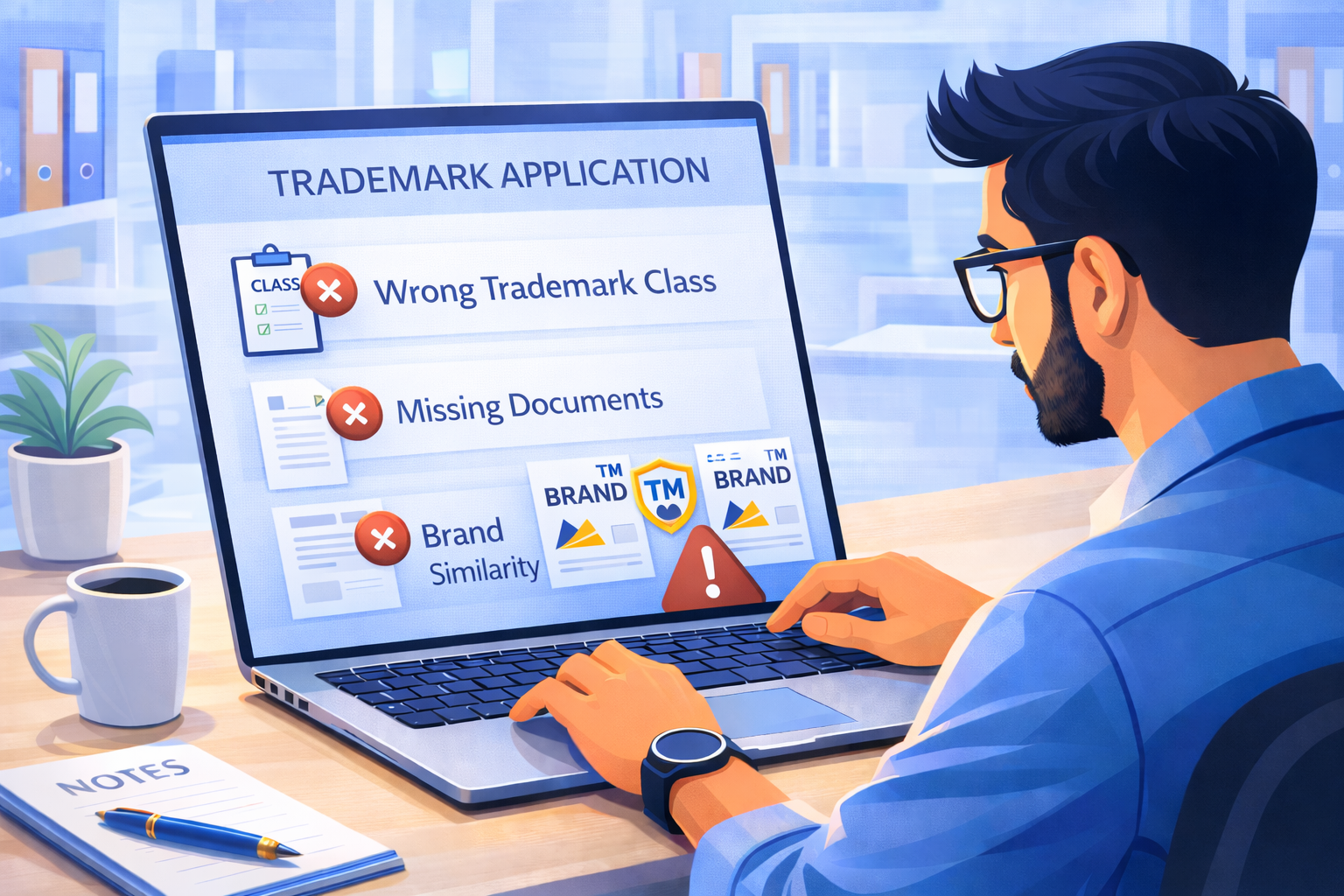
Mistakes to Avoid When Filing a Trademark Application
Registering a trademark is one of the most important steps in protecting your brand identity. Your brand name, logo, or slogan represents the reputation and recognition your business builds over time. However, many businesses face delays, objections, or even rejection during the trademark registration process because of avoidable mistakes.
Understanding the mistakes to avoid when filing a trademark application can save time, reduce legal complications, and increase the chances of successful registration. Whether you are a startup founder, small business owner, or entrepreneur launching a new brand, knowing what not to do is just as important as knowing the correct process.
This guide highlights common trademark filing mistakes and explains how to avoid them.
Why Trademark Application Mistakes Happen
Trademark registration may appear straightforward, but it involves legal evaluation, classification of goods and services, and detailed documentation. Many applicants make mistakes because they:
- rush through the filing process
- misunderstand trademark rules
- fail to conduct proper searches
- select incorrect classes
These mistakes can lead to objections from the trademark examiner or conflicts with existing trademarks.
Mistake 1: Skipping a Proper Trademark Search
One of the most common errors is filing a trademark application without conducting a thorough search.
A trademark search helps identify whether a similar or identical trademark already exists. If a similar mark is already registered, the application may face objections or rejection.
A proper search should include:
- identical trademark names
- phonetic similarities
- similar logos or brand elements
Conducting a detailed search before filing significantly reduces the risk of rejection.
Mistake 2: Choosing a Descriptive or Generic Brand Name
Many businesses attempt to register brand names that directly describe their products or services.
Examples include names like:
- “Fresh Milk Company” for a dairy brand
- “Fast Delivery Services” for a courier business
Descriptive or generic terms are difficult to register because they lack distinctiveness.
Choosing a unique and creative brand name increases the chances of trademark approval.
Mistake 3: Selecting the Wrong Trademark Class
Trademarks must be registered under the correct class of goods or services.
If the wrong class is selected, the trademark may not protect the actual business activity. This can create gaps in protection and allow competitors to register similar marks in the appropriate class.
Understanding the trademark classification system is essential before filing an application.
Mistake 4: Filing Without Understanding the Application Requirements
Incomplete or incorrect applications are another common reason for delays.
Applicants must provide accurate details such as:
- applicant name and address
- trademark representation (logo or word mark)
- description of goods or services
- trademark class
Even small errors in the application can result in examination issues.
Mistake 5: Ignoring Trademark Similarity Risks
Many applicants assume that slight spelling changes are enough to make a trademark unique.
However, trademark examiners consider phonetic similarity as well.
For example:
- “KwikKart” and “QuickCart”
- “Freshlite” and “Fresh Light”
Even if the spelling is different, the trademark may still be considered confusingly similar.
This is why conducting a thorough search is important.
Mistake 6: Not Responding to Examination Reports
If the trademark examiner raises objections, the applicant receives an examination report explaining the issues.
Some applicants ignore these reports or fail to respond within the required time.
Failure to respond can result in the application being abandoned.
Responding properly and within deadlines is essential.
Mistake 7: Using a Trademark That Is Already Widely Known
Attempting to register a trademark that resembles a well-known brand is likely to fail.
For example, marks similar to globally recognized brands often face immediate rejection.
Trademark law protects well-known marks across multiple industries to prevent consumer confusion.
Mistake 8: Not Considering Future Business Expansion
Some businesses file trademarks only for their current products but forget to consider future expansion plans.
If the brand later expands into new product categories, additional trademark registrations may be required.
Planning trademark coverage strategically helps avoid future complications.
Mistake 9: Poor Logo Representation
When registering a logo trademark, the submitted image must clearly represent the mark.
Low-quality images or inconsistent branding can cause confusion during examination.
Providing a clear and consistent logo file ensures accurate registration.
Mistake 10: Delaying Trademark Registration
Many businesses delay filing trademarks because they assume brand protection can wait.
However, delaying registration increases the risk that another company may register a similar mark first.
Early trademark filing secures priority rights and reduces future conflicts.
How to Avoid Trademark Application Mistakes
While trademark filing mistakes are common, they can be avoided with proper preparation.
Here are a few practical tips:
✔ conduct a thorough trademark search
✔ choose a distinctive brand name
✔ select the correct trademark class
✔ submit accurate application details
✔ monitor application status regularly
Following these steps improves the chances of smooth trademark registration.
Why Trademark Protection Is Worth the Effort
A registered trademark provides several benefits for businesses:
✔ exclusive rights to use the brand name
✔ protection against confusingly similar marks
✔ stronger legal standing in disputes
✔ increased brand credibility
✔ long-term intellectual property value
Because trademarks represent the identity of a business, protecting them properly is a strategic investment.
Final Thoughts
Understanding the mistakes to avoid when filing a trademark application helps businesses navigate the trademark registration process more confidently. Many trademark problems arise from simple errors such as selecting the wrong class, choosing descriptive names, or failing to conduct proper searches.
By taking time to understand the process and avoiding common mistakes, businesses can secure stronger trademark protection and safeguard their brand identity for the future.
Trademark registration is not just a legal requirement — it is a key step in building a lasting and recognizable brand.
Avoiding trademark filing mistakes is essential to protecting your brand successfully. If you want expert guidance and a clear step-by-step approach to registering your trademark, explore the complete trademark registration process in India and learn how to secure your brand properly.
![[object Object]](/_next/image?url=https%3A%2F%2Fcms.msmestory.com%2Fwp-content%2Fuploads%2F2026%2F03%2Fonline-trademark-registration.png&w=3840&q=75)
![[object Object]](/_next/image?url=https%3A%2F%2Fcms.msmestory.com%2Fwp-content%2Fuploads%2F2026%2F03%2Fapply-for-trademark-without-a-lawyer.png&w=3840&q=75)
![[object Object]](/_next/image?url=https%3A%2F%2Fcms.msmestory.com%2Fwp-content%2Fuploads%2F2026%2F03%2Findividual-vs-company-trademark-application.png&w=3840&q=75)
![[object Object]](/_next/image?url=https%3A%2F%2Fcms.msmestory.com%2Fwp-content%2Fuploads%2F2026%2F03%2Ftrademark-classes-explained-in-simple-terms-1.png&w=3840&q=75)
![[object Object]](/_next/image?url=https%3A%2F%2Fcms.msmestory.com%2Fwp-content%2Fuploads%2F2026%2F03%2Ftrademark-classes-explained-in-simple-terms.png&w=3840&q=75)
![[object Object]](/_next/image?url=https%3A%2F%2Fcms.msmestory.com%2Fwp-content%2Fuploads%2F2026%2F03%2Fhow-long-does-it-take-to-get-a-trademark-registered.png&w=3840&q=75)
![[object Object]](/_next/image?url=https%3A%2F%2Fcms.msmestory.com%2Fwp-content%2Fuploads%2F2026%2F03%2Fhow-much-does-trademark-registration-cost.png&w=3840&q=75)
![[object Object]](/_next/image?url=https%3A%2F%2Fcms.msmestory.com%2Fwp-content%2Fuploads%2F2026%2F03%2Fdocuments-required-for-trademark-registration1.png&w=3840&q=75)
![[object Object]](/_next/image?url=https%3A%2F%2Fcms.msmestory.com%2Fwp-content%2Fuploads%2F2026%2F03%2FStep-by-step-trademark-registration-process-for-startups.png&w=3840&q=75)
![[object Object]](/_next/image?url=https%3A%2F%2Fcms.msmestory.com%2Fwp-content%2Fuploads%2F2026%2F03%2Fdifference-between-trademark-and-company-registration.png&w=3840&q=75)
![[object Object]](/_next/image?url=https%3A%2F%2Fcms.msmestory.com%2Fwp-content%2Fuploads%2F2026%2F03%2Fmyths-about-trademark-protection.png&w=3840&q=75)
![[object Object]](/_next/image?url=https%3A%2F%2Fcms.msmestory.com%2Fwp-content%2Fuploads%2F2026%2F03%2FIs-a-logo-automatically-protected.png&w=3840&q=75)
![[object Object]](/_next/image?url=https%3A%2F%2Fcms.msmestory.com%2Fwp-content%2Fuploads%2F2026%2F02%2Fwhen-should-a-startup-apply-for-a-trademark.png&w=3840&q=75)
![[object Object]](/_next/image?url=https%3A%2F%2Fcms.msmestory.com%2Fwp-content%2Fuploads%2F2026%2F02%2FWhat-happens-if-I-dont-trademark-my-brand-name.png&w=3840&q=75)
![[object Object]](/_next/image?url=https%3A%2F%2Fcms.msmestory.com%2Fwp-content%2Fuploads%2F2026%2F02%2FHow-to-Check-If-a-Brand-Name-Is-Already-Taken.png&w=3840&q=75)
![[object Object]](/_next/image?url=https%3A%2F%2Fcms.msmestory.com%2Fwp-content%2Fuploads%2F2026%2F02%2FCan-I-Use-a-Business-Name-Without-Trademark-Registration.png&w=3840&q=75)
![[object Object]](/_next/image?url=https%3A%2F%2Fcms.msmestory.com%2Fwp-content%2Fuploads%2F2026%2F02%2FDo-Startups-Need-Trademark-Registration.png&w=3840&q=75)
![[object Object]](/_next/image?url=https%3A%2F%2Fcms.msmestory.com%2Fwp-content%2Fuploads%2F2026%2F02%2FTrademark-registration-for-small-businesses.png&w=3840&q=75)
![[object Object]](/_next/image?url=https%3A%2F%2Fcms.msmestory.com%2Fwp-content%2Fuploads%2F2026%2F02%2FTrademark-rejection-reasons-in-India.png&w=3840&q=75)