








TM vs ® vs © Symbols – When Can You Use What?
If you’ve ever noticed small symbols next to brand names, logos, or creative content, you’ve likely seen TM, ®, or © in use. However, many business owners are unsure about the differences between TM vs ® vs © symbols, and when each one should be used correctly.
Understanding TM vs ® vs © symbols is important because each represents a different type of legal protection. Using the wrong symbol — or using one too early — can confuse customers and may even lead to legal complications.
Let’s break down the difference between TM, ® and © symbols and when each one should be used.
What Does the TM Symbol Mean?
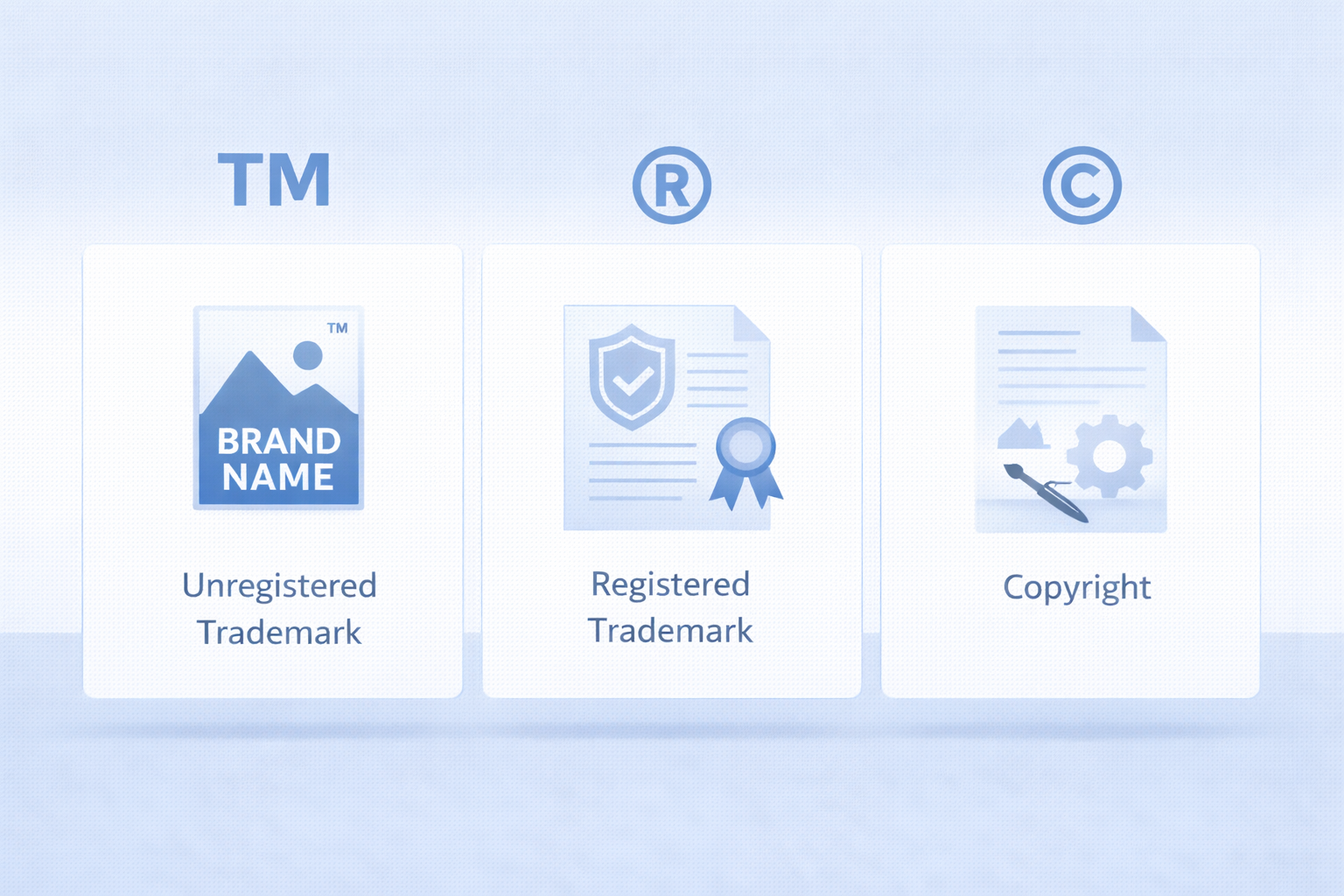
The TM (Trademark) symbol indicates that you are claiming rights over a brand name, logo, slogan, or symbol, even if it is not yet officially registered.
You can use TM when:
- You have started using a brand name or logo in business
- Your trademark application is filed and pending
- You want to signal that you consider the mark your property
TM does not mean the trademark is registered. It simply shows that you are asserting rights over the mark based on usage.
There is no legal restriction on using TM, but it should only be used for marks you genuinely claim as your brand identity.
What Does the ® Symbol Mean?
The ® (Registered) symbol can only be used once your trademark is officially registered with the trademark authority.
Using ® tells the public that:
- The trademark has completed the legal registration process
- You have exclusive legal rights to use the mark in the registered classes
- Unauthorized use may lead to legal action
Using the ® symbol without registration is considered improper and can lead to penalties or legal consequences. Always wait until you receive the registration certificate before using this symbol.
What Does the © Symbol Mean?
The © (Copyright) symbol is used to indicate ownership of creative works, not brand names.
It applies to:
- Written content
- Photographs
- Music
- Artwork
- Videos
- Software code
Copyright protection usually starts automatically when the work is created, but using © signals that the content is protected and owned.
For example, you might see:
© 2026 Company Name. All Rights Reserved.
This protects creative expression, not trademarks or business names.
Why These Symbols Matter for Businesses
Using the correct symbol:
✔ Shows professionalism and legal awareness
✔ Warns others against copying your brand or content
✔ Clarifies what type of protection applies
✔ Strengthens your legal position in disputes
Using the wrong symbol, however, can cause confusion or weaken credibility.
Common Mistakes to Avoid
❌ Using ® before the trademark is registered
❌ Using © for brand names or logos instead of trademarks
❌ Assuming TM gives the same protection as ®
❌ Not using any symbol at all, missing a deterrence opportunity
Each symbol serves a different purpose and legal function.
Quick Comparison
|
Symbol |
Stands For |
Used For |
Registration Required? |
| TM | Trademark | Brand name, logo, slogan | No |
| ® | Registered Trademark | Registered brand name/logo | Yes |
| © | Copyright | Creative works | No (automatic) |
Where Should You Place These Symbols?
Symbols are usually placed:
- At the upper right corner of a logo or brand name
- In website footers for copyright notices
- On packaging, marketing materials, and digital platforms
They should be visible but not disruptive to the design.
When Should a Business Start Using Them?
Use TM as soon as you begin using a brand name commercially.
Switch to ® only after your trademark is officially registered.
Use © whenever you publish original creative work.
Why This Matters for Brand Protection
These symbols communicate ownership. They don’t replace registration, but they support your legal position and help deter misuse.
Clear labeling of your intellectual property helps protect both your brand identity and creative assets.
Final Thoughts
Understanding the difference between TM, ® and © symbols helps you use them correctly and confidently. Each one plays a specific role in protecting different parts of your business — your brand name, your registered trademark, and your creative content.
Using them properly shows that you take your intellectual property seriously.
Understanding TM vs ® vs © symbols helps you use them correctly, but proper legal protection starts with registering your brand the right way. If you want to secure your brand name and gain the legal right to use the ® symbol, you can explore the complete trademark registration process in India here.
![[object Object]](/_next/image?url=https%3A%2F%2Fcms.msmestory.com%2Fwp-content%2Fuploads%2F2026%2F03%2Fmistakes-to-avoid-when-filing-a-trademark-application.png&w=3840&q=75)
![[object Object]](/_next/image?url=https%3A%2F%2Fcms.msmestory.com%2Fwp-content%2Fuploads%2F2026%2F03%2Fonline-trademark-registration.png&w=3840&q=75)
![[object Object]](/_next/image?url=https%3A%2F%2Fcms.msmestory.com%2Fwp-content%2Fuploads%2F2026%2F03%2Fapply-for-trademark-without-a-lawyer.png&w=3840&q=75)
![[object Object]](/_next/image?url=https%3A%2F%2Fcms.msmestory.com%2Fwp-content%2Fuploads%2F2026%2F03%2Findividual-vs-company-trademark-application.png&w=3840&q=75)
![[object Object]](/_next/image?url=https%3A%2F%2Fcms.msmestory.com%2Fwp-content%2Fuploads%2F2026%2F03%2Ftrademark-classes-explained-in-simple-terms-1.png&w=3840&q=75)
![[object Object]](/_next/image?url=https%3A%2F%2Fcms.msmestory.com%2Fwp-content%2Fuploads%2F2026%2F03%2Ftrademark-classes-explained-in-simple-terms.png&w=3840&q=75)
![[object Object]](/_next/image?url=https%3A%2F%2Fcms.msmestory.com%2Fwp-content%2Fuploads%2F2026%2F03%2Fhow-long-does-it-take-to-get-a-trademark-registered.png&w=3840&q=75)
![[object Object]](/_next/image?url=https%3A%2F%2Fcms.msmestory.com%2Fwp-content%2Fuploads%2F2026%2F03%2Fhow-much-does-trademark-registration-cost.png&w=3840&q=75)
![[object Object]](/_next/image?url=https%3A%2F%2Fcms.msmestory.com%2Fwp-content%2Fuploads%2F2026%2F03%2Fdocuments-required-for-trademark-registration1.png&w=3840&q=75)
![[object Object]](/_next/image?url=https%3A%2F%2Fcms.msmestory.com%2Fwp-content%2Fuploads%2F2026%2F03%2FStep-by-step-trademark-registration-process-for-startups.png&w=3840&q=75)
![[object Object]](/_next/image?url=https%3A%2F%2Fcms.msmestory.com%2Fwp-content%2Fuploads%2F2026%2F03%2Fdifference-between-trademark-and-company-registration.png&w=3840&q=75)
![[object Object]](/_next/image?url=https%3A%2F%2Fcms.msmestory.com%2Fwp-content%2Fuploads%2F2026%2F03%2Fmyths-about-trademark-protection.png&w=3840&q=75)
![[object Object]](/_next/image?url=https%3A%2F%2Fcms.msmestory.com%2Fwp-content%2Fuploads%2F2026%2F03%2FIs-a-logo-automatically-protected.png&w=3840&q=75)
![[object Object]](/_next/image?url=https%3A%2F%2Fcms.msmestory.com%2Fwp-content%2Fuploads%2F2026%2F02%2Fwhen-should-a-startup-apply-for-a-trademark.png&w=3840&q=75)
![[object Object]](/_next/image?url=https%3A%2F%2Fcms.msmestory.com%2Fwp-content%2Fuploads%2F2026%2F02%2FWhat-happens-if-I-dont-trademark-my-brand-name.png&w=3840&q=75)
![[object Object]](/_next/image?url=https%3A%2F%2Fcms.msmestory.com%2Fwp-content%2Fuploads%2F2026%2F02%2FHow-to-Check-If-a-Brand-Name-Is-Already-Taken.png&w=3840&q=75)
![[object Object]](/_next/image?url=https%3A%2F%2Fcms.msmestory.com%2Fwp-content%2Fuploads%2F2026%2F02%2FCan-I-Use-a-Business-Name-Without-Trademark-Registration.png&w=3840&q=75)
![[object Object]](/_next/image?url=https%3A%2F%2Fcms.msmestory.com%2Fwp-content%2Fuploads%2F2026%2F02%2FDo-Startups-Need-Trademark-Registration.png&w=3840&q=75)
![[object Object]](/_next/image?url=https%3A%2F%2Fcms.msmestory.com%2Fwp-content%2Fuploads%2F2026%2F02%2FTrademark-registration-for-small-businesses.png&w=3840&q=75)
![[object Object]](/_next/image?url=https%3A%2F%2Fcms.msmestory.com%2Fwp-content%2Fuploads%2F2026%2F02%2FTrademark-rejection-reasons-in-India.png&w=3840&q=75)