








Ford rehires 300 veteran engineers after AI shortcomings in vehicle quality inspections, report finds
As many companies integrate artificial intelligence (AI) into various business functions to automate repetitive tasks and boost efficiency, Ford Motor Company has revealed challenges in relying solely on AI for vehicle quality inspections. The American automaker has rehired over 300 experienced quality engineers after discovering that its AI-driven quality control methods could not match the expertise and judgment of seasoned personnel.
Challenges in AI-driven quality control
According to Bloomberg, Ford reinstated these veteran engineers in recent years because the automated systems did not meet performance expectations. Although Ford embraced AI across several operations, including manufacturing quality checks, the company recognized that the technology alone was insufficient.
Charles Poon, Ford 27s vice president of vehicle hardware engineering, explained that AI’s effectiveness depends heavily on the quality of training data. He admitted the company previously underestimated the value of the extensive knowledge held by long-tenured engineers with multiple product cycles of experience.
Ford’s AI adoption and implementation
Ford has publicly supported AI adoption in recent years. In June, CEO Jim Farley commented on AI 27s disruptive potential for white-collar jobs, and in October, COO Kumar Galhotra noted the company’s deployment of AI throughout its industrial systems.
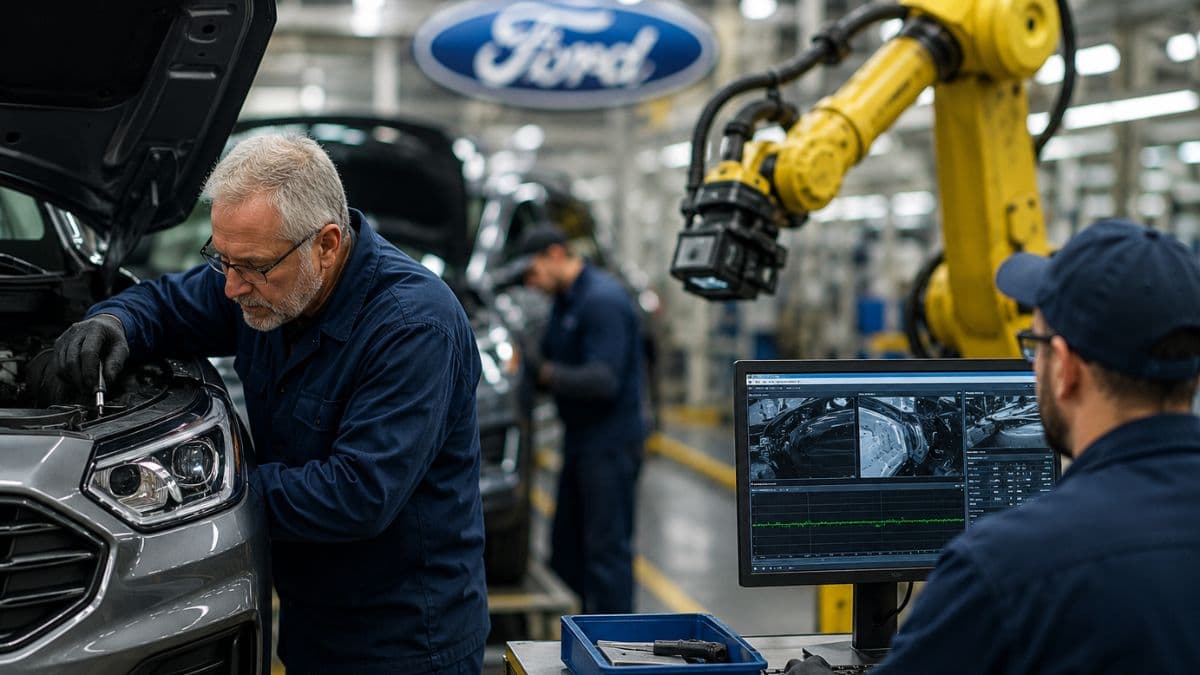
As part of the AI initiative, Ford installed approximately 900 AI-equipped cameras in manufacturing plants aimed at detecting quality problems early and minimizing supply chain disruptions. However, Poon stated that the AI-based quality inspections did not perform as anticipated. The automated tools lacked the practical insights and experience of veteran engineers, many of whom had departed before their expertise could enhance the AI models.
Rehiring veteran engineers to complement AI
In response, Ford rehired these expert engineers not only to raise product quality but also to train the AI systems and mentor younger employees. Poon emphasized that incorporating the knowledge of the most experienced staff was essential to advancing automation, machine learning, and AI capabilities at the company.
Impact on Ford’s industry standing
These efforts coincided with Ford regaining the top position among mainstream manufacturers in the US JD Power Initial Quality Study, an industry-standard measure of vehicle quality. This marked the first time since 2010 that Ford led these rankings.
A company press release highlighted that achieving best-in-class quality required significant talent renewal. This included changes in senior leadership across engineering, supply chain, and manufacturing units, as well as hiring approximately 300 veteran engineers bringing decades of critical design experience.
Key Takeaways
- Ford found AI-driven vehicle quality inspections insufficient compared to experienced engineers.
- The company rehired over 300 veteran quality engineers to improve product quality and AI training.
- AI’s success depends heavily on high-quality training data and expert insights.
- Ford integrated around 900 AI-equipped cameras to detect manufacturing quality issues early.
- These efforts helped Ford regain top rank in the JD Power Initial Quality Study for the first time since 2010.
![[object Object]](/_next/image?url=https%3A%2F%2Fcms.msmestory.com%2Fwp-content%2Fuploads%2F2026%2F07%2Fog-1.jpg&w=3840&q=75)
![[object Object]](/_next/image?url=https%3A%2F%2Fcms.msmestory.com%2Fwp-content%2Fuploads%2F2026%2F06%2Fog-54.jpg&w=3840&q=75)
![[object Object]](/_next/image?url=https%3A%2F%2Fcms.msmestory.com%2Fwp-content%2Fuploads%2F2026%2F06%2Fog-53.jpg&w=3840&q=75)
![[object Object]](/_next/image?url=https%3A%2F%2Fcms.msmestory.com%2Fwp-content%2Fuploads%2F2026%2F06%2Fog-17.webp&w=3840&q=75)