









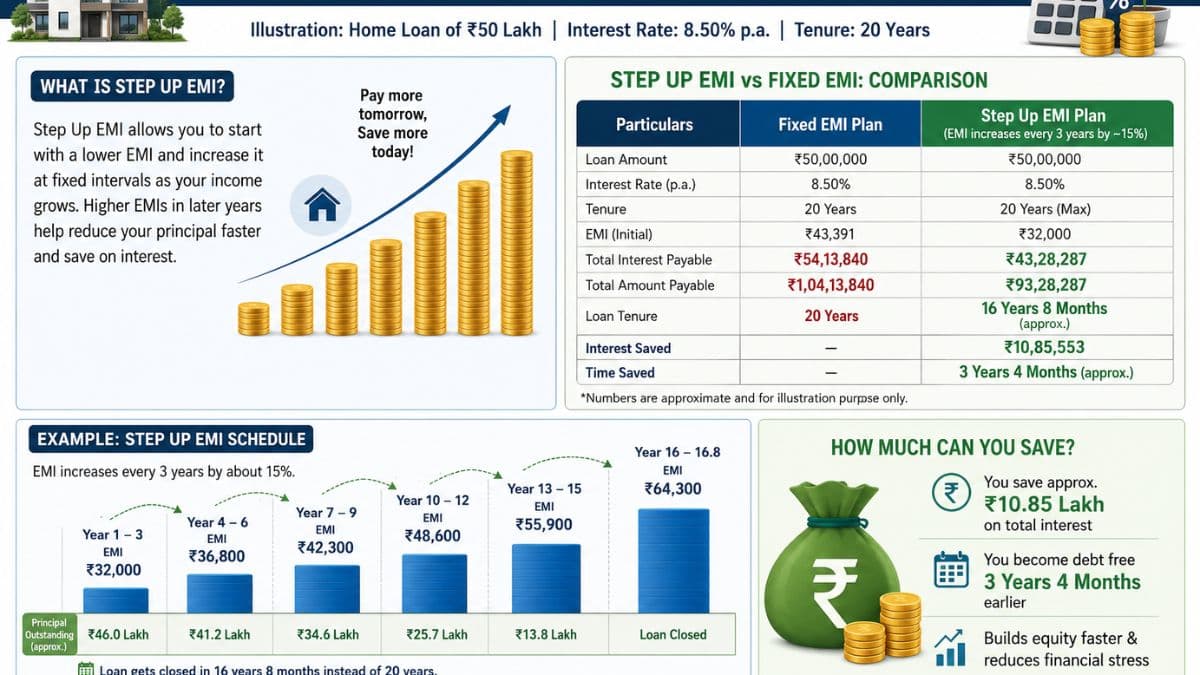
Want to end your home loan faster? Here’s how Step Up EMI can help you repay your loan early and save thousands on interest
For many households, a home loan represents the largest financial obligation. While most borrowers focus on comparing interest rates, they often overlook the importance of repayment strategies. One such strategy is the Step Up EMI option, which allows equated monthly installments (EMIs) to increase gradually in line with expected income growth.
This method can accelerate the reduction of the loan principal in later years, potentially shortening the loan tenure and lowering the overall interest paid. Below is an explanation of how Step Up EMI works and who might benefit from it.
What Is Step Up EMI?
Step Up EMI is a repayment feature provided by some financial institutions. Borrowers begin by paying a lower EMI in the initial years of the loan. At predetermined intervals, the EMI amount increases, anticipating that the borrower’s income will also rise over time.
This plan is primarily designed for young salaried professionals who expect regular salary increments.
For example, if the initial EMI is Rs 32,000, it might increase to Rs 36,000 after three years and then to Rs 40,000 after a few more years, according to the agreement with the lender. These higher payments later in the term help in quicker principal reduction.
How Does It Shorten Loan Tenure?
As EMIs increase, a greater portion of the payment goes towards repaying the principal rather than interest. A reduced principal balance means that interest charged on the remaining loan decreases, enabling borrowers to complete their loan repayment quicker than initially scheduled, provided they consistently make the higher EMIs as planned.
For instance, with two borrowers taking the same loan amount, at the same interest rate and tenure, one paying fixed EMIs and the other opting for Step Up EMIs, the latter may conclude the loan repayment several months or even years sooner, depending on the size of the EMI increments and the repayment timeline.
Who Is This Option Suitable For?
Step Up EMI is most effective for individuals who anticipate steady income growth, such as young professionals in corporate roles, doctors, engineers, or business owners with predictable earnings. It may not be ideal for those with unpredictable incomes or individuals nearing retirement.
Key Considerations Before Choosing Step Up EMI
Before selecting this option, borrowers should fully understand the future EMI schedule outlined in their loan agreement. It is important to ensure that the increasing EMIs will remain affordable even if other expenses rise.
Comparing the total repayment amounts under both fixed EMI and Step Up EMI plans is advisable. Additionally, reviewing the lender’s policies on prepayment and other loan terms is essential before finalizing the decision.
Can Step Up EMI Save Money?
This approach can reduce the total interest payments if the increased EMIs efficiently lower the principal balance earlier. The exact savings depend on factors such as loan amount, interest rate, tenure, and the specifics of the EMI increase.
For example, a Rs 50 lakh home loan over 20 years might conclude a year earlier with Step Up EMI, resulting in significant interest savings. Because results vary per loan, borrowers should request an amortization schedule from their lender to understand potential benefits.
Disclaimer
The information provided is intended for general educational purposes and should not be considered financial, investment, or legal advice. Loan features, interest rates, and repayment conditions differ among lenders.
Prospective borrowers should consult their bank or a qualified financial advisor before making any financial decisions.
Key Takeaways
- Step Up EMI starts with lower payments that gradually increase over time.
- This strategy benefits borrowers expecting steady income growth.
- Higher EMIs in later years reduce principal faster, shortening loan tenure.
- Comparing total costs between fixed and Step Up EMI plans is essential.
- Consult a financial advisor to assess suitability before choosing this option.
![[object Object]](/_next/image?url=https%3A%2F%2Fcms.msmestory.com%2Fwp-content%2Fuploads%2F2026%2F07%2Fog-41.jpg&w=3840&q=75)
![[object Object]](/_next/image?url=https%3A%2F%2Fcms.msmestory.com%2Fwp-content%2Fuploads%2F2026%2F07%2Fog-36.jpg&w=3840&q=75)
![[object Object]](/_next/image?url=https%3A%2F%2Fcms.msmestory.com%2Fwp-content%2Fuploads%2F2026%2F07%2Fog-29.jpg&w=3840&q=75)