









Don’t write IT’s obit just yet
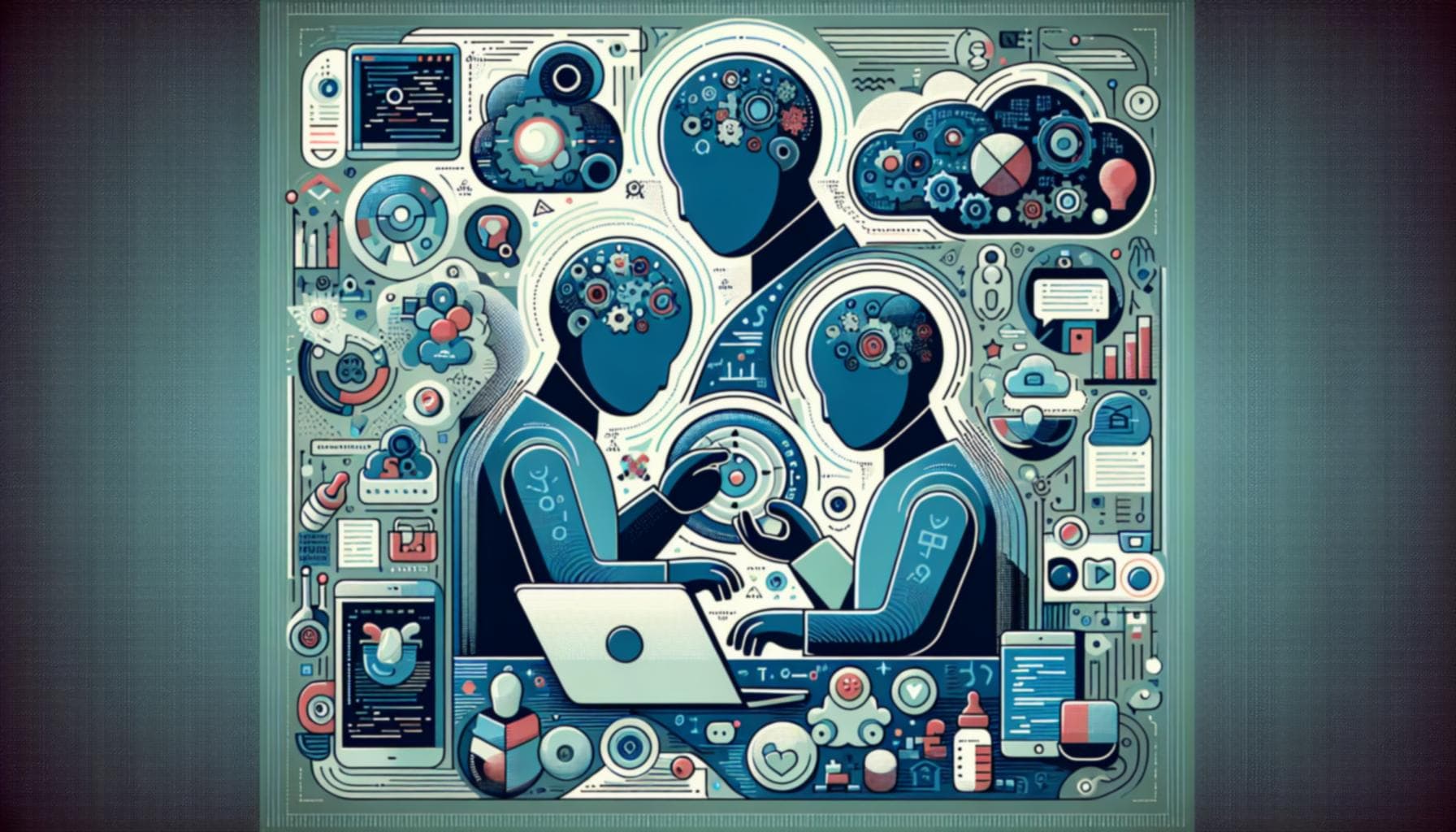
India’s technology services sector is undergoing a significant transformation as agentic artificial intelligence (AI) reshapes essential functions such as software development, testing, and operations. This evolution is shifting the industry from a labor-dependent approach to one focused on delivering measurable outcomes.
Although forecasts of decline have occurred before due to automation, cloud computing, and platform disruption, the industry has consistently adapted and reinvented itself.
Fundamental restructuring driven by agentic AI
Experts now emphasize that the changes brought on by agentic AI represent a fundamental restructuring rather than a temporary shift. The sector must develop new operating models that integrate human expertise, AI agents, and technological platforms.
Recent market reactions to announcements of autonomous AI agents reflect common tendencies to predict catastrophic outcomes; however, while markets are adept at identifying disruption, they struggle with accurately anticipating the transition process.
Replacing labor arbitrage with intelligence arbitrage
Central to this transformation is the replacement of labor arbitrage with intelligence arbitrage. The traditional model relying on workforce scaling is being surpassed by AI-driven delivery methods.
Success in this new environment depends on judgment, coordination, and deep domain knowledge—capabilities beyond what machines can achieve independently. The industry is moving into an era defined by the integration of humans, AI agents, and platforms, where entities that strategically incorporate automation will outperform those that merely pursue it.
Accelerating pace of change and new business models
The pace of change is accelerating rapidly, shortening adoption timelines from years to mere quarters, and compelling companies to continually rework their operating frameworks.
This also means existing commercial models cannot merely append AI agents; instead, comprehensive business model innovation is required to reposition the industry from functioning as the global “back office” to becoming the architect of AI-native enterprises.
Growth potential and strategic initiatives
If this transformation is managed effectively, India’s technology services sector could reach annual revenues between $750 billion and $850 billion by 2035, maintain a contribution of 7-8% to the nation’s GDP, and expand its share of the global market to over 25%.
Achieving this requires pursuing six strategic initiatives:
- Scaling agentic AI through ‘services as software’ to unlock non-linear productivity gains, targeting both mid-sized companies and legacy system upgrades.
- Developing a human-technology hybrid workforce model supported by AI agent services to enhance operational productivity.
- Revamping software offerings by capturing a larger portion of the global SaaS market, reengineering core value propositions such as customer relationship management and enterprise resource planning.
- Establishing India as a leader in AI-ready infrastructure, expanding data center capacity from 1.4 GW to 12 GW, and building sovereign cloud computing capabilities.
- Creating specialized centers of excellence aimed at capturing the $1.1 trillion global research and development operations market in industries like medical technology and automotive.
- Addressing substantial domestic challenges in healthcare and agriculture with locally adapted AI models that have potential for international export.
Business model innovation and investment
This large-scale reinvention demands a shift from billing by hours worked to pricing based on outcomes and allocating 1-2% of revenues for investment in proprietary intellectual property and research and development.
Outlook: Reinvention over decline
Contrary to narratives announcing the demise of the sector, what is emerging is a new model of global work based on AI integration. Defensive responses risk commoditization, whereas bold reinvention can position firms to lead in the AI-native economy.
Historical trends demonstrate the industry’s ability to evolve repeatedly—from application maintenance to digital transformation and from cost arbitrage to strategic partnerships.
As past experiences indicate, predictions of the sector’s demise have proven premature, and this time is likely to be no different.
Key Takeaways
- Agentic AI is fundamentally reshaping India’s technology services industry.
- Labor arbitrage is being replaced by intelligence arbitrage driven by AI integration.
- Comprehensive business model innovation is essential for future growth.
- Six strategic initiatives can position India as a global leader in AI-native services.
- The sector’s transformation presents an opportunity for revenue growth and expanded global market share.
- Past predictions of the sector’s decline have been consistently premature.
![[object Object]](/_next/image?url=https%3A%2F%2Fcms.msmestory.com%2Fwp-content%2Fuploads%2F2026%2F04%2Fog-37-scaled.jpg&w=3840&q=75)
![[object Object]](/_next/image?url=https%3A%2F%2Fcms.msmestory.com%2Fwp-content%2Fuploads%2F2026%2F04%2FJharkhand_Chamber_Demands_Residential-Commercial_Use_in_Colonies_Mixed-Use_Policy_Push.jpg&w=3840&q=75)
![[object Object]](/_next/image?url=https%3A%2F%2Fcms.msmestory.com%2Fwp-content%2Fuploads%2F2026%2F04%2Fog-7.webp&w=3840&q=75)
![[object Object]](/_next/image?url=https%3A%2F%2Fcms.msmestory.com%2Fwp-content%2Fuploads%2F2026%2F04%2Fog-8.webp&w=3840&q=75)
![[object Object]](/_next/image?url=https%3A%2F%2Fcms.msmestory.com%2Fwp-content%2Fuploads%2F2026%2F04%2Fog-34.jpg&w=3840&q=75)