









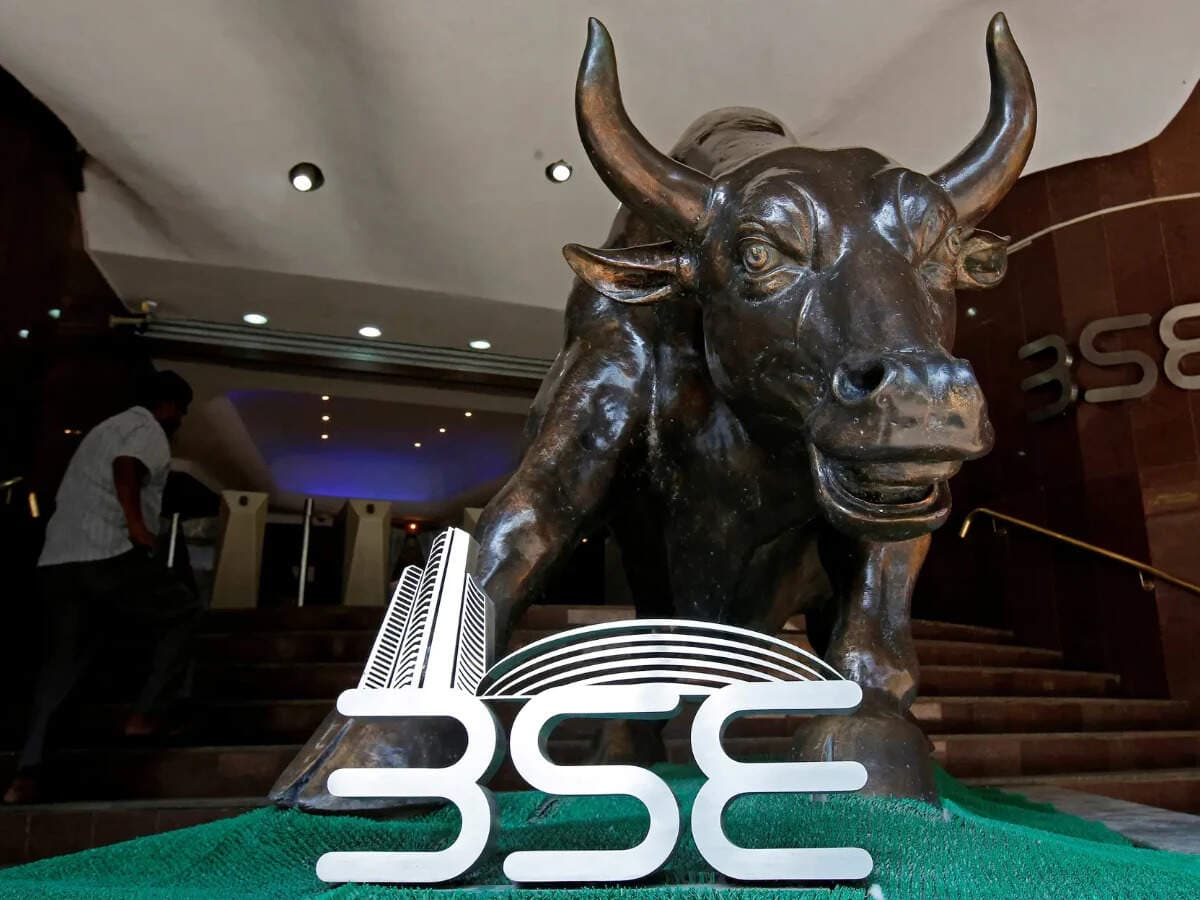
BSE’s Inclusion in Nifty 50 Demonstrates Index’s Ability to Influence Market Movements
On August 10, the NSE announced that the Bombay Stock Exchange (BSE) will replace Wipro in the Nifty 50 index, effective after market close on September 29. The new composition will begin on September 30. This marks the first time an exchange operator has entered the benchmark index of the exchange it operates.
Significance of the Inclusion
Traditionally, an index reflects investor preferences and market capital allocations rather than actively driving market actions. However, this change highlights how index revisions can influence stock prices beyond simply mirroring existing conditions.
Qualification Criteria and Market Impact
BSE qualified for inclusion based on the Nifty 50’s criteria, which requires a company’s average six-month free-float market capitalization to be at least 1.5 times that of the smallest current constituent. BSE’s average free-float market cap was approximately ₹1,40,879 crore, substantially higher than Wipro’s ₹55,930 crore.
Notably, BSE has no promoter holding, ensuring almost all of its market capitalization counts as free float. Following the announcement, BSE shares rose by about 4%.
Market Rebalancing and Investment Flows
Following this change, Nifty 50 index funds and ETFs are required to purchase BSE shares in proportion to its index weight at rebalancing. Analysts estimate that passive funds will buy around $741 million worth of BSE stock, while Wipro could experience outflows near $246 million as it moves to the Nifty Next 50.
This results in a net inflow for BSE, as more passive investment is benchmarked to the Nifty 50 compared to the Nifty Next 50. Stocks entering the headline index tend to face stronger buying pressure than the selling pressure experienced upon exiting.
Trading Dynamics Before and After Rebalancing
Typically, passive funds purchase shares close to the rebalancing date to minimize tracking errors. However, since index changes and effective dates are publicly known in advance, active investors often position themselves beforehand. This involves an initial rise in the stock’s market capitalization, speculation about index eligibility, analyst flow estimates, anticipatory trades by market participants, followed by index funds’ required purchases.
Interestingly, much of the price impact occurs before passive funds actually trade. Arbitrageurs buy shares in advance, accelerating demand. By the time index funds execute their trades, a significant portion of the expected price appreciation is already reflected in the stock value.
Impact on Company’s Fundamentals and Long-Term Valuation
It is important to note that index inclusion changes ownership structures but does not affect the company’s fundamental earnings or operations. BSE’s inclusion does not alter its transaction volumes, derivative market share, or regulatory environment. These factors will continue to determine the stock’s valuation over time.
However, increased institutional ownership from index inclusion can enhance trading liquidity, attract analyst coverage, and increase global investor interest. This may support a higher valuation multiple in the long term, although such outcomes are not guaranteed.
Conclusion
The case of BSE exemplifies this dynamic. The immediate buying generated by the rebalancing is a mechanical, temporary effect triggered by its Nifty 50 inclusion. While the listing brought attention to BSE, the company’s future prospects will ultimately determine if this recognition is sustained.
Arihant Baradia, Founder and CIO of Valtrust, authored this commentary. The opinions expressed are his own and do not reflect the position of The Economic Times.
Key Takeaways
- BSE replaces Wipro in the Nifty 50 starting September 30, marking a first for an exchange operator.
- Index revisions can influence market movements, not just mirror them.
- BSE’s free-float market capitalization significantly exceeds the required threshold for inclusion.
- Passive index funds will drive substantial buying pressure on BSE shares during rebalancing.
- Price impacts often occur ahead of passive fund purchases due to anticipatory trading by active investors and arbitrageurs.
- Index inclusion affects ownership structure but does not alter company fundamentals.
- Increased institutional ownership may enhance liquidity and investor interest, potentially supporting valuation.
![[object Object]](/_next/image?url=https%3A%2F%2Fcms.msmestory.com%2Fwp-content%2Fuploads%2F2026%2F08%2Fog-22.webp&w=3840&q=75)
![[object Object]](/_next/image?url=https%3A%2F%2Fcms.msmestory.com%2Fwp-content%2Fuploads%2F2026%2F08%2Fog-21.webp&w=3840&q=75)
![[object Object]](/_next/image?url=https%3A%2F%2Fcms.msmestory.com%2Fwp-content%2Fuploads%2F2026%2F08%2Fog-28.jpg&w=3840&q=75)
![[object Object]](/_next/image?url=https%3A%2F%2Fcms.msmestory.com%2Fwp-content%2Fuploads%2F2026%2F08%2Fog-21.jpg&w=3840&q=75)