



Discovering a Different Kind of Jungle Lodge in Kanha
Nestled in the heart of Kanha’s towering sal trees, a distinct type of forest lodge offers visitors more than luxury—it provides a genuine connection to the land, the community, and sustainability. This village-run forest lodge stands apart from the standard big resorts by embracing the forest and the local lifestyle rather than overshadowing it.
“The lodge didn’t clear the forest to make room. It asked the forest if it could stay.”
Built From the Land, For the Land
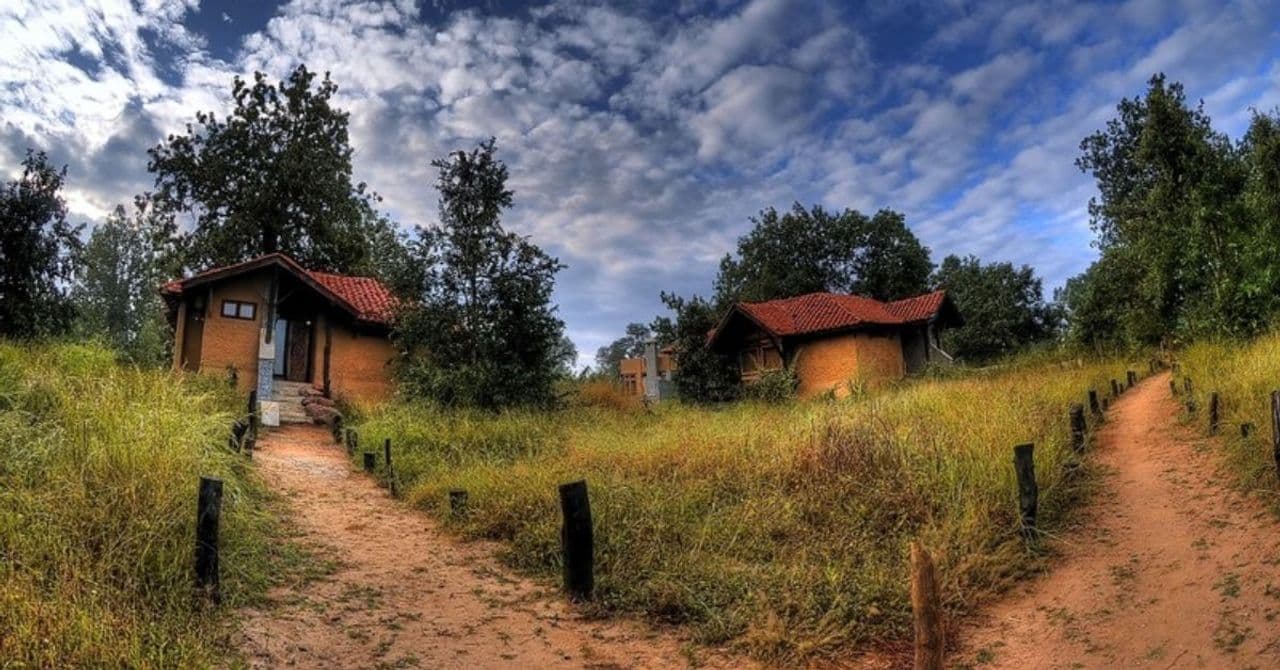
Unlike most jungle lodges built within forests, Kanha Earth Lodge was constructed because of the forest’s presence. The thick mud walls, rough stones from nearby farms, and reclaimed wood create a natural harmony with the surrounding environment. Every material was locally sourced, ensuring that the lodge fit seamlessly with the regional style and supported local livelihoods.
Harpreet Singh, the Lodge Manager, explains that the lodge uses only materials found nearby. Stones came from unused farm piles, timber was salvaged from wood that villagers would have otherwise burned, and roof tiles were crafted in local kilns. This careful approach deliberately avoids cutting down trees, with cottages built around existing trees and new saplings planted to restore green spaces over the past fifteen years.
The Village Behind the Lodge
The lodge’s connection to the local community is not limited to its building materials—it is deeply embedded in the people who run it. Most staff members hail from nearby villages, with over 80% of the 40-plus employees being locals. Many have worked at the lodge for over 15 years, dispelling the trend of rural youth migrating to cities by providing meaningful employment and ongoing training.
Beyond employment, the lodge actively supports the community. It contributes to the local school in Narna, encourages guest visits to foster cultural exchange, and participates in village sporting events. Such engagement highlights how the lodge invests in the community’s long-term wellbeing.
No Waste Left Behind
Sustainability here is ingrained in daily operations. Waste management begins in the kitchen, with separation of waste streams and composting of food scraps and leaves to nourish the organic kitchen garden. Treated water from a sewage plant irrigates this garden, and solar panels supply 60 to 70% of the lodge’s electricity.
The cottages are positioned near large trees that provide natural cooling, lessening the need for air conditioning. Energy-saving features such as low-watt LED bulbs and master switches are standard. Food wastage is minimized through pre-ordered meals tailored to guest preferences instead of buffets, ensuring resources are used efficiently.
From Garden to Table
Maya Madavi, the Garden Executive, leads the kitchen and butterfly gardens where herbs, vegetables, and garnishes are grown organically without chemicals or pesticides. The garden produces unique local plants not easily available in markets, while mushrooms cultivated in a controlled hut supplement kitchen needs.
The lodge sources traditional grains and pulses like Chinnor rice, Kulthi, Kodo, and Kutki directly from local farmers. Guests experience authentic Gond cuisine that celebrates regional festivals and culture, served under the sweeping branches of a mahua tree—emphasizing a profound taste of place and community.
Every Item Has a Story
Attention to detail extends beyond food and architecture to the furnishings and décor. Reused and repurposed materials form many lodge features: an old cart axle forms the rotating bar centerpiece, village vessels decorate the interiors, and furniture crafted by local carpenters uses railway sleepers and reclaimed timber.
Local Gond artisans contribute traditional crafts, while lanterns made from dried pumpkin shells illuminate pathways, reflecting village aesthetics. These elements create a lodge that not only looks indigenous but feels truly connected to the land and its people.
The Essentials
- How to reach: Jabalpur Airport, 160 km away
- Rates: Doubles start at Rs 27,000 plus taxes
- Best time to visit: November to June