





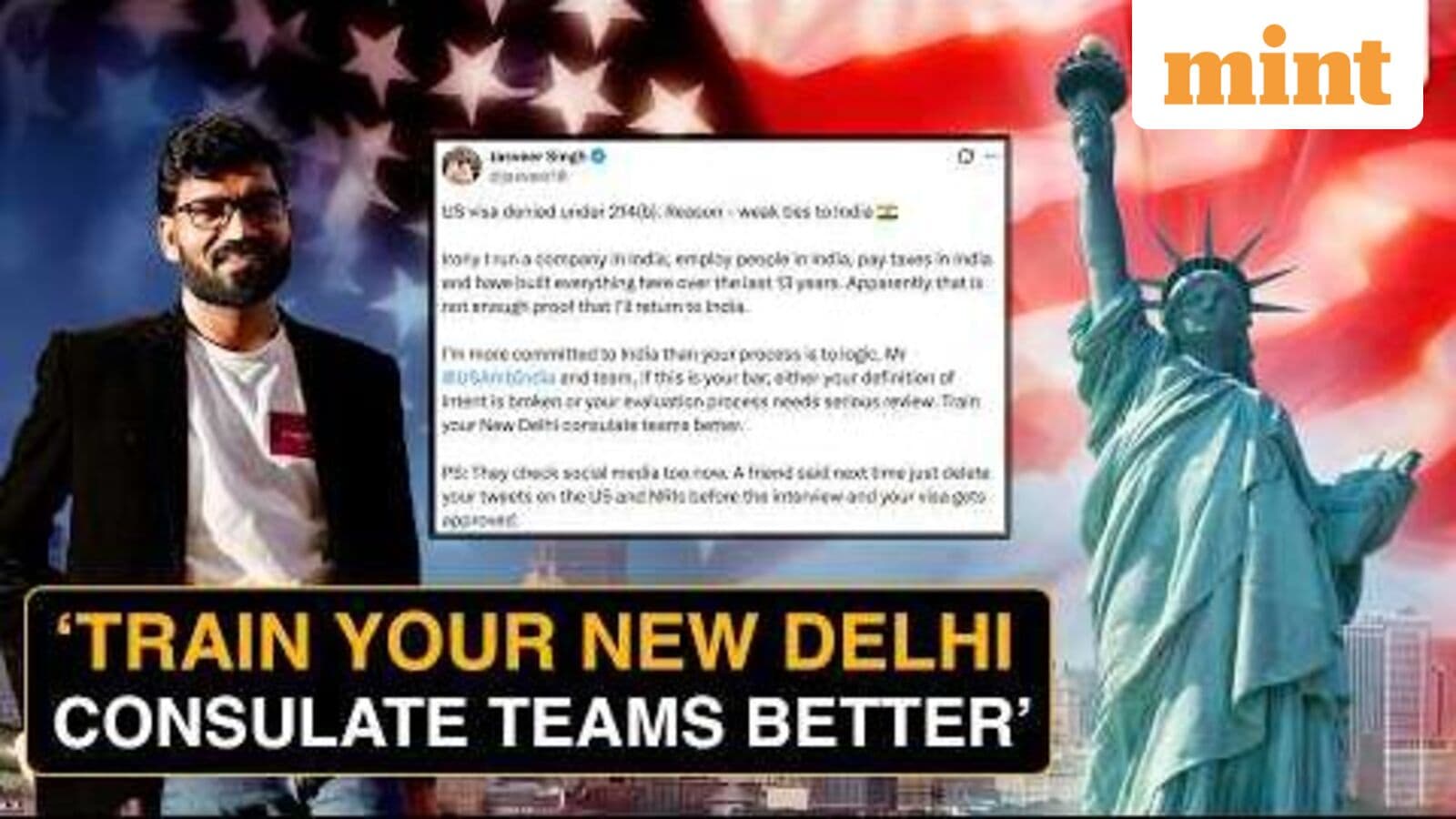
Trump’s U.S. Denies Visa to Indian CEO, Delhi Entrepreneur’s Sharp Retort Gains Attention
Indian entrepreneur Jasveer Singh, co-founder and CEO of a matrimonial platform based in Delhi, recently had his U.S. visa application refused under Section 214(b). Despite operating his company in India for 13 years, employing staff, and paying taxes locally, U.S. authorities concluded that this did not sufficiently demonstrate his intent to return to India.
Singh publicly shared the rejection letter on the social media platform X, addressing U.S. Ambassador Sergio Gor and suggesting improvements in training for staff at the New Delhi consulate. He also raised concerns about the visa approval process increasingly relying on social media screenings, questioning whether deleting critical tweets is becoming a necessity for obtaining approval.
This visa denial is part of a broader pattern affecting Indian entrepreneurs. For example, Bengaluru-based founder Dhananjay Yadav faced a similar refusal. These cases have sparked debate among business communities amid ongoing immigration scrutiny and policy changes instituted during the Trump administration.
Visa Denial Under Section 214(b)
Section 214(b) of the U.S. Immigration and Nationality Act is commonly cited when visa applicants fail to convince consular officers of their intent to return to their home country. Singh’s case highlights the challenges that established Indian entrepreneurs face during this process.
Concerns Over Social Media Screening
The increased emphasis on social media activity as part of visa scrutiny raises several issues for applicants. Jasveer Singh’s experience suggests that social media content may disproportionately influence visa decisions, leading to calls for clearer guidelines and fairer evaluation criteria.
Impact on Indian Entrepreneurs
Several Indian business leaders have encountered similar visa refusals, signaling a broader impact on the entrepreneurial ecosystem. The rules and their application during the Trump administration have intensified discussions about the United States’ stance on foreign entrepreneurs and its effect on bilateral business relations.
Key Takeaways
- Jasveer Singh, a Delhi-based CEO, was denied a U.S. visa under Section 214(b) despite his long-term business presence in India.
- The decision highlights challenges faced by Indian entrepreneurs in proving their ties to India to U.S. consular officers.
- Social media screenings have become an important and controversial aspect of the U.S. visa approval process.
- Similar visa refusals have impacted other Indian entrepreneurs, raising concerns in the business community.
- These cases occur amid an intensified immigration crackdown during the Trump administration.
![[object Object]](/_next/image?url=https%3A%2F%2Fcms.msmestory.com%2Fwp-content%2Fuploads%2F2026%2F08%2Fog-23.webp&w=3840&q=75)
![[object Object]](/_next/image?url=https%3A%2F%2Fcms.msmestory.com%2Fwp-content%2Fuploads%2F2026%2F08%2Fog-43.jpg&w=3840&q=75)
![[object Object]](/_next/image?url=https%3A%2F%2Fcms.msmestory.com%2Fwp-content%2Fuploads%2F2026%2F08%2Fog-9.png&w=3840&q=75)
![[object Object]](/_next/image?url=https%3A%2F%2Fcms.msmestory.com%2Fwp-content%2Fuploads%2F2026%2F08%2Fog-13.jpg&w=3840&q=75)
![[object Object]](/_next/image?url=https%3A%2F%2Fcms.msmestory.com%2Fwp-content%2Fuploads%2F2026%2F08%2Fog-2.png&w=3840&q=75)