









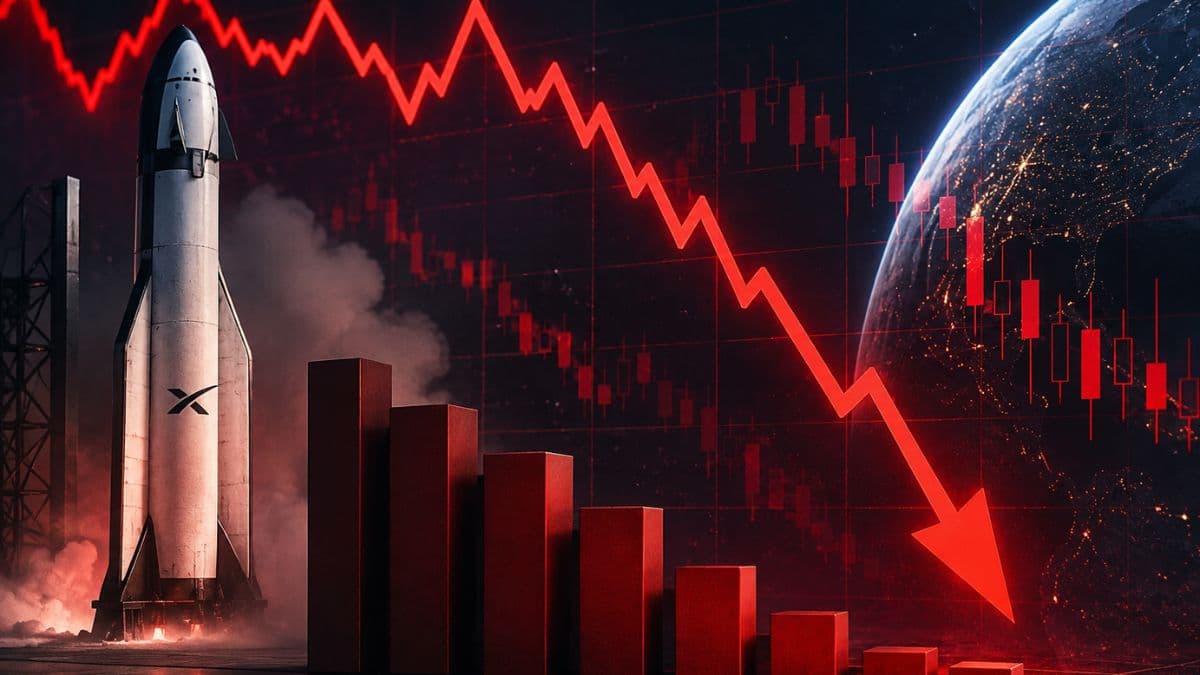
SpaceX eliminates post-IPO gains after stock dips below $150; factors behind the sell-off explained
SpaceX’s stock briefly fell below its initial public offering (IPO) price of $150 on Tuesday, dropping to approximately $149 before recovering later that day. This dip was notable since $150 marked the stock’s debut trading price on June 12.
Although the stock rebounded to trade in the mid-$150 range by early afternoon, the momentary slide below $150 indicated growing investor caution following the strong rally after its market launch.
Stock decline erases gains and affects valuation
The drop beneath $150 erased all gains accumulated since SpaceX went public. Even with the recovery, the stock traded well below its recent peak levels.
The company’s market valuation declined by about $600 billion from its high, briefly falling under the $2 trillion threshold.
Causes and market pressures behind the sell-off
The decline followed SpaceX’s most significant single-day loss since listing, when the stock fell over 16% on Monday, stirring concerns among investors.
This sharp decrease has increased pressure on major shareholders and market makers, who might attempt to support the stock as it nears critical price points.
Upcoming lock-up expirations and share supply concerns
Investors are wary due to upcoming lock-up expirations that will release more shares into the market.
According to Jeff Jacobson, a strategist at 22V Research speaking to Yahoo Finance, nearly 20% of shares held by insiders could become available for trading following SpaceX’s earnings report in early to mid-August.
There is also a potential 10% share unlock if the stock price rises 30% above its IPO level. Further share releases, each representing about 7%, are expected around August 21 and September 10.
Analysts warn that these events might increase the share supply, adding volatility in the near term.
Impact on other space stocks and market trends
SpaceX’s struggles have had a ripple effect on other space-related companies.
Data from Bespoke Investment Group showed that while a group of space stocks had gained an average of 99% this year before SpaceX’s IPO pricing on June 11 at $135, these same stocks have since declined by an average of 17%.
Valuation concerns and broader market pressures
The stock’s volatility has also reignited debate over SpaceX’s valuation.
The company has outlined ambitious initiatives involving artificial intelligence and space-based data centers; however, these ventures remain largely speculative.
Investors are closely watching the firm’s cash burn rate and future funding requirements.
Furthermore, the sell-off occurs amid broader pressure on technology stocks due to concerns about a potential AI bubble, with semiconductor companies like AMD and Nvidia also experiencing declines on Tuesday.
Analyst perspectives and future outlook
Some analysts suggest that stock volatility might lessen as more shares enter circulation and trading stabilizes.
Nonetheless, many emphasize that investors will ultimately require stronger financial performance to justify the excitement surrounding SpaceX.
Peter Boockvar, chief investment officer at Point BFG Wealth Partners, told CNBC last week that while enthusiasm and trading activity are currently driven by narrative and sentiment—including Elon Musk’s influence—the company’s fundamentals will eventually need to support that enthusiasm.
Disclaimer
This summary provides factual analysis and should not be construed as investment advice or a solicitation to buy or sell securities.
Investors are advised to perform their own independent research and consult licensed financial professionals in their jurisdictions.
Key Takeaways
- SpaceX’s stock briefly dipped below its IPO price of $150, erasing post-IPO gains before rebounding.
- The company’s valuation fell by about $600 billion, falling briefly below $2 trillion.
- Upcoming lock-up expirations could increase share supply and volatility.
- Other space-related stocks have declined following SpaceX’s price movements.
- Analysts emphasize the need for stronger fundamentals to sustain investor enthusiasm.
- Broader tech sector pressures related to AI concerns are also influencing stock performance.
![[object Object]](/_next/image?url=https%3A%2F%2Fcms.msmestory.com%2Fwp-content%2Fuploads%2F2026%2F09%2Fog-26.jpg&w=3840&q=75)
![[object Object]](/_next/image?url=https%3A%2F%2Fcms.msmestory.com%2Fwp-content%2Fuploads%2F2026%2F08%2Fog-20.webp&w=3840&q=75)
![[object Object]](/_next/image?url=https%3A%2F%2Fcms.msmestory.com%2Fwp-content%2Fuploads%2F2026%2F08%2Fog-19.jpg&w=3840&q=75)
![[object Object]](/_next/image?url=https%3A%2F%2Fcms.msmestory.com%2Fwp-content%2Fuploads%2F2026%2F08%2Fog-8.webp&w=3840&q=75)
![[object Object]](/_next/image?url=https%3A%2F%2Fcms.msmestory.com%2Fwp-content%2Fuploads%2F2026%2F08%2Fog-8-scaled.jpg&w=3840&q=75)