








How to Choose the Right Trademark Class for Your Business
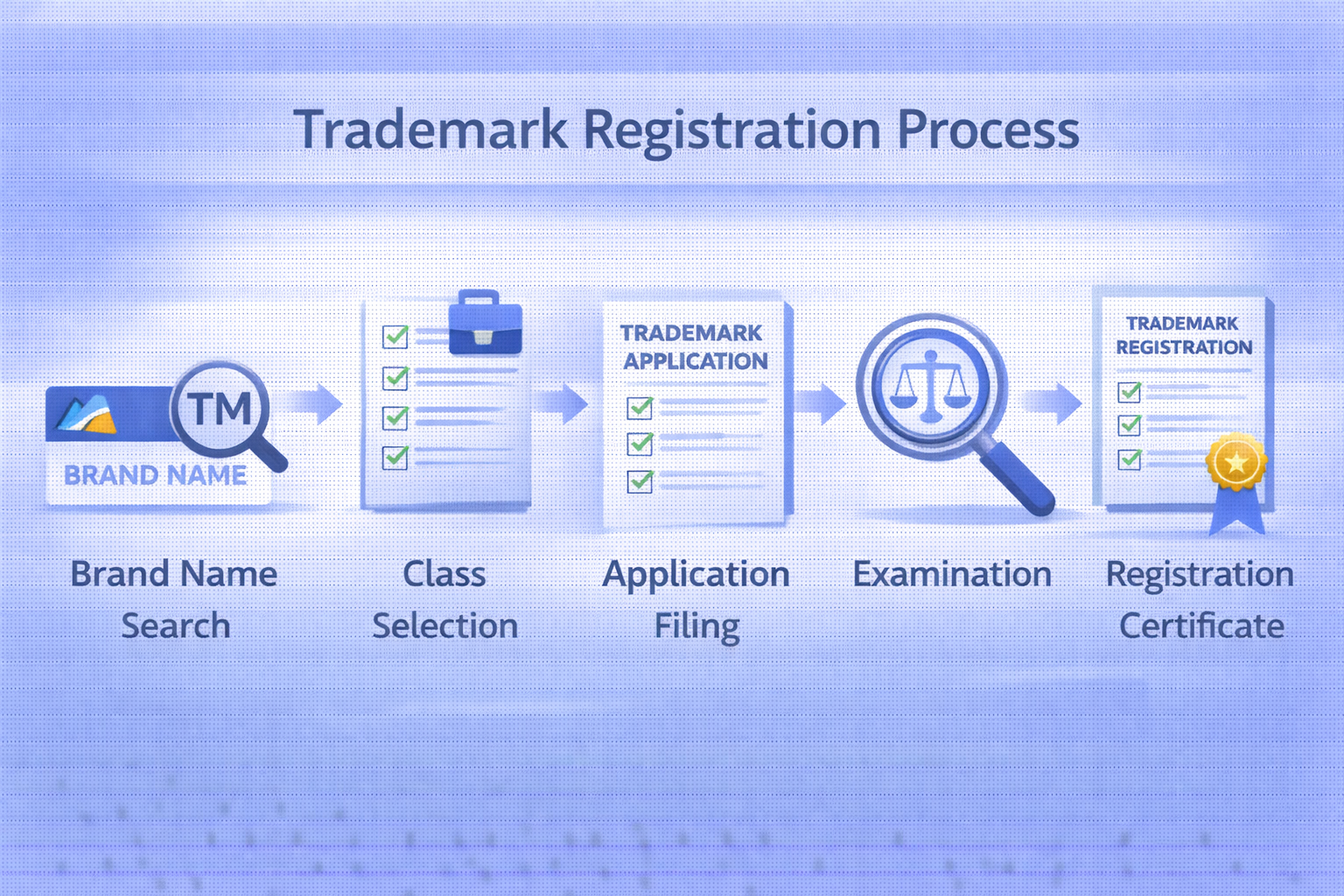
Choosing the correct trademark class is one of the most important — and most misunderstood — parts of the trademark registration process. Many business owners focus on picking a brand name but overlook classification, which can weaken their protection later.
A trademark class determines what type of goods or services your brand name is legally protected for. If you select the wrong class, your trademark may not protect your actual business activities.
This guide explains, in simple terms, how to choose the right trademark class for your business and avoid costly mistakes.
What Is a Trademark Class?
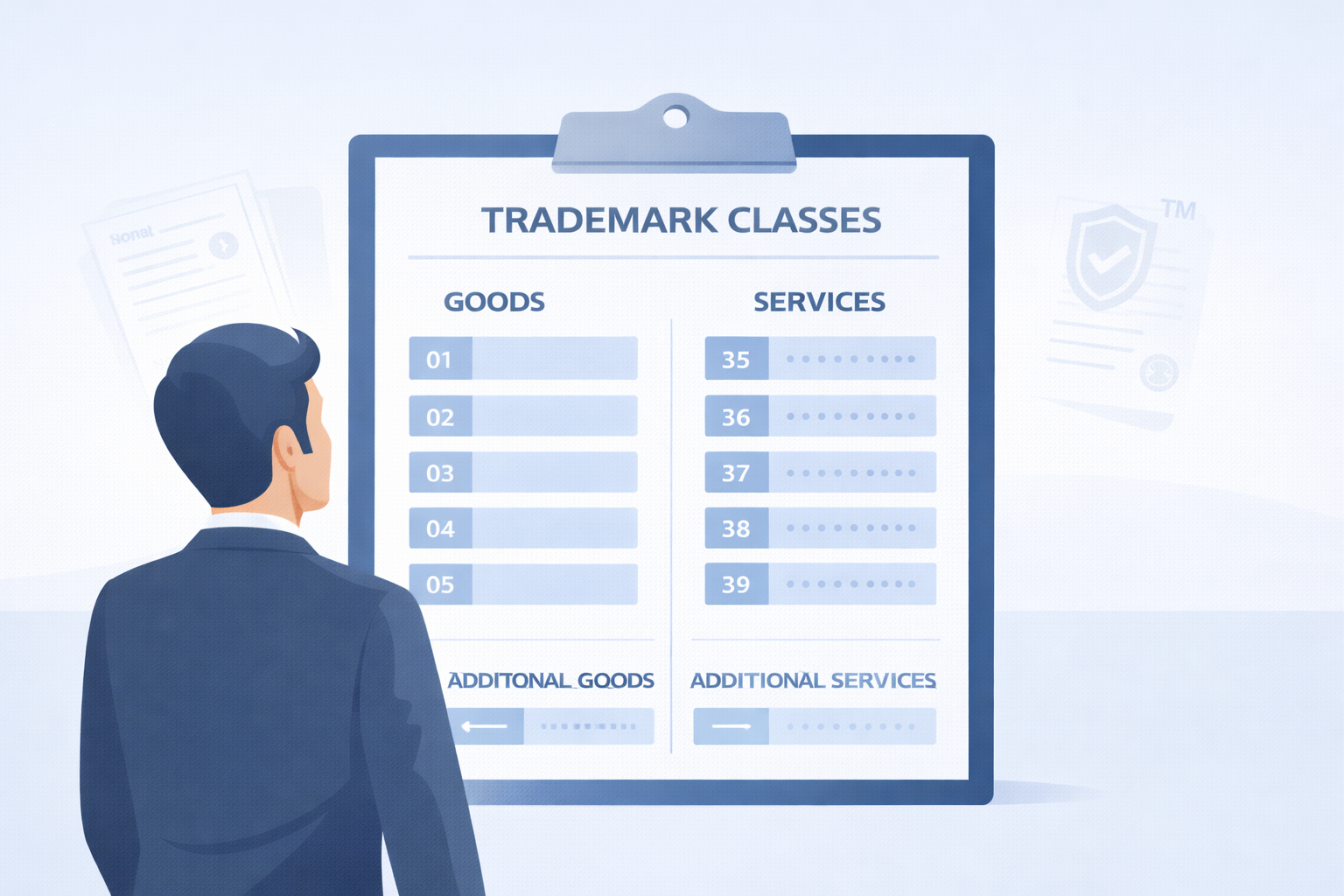
Trademark law divides all goods and services into 45 different classes:
- Classes 1–34 cover goods (physical products)
- Classes 35–45 cover services
When you apply for a trademark, you must choose the class (or classes) that match what your business offers. Your legal protection applies only to the classes you select.
For example, registering a trademark in a clothing class does not automatically protect the same name for software services.
Why Choosing the Right Class Matters
Your trademark rights are limited to the classes you file under. Selecting the wrong one can lead to:
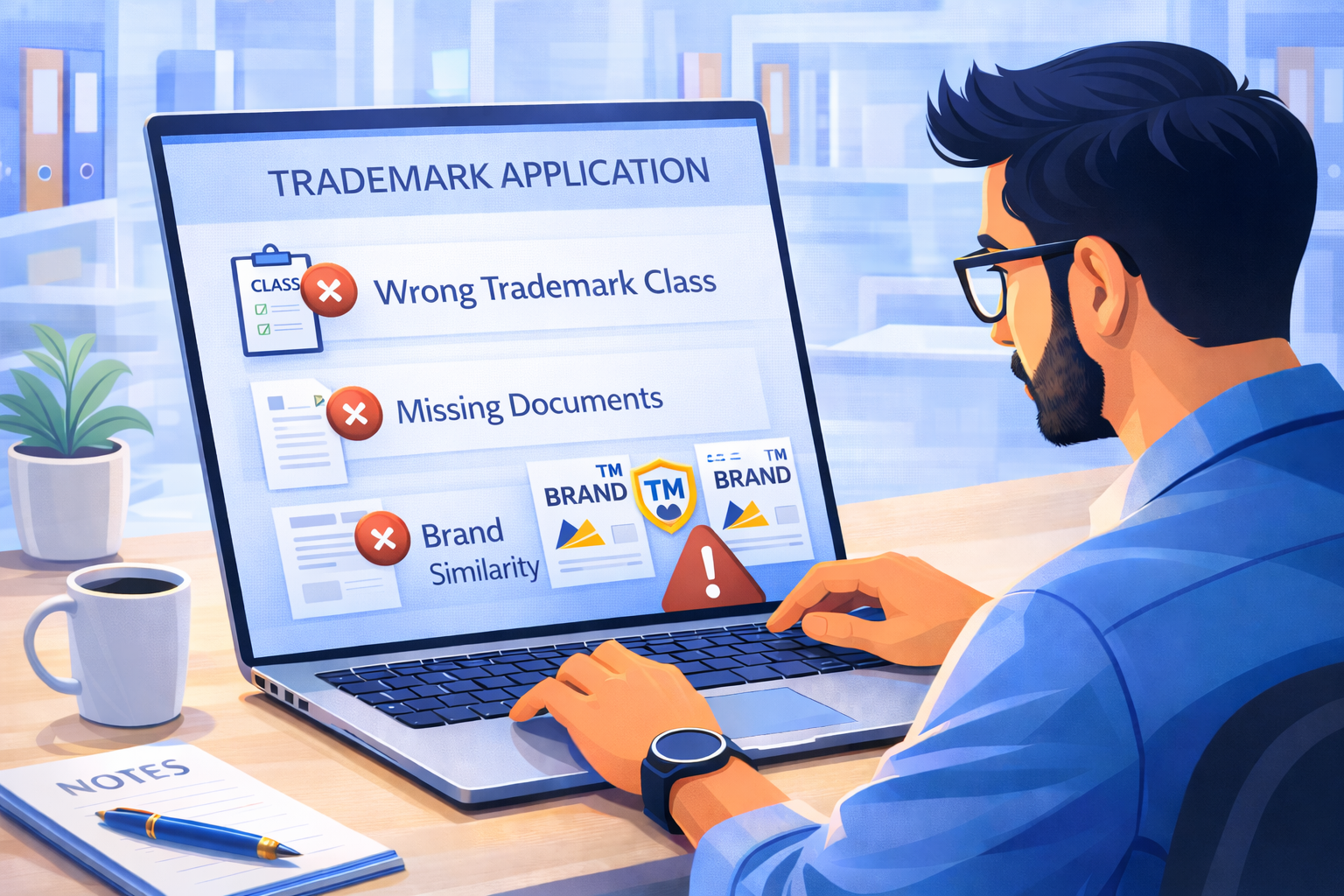
❌ Weak legal protection
❌ Inability to stop competitors in your actual industry
❌ Need to reapply and pay new fees
❌ Delays in approval
Proper classification ensures your brand is protected exactly where it operates.
Step 1: Clearly Define What Your Business Actually Does
Start by listing:
- What products do you sell?
- What services do you provide?
- Do you plan to expand into new areas soon?
Be specific. Instead of saying “fashion business,” break it down into:
- Clothing
- Footwear
- Retail store services
Each may fall into a different trademark class.
Step 2: Understand the Difference Between Goods and Services
This is where many businesses make mistakes.
Goods Classes (1–34)
These apply if you manufacture or sell physical products.
Examples:
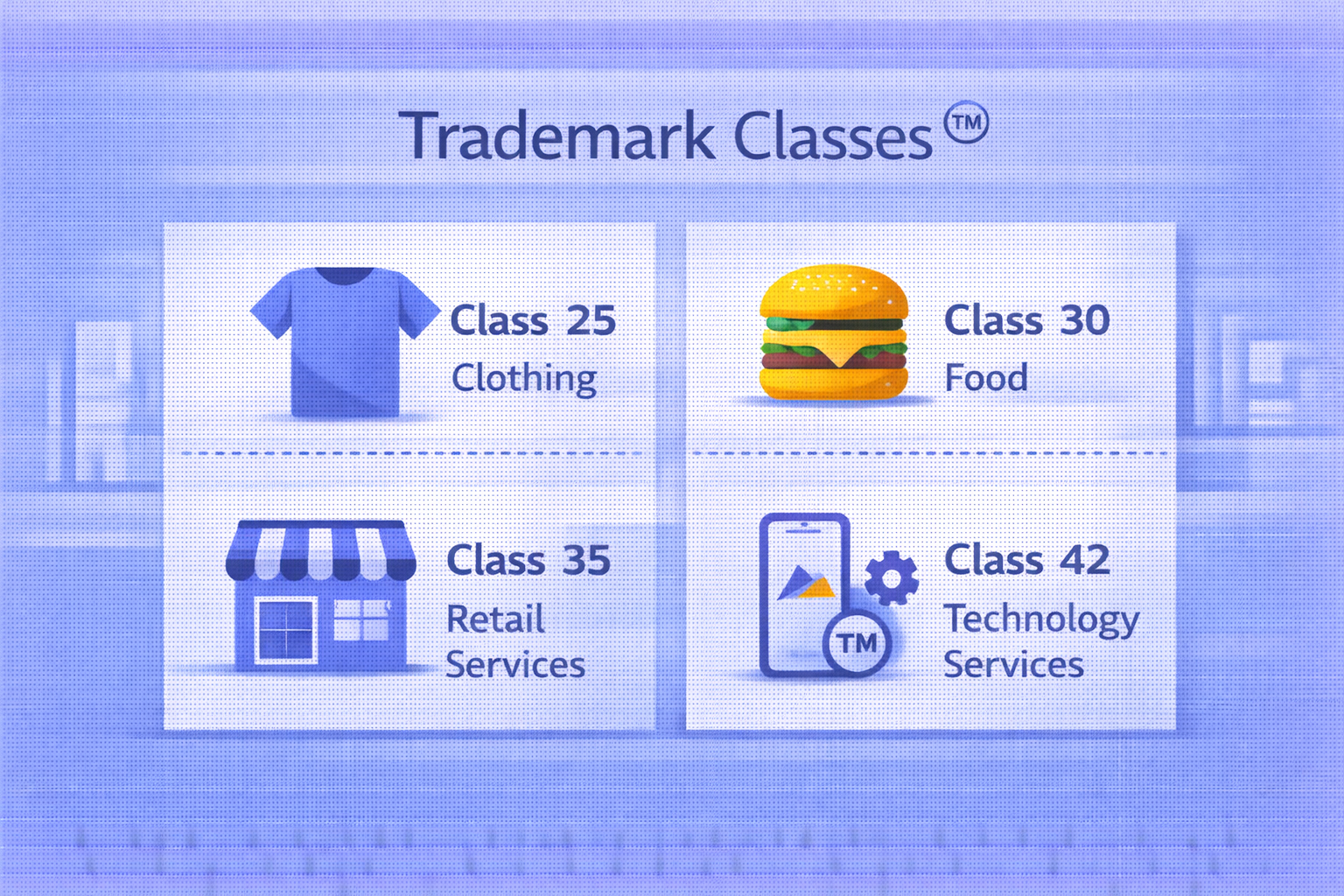
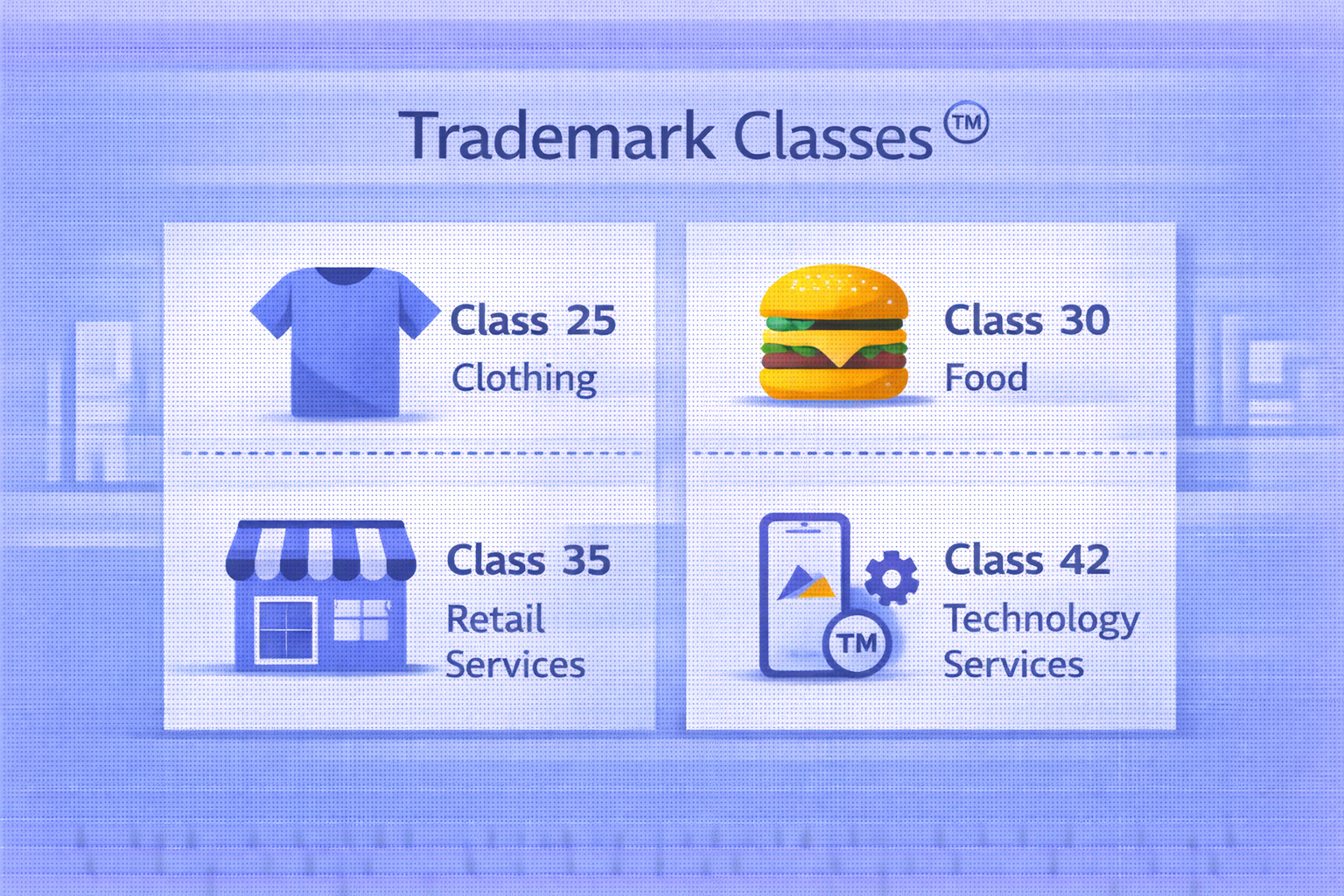
- Class 25 → Clothing
- Class 9 → Electronics and software
- Class 30 → Food items
Service Classes (35–45)
These apply if you offer services rather than products.
Examples:
- Class 35 → Advertising, retail, and business services
- Class 41 → Education and training
- Class 42 → IT and software services
If you both sell products and offer services, you may need multiple classes.
Step 3: Think About How Customers Experience Your Brand
Your trademark protects how your brand appears in the marketplace. Ask:
- Do customers buy a product under your brand name?
- Do they receive a service under your brand name?
- Does your website sell goods, provide services, or both?
For example, a skincare brand that manufactures products may file under a cosmetics class, while its beauty consultation service might fall under a service class.
Step 4: Consider Future Business Expansion
Trademark registration lasts for years, so think ahead. If you plan to:
✔ Launch new product lines
✔ Expand to new services
✔ Open physical stores
It may be smart to include relevant additional classes now instead of reapplying later.
However, avoid filing in unrelated classes just for safety — that can lead to objections or unnecessary fees.
Step 5: Avoid Overly Broad or Incorrect Descriptions
A common mistake is selecting a class that “sounds close” but doesn’t legally match your activities.
For example:
- Registering under a technology class when you only sell physical gadgets
- Registering under retail services when you only manufacture goods
Trademark examiners review whether your chosen class matches your business description. Mismatches can lead to objections.
Step 6: Use the Official Classification System
Trademark offices follow the Nice Classification system, which standardizes classes worldwide. Each class has a detailed list of included goods and services.
Reading the official descriptions helps ensure your business activity aligns with the correct class.
When Multiple Classes Are Needed
Many modern businesses operate across categories.
You may need more than one class if:
- You sell products AND offer services
- Your brand covers different product types
- Your company runs both manufacturing and retail operations
Each class requires a separate government fee, but it also provides separate legal protection.
Common Examples
|
Business Type |
Possible Trademark Classes |
| Clothing Brand | Class 25 (clothing), Class 35 (retail) |
| Software Company | Class 9 (software), Class 42 (IT services) |
| Restaurant | Class 43 (food services) |
| Online Marketplace | Class 35 (e-commerce services) |
These are examples — the right choice depends on your exact activities.
Mistakes to Avoid
🚫 Choosing a class based only on your company name
🚫 Copying a competitor’s class without checking your own services
🚫 Ignoring service classes when you sell online
🚫 Filing in too many unrelated classes
Correct classification balances protection and relevance.
Final Thoughts
Choosing the right trademark class is not just a formality — it defines the scope of your legal protection. A well-chosen class ensures your brand is protected in the industries where you actually operate, both now and in the future.
Taking the time to understand classification can save you from re-filing, legal gaps, and unnecessary expenses.
Choosing the right trademark class is a crucial step in securing proper legal protection for your brand. If you want clarity on classification, documentation, and filing, exploring the trademark registration process in India can help you move forward with confidence and avoid costly mistakes.