


What Are E-Commerce Exports? A Simple Guide for Indian MSMEs
India has set an ambitious target of achieving USD 1 trillion in merchandise exports by 2030, and cross-border e-commerce is expected to play a key role in reaching this goal. With growing global online demand, Indian MSMEs now have an opportunity to sell directly to international customers—without relying on traditional exporters or intermediaries.
What Are E-Commerce Exports?
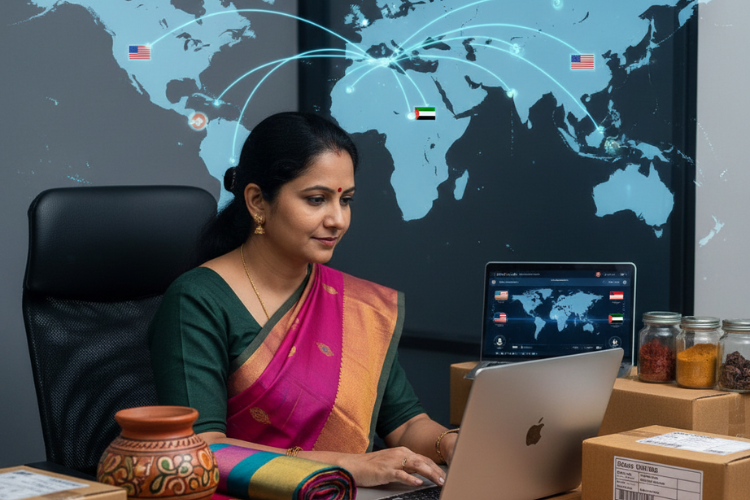
E-commerce exports refer to the sale of goods by Indian businesses to foreign customers through online or digital platforms. These exports are typically direct-to-consumer (B2C) and are enabled by e-commerce marketplaces, websites, or social media platforms.
In simple terms:
- An Indian MSME lists its products online
- A customer from another country places an order
- The product is shipped internationally
- Payment is received digitally
This entire process is supported by integrated services such as cataloguing, payments, logistics, customs clearance, and delivery, making exports faster and more cost-effective for small businesses.
How E-Commerce Exports Are Different from Traditional Exports
In traditional exports, MSMEs usually depend on agents, distributors, or bulk buyers. This involves higher costs, complex documentation, and limited market reach.
E-commerce exports simplify this process by offering:
- Direct access to global customers
- Integrated logistics and payment solutions
- Lower infrastructure and operational costs
- Faster market entry
As highlighted in the DGFT handbook, sellers on e-commerce platforms can focus more on product quality, packaging, branding, and marketing, while the platform manages backend operations.
Why E-Commerce Exports Are Important for MSMEs
However, building brand visibility in global markets requires more than just listing products. Strategic e-commerce marketing services help MSMEs reach the right international customers through optimized listings and digital promotion.
E-commerce exports offer several advantages, especially for small and medium businesses:
1. Access to Global Markets
MSMEs can sell to customers across the USA, Europe, Middle East, Asia-Pacific, and other regions without setting up offices abroad.
2. Better Profit Margins
Direct-to-consumer sales reduce middlemen, allowing exporters to earn higher margins.
3. Lower Costs
Compared to traditional exports, e-commerce requires less investment in infrastructure, warehousing, and distribution.
4. Year-Round Demand
Exporters can overcome domestic seasonality by tapping into international festivals, global sales events, and overseas demand cycles.
5. Brand Visibility
Selling globally helps MSMEs build international brand recognition and understand global quality standards and trends.
What Indian MSMEs Can Sell Through E-Commerce Exports
To successfully sell these products internationally, MSMEs must focus on online discoverability, customer targeting, and conversion, which can be supported through professional e-commerce marketing services.
India has a strong global reputation in several product categories. The handbook identifies high-potential export products, including:
- Textiles, apparel, and handloom products
- Leather goods
- Handicrafts and home décor
- Beauty and personal care products
- Jewellery and accessories
- AYUSH and herbal products
- Spices, tea, coffee, and food products
- Engineering and automotive components
- Religious and cultural artefacts
How MSMEs Can Start E-Commerce Exports
Once regulatory and logistics requirements are in place, the next critical step is attracting global buyers, where specialized e-commerce marketing services play an important role in scaling exports.
To begin e-commerce exports, MSMEs need to ensure basic compliance:
- PAN and business registration
- GSTIN
- Importer Exporter Code (IEC) from DGFT
- Bank account with AD code
- Understanding product-specific export policies and certifications
Products can be shipped through postal routes (Dak Niryat Kendras) or authorized courier services, both of which are supported by simplified digital procedures.
Government Support for E-Commerce Exporters
The Government of India, through the Foreign Trade Policy 2023, actively promotes e-commerce exports for artisans, craftsmen, and MSMEs. DGFT, along with Customs and the Department of Posts, is strengthening infrastructure, easing regulations, and resolving payment and logistics challenges to support exporters.
Conclusion
E-commerce exports are reshaping the way Indian MSMEs engage with global trade. By using digital platforms, integrated logistics solutions, and supportive government initiatives, even small and first-time exporters can reach international customers with ease. This model reduces traditional barriers such as high costs, complex procedures, and dependence on intermediaries. As a result, MSMEs can scale faster, build global brand presence, and compete effectively in international markets, making e-commerce exports a powerful driver of inclusive and sustainable export growth for India.
Need support to get started?
MSMEs exploring cross-border e-commerce can benefit from structured assistance in export planning, registration, compliance, logistics, and payments to ensure a smooth and compliant export journey.
![[object Object]](/_next/image?url=https%3A%2F%2Fcms.msmestory.com%2Fwp-content%2Fuploads%2F2026%2F04%2Fog-6.webp&w=3840&q=75)
![[object Object]](/_next/image?url=https%3A%2F%2Fcms.msmestory.com%2Fwp-content%2Fuploads%2F2026%2F02%2Fog-13.jpg&w=3840&q=75)
![[object Object]](/_next/image?url=https%3A%2F%2Fcms.msmestory.com%2Fwp-content%2Fuploads%2F2026%2F01%2FMSME-export-roadmap.png&w=3840&q=75)
![[object Object]](/_next/image?url=https%3A%2F%2Fcms.msmestory.com%2Fwp-content%2Fuploads%2F2026%2F01%2Fsocial-media-for-export-orders-for-MSMEs.png&w=3840&q=75)
![[object Object]](/_next/image?url=https%3A%2F%2Fcms.msmestory.com%2Fwp-content%2Fuploads%2F2026%2F01%2Fcost-breakdown-of-selling-on-e-commerce-platforms.png&w=3840&q=75)
![[object Object]](/_next/image?url=https%3A%2F%2Fcms.msmestory.com%2Fwp-content%2Fuploads%2F2026%2F01%2Fsocial-commerce-exports-for-global-sales.png&w=3840&q=75)
![[object Object]](/_next/image?url=https%3A%2F%2Fcms.msmestory.com%2Fwp-content%2Fuploads%2F2026%2F01%2FHow-MSMEs-Can-Export-Using-Global-Marketplaces-1.png&w=3840&q=75)
![[object Object]](/_next/image?url=https%3A%2F%2Fcms.msmestory.com%2Fwp-content%2Fuploads%2F2026%2F01%2Fwrite-off-rules-for-unrealised-export-proceeds.png&w=3840&q=75)
![[object Object]](/_next/image?url=https%3A%2F%2Fcms.msmestory.com%2Fwp-content%2Fuploads%2F2026%2F01%2FHandling-Returns-And-Rejections-in-Global-E-Commerce.png&w=3840&q=75)
![[object Object]](/_next/image?url=https%3A%2F%2Fcms.msmestory.com%2Fwp-content%2Fuploads%2F2026%2F01%2FIGST-refund-process-for-e-commerce-exports.png&w=3840&q=75)
![[object Object]](/_next/image?url=https%3A%2F%2Fcms.msmestory.com%2Fwp-content%2Fuploads%2F2026%2F01%2FRBI-guidelines-for-export-payments.png&w=3840&q=75)
![[object Object]](/_next/image?url=https%3A%2F%2Fcms.msmestory.com%2Fwp-content%2Fuploads%2F2026%2F01%2Fhow-MSMEs-receive-payments-from-international-e-commerce-sales.png&w=3840&q=75)
![[object Object]](/_next/image?url=https%3A%2F%2Fcms.msmestory.com%2Fwp-content%2Fuploads%2F2026%2F01%2Fhow-to-reduce-logistics-cost-in-cross-border-e-commerce-1.png&w=3840&q=75)
![[object Object]](/_next/image?url=https%3A%2F%2Fcms.msmestory.com%2Fwp-content%2Fuploads%2F2026%2F01%2FPostal-and-courier-export-weight-limits-and-costs.png&w=3840&q=75)
![[object Object]](/_next/image?url=https%3A%2F%2Fcms.msmestory.com%2Fwp-content%2Fuploads%2F2026%2F01%2FDak-Niryat-Kendra.png&w=3840&q=75)
![[object Object]](/_next/image?url=https%3A%2F%2Fcms.msmestory.com%2Fwp-content%2Fuploads%2F2026%2F01%2FIndia-Post-vs-courier-services-for-e-commerce-exports.png&w=3840&q=75)
![[object Object]](/_next/image?url=https%3A%2F%2Fcms.msmestory.com%2Fwp-content%2Fuploads%2F2026%2F01%2FPackaging-Guidelines-for-E-Commerce-Exports-from-India.png&w=3840&q=75)
![[object Object]](/_next/image?url=https%3A%2F%2Fcms.msmestory.com%2Fwp-content%2Fuploads%2F2026%2F01%2FSEO-Friendly-Product-Descriptions-for-International-E-Commerce.png&w=3840&q=75)
![[object Object]](/_next/image?url=https%3A%2F%2Fcms.msmestory.com%2Fwp-content%2Fuploads%2F2026%2F01%2FProduct-Images-and-Descriptions-for-E-Commerce-Exports.png&w=3840&q=75)
![[object Object]](/_next/image?url=https%3A%2F%2Fcms.msmestory.com%2Fwp-content%2Fuploads%2F2026%2F01%2FHigh-converting-product-catalogue-for-global-buyers.png&w=3840&q=75)