





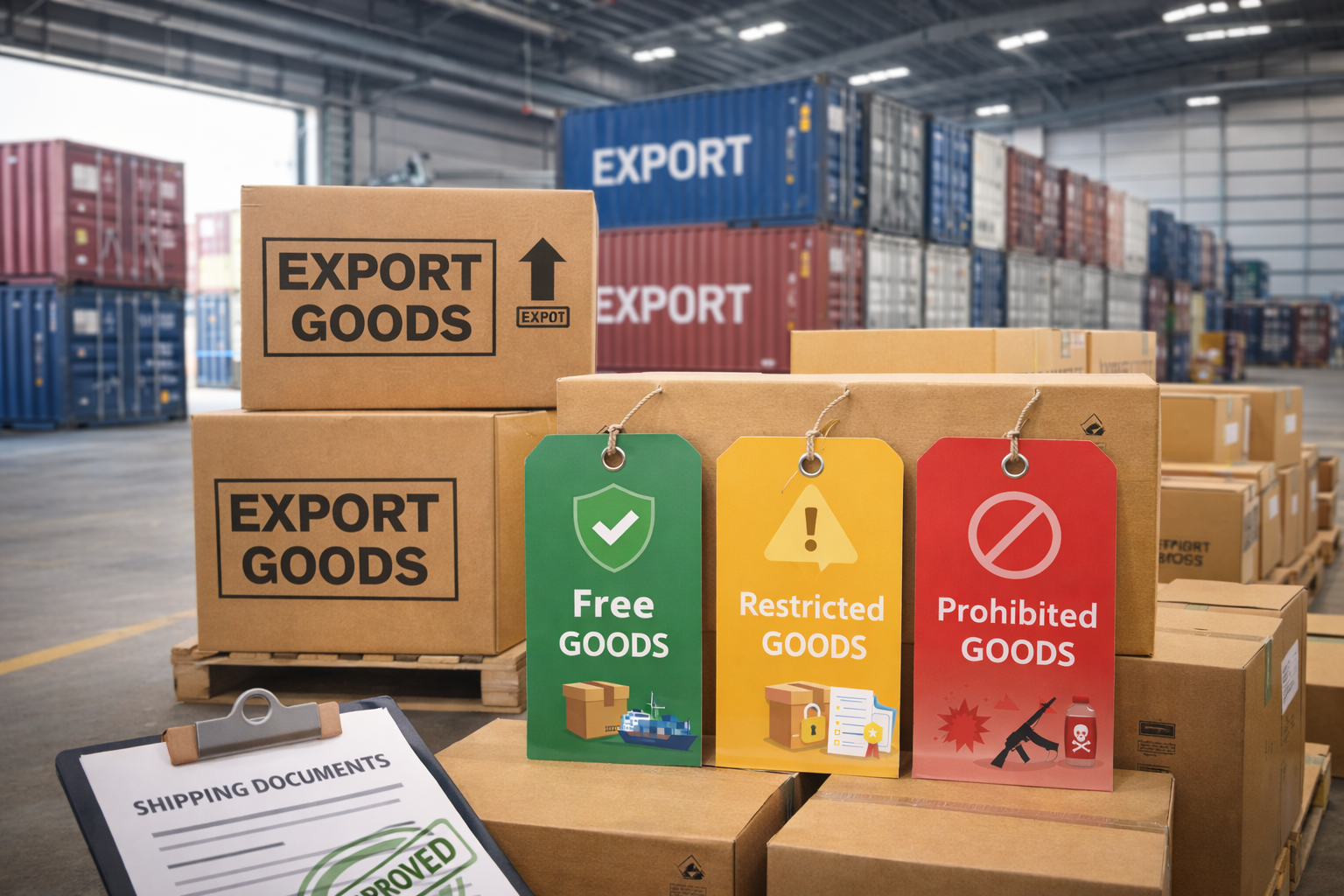
Export Policy Explained: Free vs Restricted vs Prohibited Goods
For MSMEs planning to enter international markets, understanding export policy is a critical step that cannot be ignored. While finding buyers and managing logistics are important, exporting goods without checking their export policy status can lead to serious legal and financial consequences.
Every product exported from India falls under one of three export policy categories: Free, Restricted, or Prohibited. Knowing the difference between these categories helps MSMEs stay compliant, avoid shipment delays, and build credibility in global trade.
This article explains export policy classification in a simple and practical way, helping MSMEs approach exports with clarity and confidence.
What Is Export Policy and Why Does It Matter?
Export policy defines the conditions under which goods can be legally exported from India. It determines whether a product can be exported freely, requires special authorization, or is completely banned from export.
Export policy classification is closely linked to product classification and regulatory requirements. MSMEs that align export planning with eCommerce management services are better equipped to handle these checks accurately before shipping goods abroad.
Ignoring export policy rules can result in shipment seizure, penalties, or long-term compliance issues.
Free Export Goods: What MSMEs Should Know
Goods classified as Free can be exported without obtaining any special export authorization, as long as standard regulatory and documentation requirements are fulfilled.
Key Features of Free Export Goods:
- No export license required
- Standard export documentation applies
- Subject to quality, safety, and labeling norms
Most consumer goods, textiles, handicrafts, apparel, and many engineering products fall under this category.
However, “Free” does not mean “no compliance.” MSMEs must still ensure correct product classification, proper documentation, and destination-country compliance. Many exporters rely on professional eCommerce export management services to manage these processes efficiently.
Restricted Export Goods: Authorization Is Mandatory
Restricted goods can be exported only after obtaining specific authorization from the concerned authorities. These restrictions are imposed to regulate sensitive products, protect domestic supply, or ensure environmental and safety standards.
Key Features of Restricted Export Goods:
- Export allowed only with official authorization
- Additional approvals or certifications required
- Quantity, destination, or end-use may be regulated
Examples may include certain agricultural items, chemicals, or strategic goods.
For MSMEs, exporting restricted goods without authorization can result in heavy penalties and shipment rejection. This is why many businesses seek MSME export planning, registration & compliance support before proceeding with exports.
Prohibited Export Goods: Absolute Restrictions
Prohibited goods are items that cannot be exported under any circumstances. These restrictions are imposed to safeguard national interests, public safety, cultural heritage, or environmental protection.
Key Features of Prohibited Export Goods:
- Export is completely banned
- No license or authorization can override the restriction
- Violations may lead to legal action and permanent penalties
Attempting to export prohibited goods—even unintentionally—can severely damage an MSME’s reputation and export eligibility. Using end-to-end eCommerce management services helps businesses identify such risks early in the export planning stage.
Why Export Policy Understanding Is Crucial for MSMEs
1. Prevents Legal and Financial Risks
Misclassifying goods or ignoring export restrictions can lead to penalties, shipment delays, and financial losses.
2. Builds International Buyer Confidence
Buyers prefer exporters who understand regulations and deliver compliant shipments consistently.
3. Ensures Smooth Customs Clearance
Customs authorities rely on export policy classification to assess shipment eligibility quickly.
4. Supports Sustainable Export Growth
Compliance-first exporters face fewer disruptions and scale globally with confidence.
MSMEs that integrate export policy checks with expert eCommerce management services significantly reduce operational risks.
How MSMEs Should Approach Export Policy Classification
A structured approach includes:
- Identifying the correct product classification
- Verifying export policy status
- Checking authorization and certification requirements
- Confirming destination-country regulations
Guesswork should be avoided at all costs. MSMEs that use strategic eCommerce management support ensure accuracy and regulatory readiness before shipping goods.
Common Export Policy Mistakes MSMEs Make
- Assuming all products are freely exportable
- Ignoring restricted goods authorization requirements
- Misclassifying goods to speed up exports
- Failing to monitor policy updates
Such mistakes can halt export operations and damage buyer trust permanently.
Conclusion
Understanding export policy—Free, Restricted, and Prohibited goods—is a foundational requirement for MSMEs entering international trade. Export success depends not only on sales and logistics but also on compliance, accuracy, and regulatory awareness.
To ensure your export plans align with regulations, MSMEs should also understand how products are classified and what compliance requirements apply before shipping goods internationally.
![[object Object]](/_next/image?url=https%3A%2F%2Fcms.msmestory.com%2Fwp-content%2Fuploads%2F2026%2F04%2Fog-6.webp&w=3840&q=75)
![[object Object]](/_next/image?url=https%3A%2F%2Fcms.msmestory.com%2Fwp-content%2Fuploads%2F2026%2F02%2Fog-13.jpg&w=3840&q=75)
![[object Object]](/_next/image?url=https%3A%2F%2Fcms.msmestory.com%2Fwp-content%2Fuploads%2F2026%2F01%2FMSME-export-roadmap.png&w=3840&q=75)
![[object Object]](/_next/image?url=https%3A%2F%2Fcms.msmestory.com%2Fwp-content%2Fuploads%2F2026%2F01%2Fsocial-media-for-export-orders-for-MSMEs.png&w=3840&q=75)
![[object Object]](/_next/image?url=https%3A%2F%2Fcms.msmestory.com%2Fwp-content%2Fuploads%2F2026%2F01%2Fcost-breakdown-of-selling-on-e-commerce-platforms.png&w=3840&q=75)
![[object Object]](/_next/image?url=https%3A%2F%2Fcms.msmestory.com%2Fwp-content%2Fuploads%2F2026%2F01%2Fsocial-commerce-exports-for-global-sales.png&w=3840&q=75)
![[object Object]](/_next/image?url=https%3A%2F%2Fcms.msmestory.com%2Fwp-content%2Fuploads%2F2026%2F01%2FHow-MSMEs-Can-Export-Using-Global-Marketplaces-1.png&w=3840&q=75)
![[object Object]](/_next/image?url=https%3A%2F%2Fcms.msmestory.com%2Fwp-content%2Fuploads%2F2026%2F01%2Fwrite-off-rules-for-unrealised-export-proceeds.png&w=3840&q=75)
![[object Object]](/_next/image?url=https%3A%2F%2Fcms.msmestory.com%2Fwp-content%2Fuploads%2F2026%2F01%2FHandling-Returns-And-Rejections-in-Global-E-Commerce.png&w=3840&q=75)
![[object Object]](/_next/image?url=https%3A%2F%2Fcms.msmestory.com%2Fwp-content%2Fuploads%2F2026%2F01%2FIGST-refund-process-for-e-commerce-exports.png&w=3840&q=75)
![[object Object]](/_next/image?url=https%3A%2F%2Fcms.msmestory.com%2Fwp-content%2Fuploads%2F2026%2F01%2FRBI-guidelines-for-export-payments.png&w=3840&q=75)
![[object Object]](/_next/image?url=https%3A%2F%2Fcms.msmestory.com%2Fwp-content%2Fuploads%2F2026%2F01%2Fhow-MSMEs-receive-payments-from-international-e-commerce-sales.png&w=3840&q=75)
![[object Object]](/_next/image?url=https%3A%2F%2Fcms.msmestory.com%2Fwp-content%2Fuploads%2F2026%2F01%2Fhow-to-reduce-logistics-cost-in-cross-border-e-commerce-1.png&w=3840&q=75)
![[object Object]](/_next/image?url=https%3A%2F%2Fcms.msmestory.com%2Fwp-content%2Fuploads%2F2026%2F01%2FPostal-and-courier-export-weight-limits-and-costs.png&w=3840&q=75)
![[object Object]](/_next/image?url=https%3A%2F%2Fcms.msmestory.com%2Fwp-content%2Fuploads%2F2026%2F01%2FDak-Niryat-Kendra.png&w=3840&q=75)
![[object Object]](/_next/image?url=https%3A%2F%2Fcms.msmestory.com%2Fwp-content%2Fuploads%2F2026%2F01%2FIndia-Post-vs-courier-services-for-e-commerce-exports.png&w=3840&q=75)
![[object Object]](/_next/image?url=https%3A%2F%2Fcms.msmestory.com%2Fwp-content%2Fuploads%2F2026%2F01%2FPackaging-Guidelines-for-E-Commerce-Exports-from-India.png&w=3840&q=75)
![[object Object]](/_next/image?url=https%3A%2F%2Fcms.msmestory.com%2Fwp-content%2Fuploads%2F2026%2F01%2FSEO-Friendly-Product-Descriptions-for-International-E-Commerce.png&w=3840&q=75)
![[object Object]](/_next/image?url=https%3A%2F%2Fcms.msmestory.com%2Fwp-content%2Fuploads%2F2026%2F01%2FProduct-Images-and-Descriptions-for-E-Commerce-Exports.png&w=3840&q=75)
![[object Object]](/_next/image?url=https%3A%2F%2Fcms.msmestory.com%2Fwp-content%2Fuploads%2F2026%2F01%2FHigh-converting-product-catalogue-for-global-buyers.png&w=3840&q=75)