








E-Commerce Export Timing Strategy: When and Where Indian Exporters Should Sell
An effective e-commerce export timing strategy goes beyond selecting the right product—it focuses on identifying the right market and the right moment to sell. For Indian exporters, success in cross-border e-commerce depends on understanding global online shopping behavior, regional demand cycles, diaspora-led consumption patterns, and international festival calendars. By aligning product availability and promotions with these demand peaks, exporters can improve visibility, accelerate sales, and achieve sustainable growth in global e-commerce markets.
This blog explains how Indian MSMEs can optimize their timing and market selection to maximize export sales, especially when supported by professional eCommerce management services.
1. Why Timing Matters in E-Commerce Exports
Consumer demand is not uniform throughout the year. Online buying behavior is influenced by:
- Regional holidays and festivals
- Global sales events
- Seasonal shopping trends
- Cultural and lifestyle preferences
Exporters who align product availability with these demand peaks gain higher visibility, faster sales, and better margins. Many MSMEs rely on end-to-end eCommerce management services to plan listings, inventory, and logistics around these peak periods.
2. Choosing Where to Sell: Market-Based Strategy
Different regions show different levels of e-commerce maturity and spending behavior.
High-Potential E-Commerce Regions
- United States: Large online shopper base and frequent global sales events
- Europe: Stable demand with focus on quality and seasonal shopping
- Middle East: Fast-growing e-commerce adoption with strong diaspora demand
- Asia-Pacific: Rapid digital growth and festival-driven buying
- Latin America: Emerging markets with increasing online shopping activity
Selecting markets based on consumer behavior rather than assumptions significantly improves export success. MSMEs that combine market selection with strategic eCommerce export management services reduce entry risks.
3. Understanding Shopping Behavior by Region
A strong timing strategy begins with understanding how buyers shop in different regions.
Key Factors to Consider
- Age-based demand patterns
- Cultural preferences
- Seasonal buying cycles
- Gifting traditions
For example, gifting and festive décor sell strongly during festivals, while lifestyle and everyday products see steady year-round demand. Exporters that analyze this data using eCommerce marketplace management services can optimize product positioning and timing.
4. Leveraging Indian Diaspora for Market Entry
Indian-origin populations living abroad create predictable demand for Indian products.
Why Diaspora Markets Are Ideal for Timing
- Regular purchasing during Indian festivals
- Strong demand for culturally rooted products
- Repeat buying behavior throughout the year
Markets with large diaspora populations offer exporters a stable starting point for timing export campaigns, especially when paired with MSME export planning, registration & compliance support.
5. Timing Sales Around Indian Festivals
Indian festivals drive global demand, particularly among diaspora consumers.
Major Indian Festivals to Plan For
- Diwali
- Raksha Bandhan
- Holi
- Ganesh Chaturthi
- Eid
Exporters should prepare inventory, listings, and promotions well in advance to capture peak demand during these periods. Structured planning is often supported through eCommerce management services to avoid last-minute gaps.
6. Aligning with Global Sales Events
Global e-commerce events create massive sales opportunities across regions.
Important International Events
- New Year
- Black Friday
- Cyber Monday
- Christmas
- Valentine’s Day
- Mother’s Day and Father’s Day
These events attract both diaspora and non-diaspora buyers, expanding market reach beyond niche segments. MSMEs leveraging eCommerce management services can maximize visibility during platform-led global campaigns.
7. Country-Specific Seasonal Opportunities
Every region has unique sales drivers.
Examples
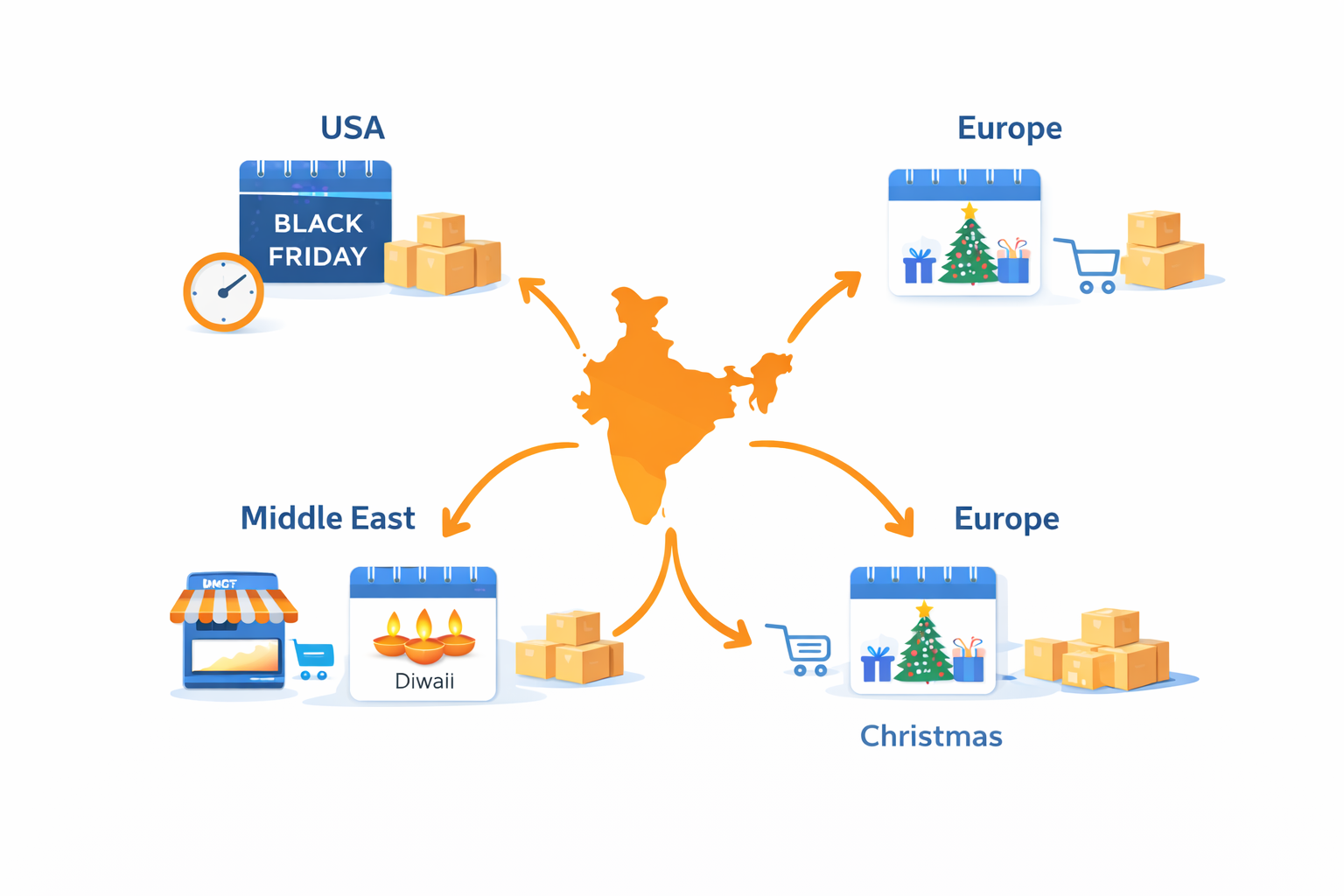
- Thanksgiving and Black Friday in the USA
- Christmas and Easter in Europe
- Ramadan and Eid in Middle Eastern countries
- Chinese New Year in East Asia
Understanding country-specific calendars allows exporters to tailor promotions, pricing, and product offerings more effectively.
8. Building a Year-Round Export Calendar
A successful timing strategy spreads sales across the year.
Benefits of a Structured Export Calendar
- Consistent cash flow
- Better production planning
- Reduced dependence on a single market or season
- Higher inventory efficiency
By mapping multiple festivals and events across regions, exporters can maintain steady export momentum throughout the year with the help of professional eCommerce management services.
Conclusion
Timing and market selection are critical success factors in e-commerce exports. By understanding where demand exists and when it peaks, Indian exporters can significantly improve sales performance.
Aligning exports with regional shopping behavior, diaspora demand, and global festivals—supported by strategic eCommerce management services—enables MSMEs to build sustainable, scalable, and predictable export growth through e-commerce.
![[object Object]](/_next/image?url=https%3A%2F%2Fcms.msmestory.com%2Fwp-content%2Fuploads%2F2026%2F04%2Fog-6.webp&w=3840&q=75)
![[object Object]](/_next/image?url=https%3A%2F%2Fcms.msmestory.com%2Fwp-content%2Fuploads%2F2026%2F02%2Fog-13.jpg&w=3840&q=75)
![[object Object]](/_next/image?url=https%3A%2F%2Fcms.msmestory.com%2Fwp-content%2Fuploads%2F2026%2F01%2FMSME-export-roadmap.png&w=3840&q=75)
![[object Object]](/_next/image?url=https%3A%2F%2Fcms.msmestory.com%2Fwp-content%2Fuploads%2F2026%2F01%2Fsocial-media-for-export-orders-for-MSMEs.png&w=3840&q=75)
![[object Object]](/_next/image?url=https%3A%2F%2Fcms.msmestory.com%2Fwp-content%2Fuploads%2F2026%2F01%2Fcost-breakdown-of-selling-on-e-commerce-platforms.png&w=3840&q=75)
![[object Object]](/_next/image?url=https%3A%2F%2Fcms.msmestory.com%2Fwp-content%2Fuploads%2F2026%2F01%2Fsocial-commerce-exports-for-global-sales.png&w=3840&q=75)
![[object Object]](/_next/image?url=https%3A%2F%2Fcms.msmestory.com%2Fwp-content%2Fuploads%2F2026%2F01%2FHow-MSMEs-Can-Export-Using-Global-Marketplaces-1.png&w=3840&q=75)
![[object Object]](/_next/image?url=https%3A%2F%2Fcms.msmestory.com%2Fwp-content%2Fuploads%2F2026%2F01%2Fwrite-off-rules-for-unrealised-export-proceeds.png&w=3840&q=75)
![[object Object]](/_next/image?url=https%3A%2F%2Fcms.msmestory.com%2Fwp-content%2Fuploads%2F2026%2F01%2FHandling-Returns-And-Rejections-in-Global-E-Commerce.png&w=3840&q=75)
![[object Object]](/_next/image?url=https%3A%2F%2Fcms.msmestory.com%2Fwp-content%2Fuploads%2F2026%2F01%2FIGST-refund-process-for-e-commerce-exports.png&w=3840&q=75)
![[object Object]](/_next/image?url=https%3A%2F%2Fcms.msmestory.com%2Fwp-content%2Fuploads%2F2026%2F01%2FRBI-guidelines-for-export-payments.png&w=3840&q=75)
![[object Object]](/_next/image?url=https%3A%2F%2Fcms.msmestory.com%2Fwp-content%2Fuploads%2F2026%2F01%2Fhow-MSMEs-receive-payments-from-international-e-commerce-sales.png&w=3840&q=75)
![[object Object]](/_next/image?url=https%3A%2F%2Fcms.msmestory.com%2Fwp-content%2Fuploads%2F2026%2F01%2Fhow-to-reduce-logistics-cost-in-cross-border-e-commerce-1.png&w=3840&q=75)
![[object Object]](/_next/image?url=https%3A%2F%2Fcms.msmestory.com%2Fwp-content%2Fuploads%2F2026%2F01%2FPostal-and-courier-export-weight-limits-and-costs.png&w=3840&q=75)
![[object Object]](/_next/image?url=https%3A%2F%2Fcms.msmestory.com%2Fwp-content%2Fuploads%2F2026%2F01%2FDak-Niryat-Kendra.png&w=3840&q=75)
![[object Object]](/_next/image?url=https%3A%2F%2Fcms.msmestory.com%2Fwp-content%2Fuploads%2F2026%2F01%2FIndia-Post-vs-courier-services-for-e-commerce-exports.png&w=3840&q=75)
![[object Object]](/_next/image?url=https%3A%2F%2Fcms.msmestory.com%2Fwp-content%2Fuploads%2F2026%2F01%2FPackaging-Guidelines-for-E-Commerce-Exports-from-India.png&w=3840&q=75)
![[object Object]](/_next/image?url=https%3A%2F%2Fcms.msmestory.com%2Fwp-content%2Fuploads%2F2026%2F01%2FSEO-Friendly-Product-Descriptions-for-International-E-Commerce.png&w=3840&q=75)
![[object Object]](/_next/image?url=https%3A%2F%2Fcms.msmestory.com%2Fwp-content%2Fuploads%2F2026%2F01%2FProduct-Images-and-Descriptions-for-E-Commerce-Exports.png&w=3840&q=75)
![[object Object]](/_next/image?url=https%3A%2F%2Fcms.msmestory.com%2Fwp-content%2Fuploads%2F2026%2F01%2FHigh-converting-product-catalogue-for-global-buyers.png&w=3840&q=75)