



Cross-Border E-Commerce for Indian MSMEs: How Big Is the Opportunity?
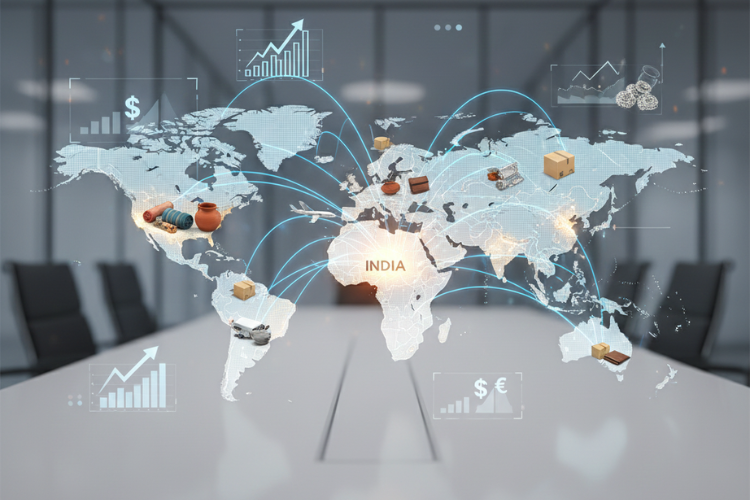
Global trade is rapidly shifting towards digital channels, and cross-border e-commerce is emerging as one of the fastest-growing segments of international trade. For Indian MSMEs, this shift presents a massive opportunity to access global markets with lower costs and fewer entry barriers.
India’s export ambitions and global e-commerce growth are aligning at the right time—making cross-border e-commerce a powerful growth engine for small businesses.
A Rapidly Growing Global Market
As global online competition intensifies, reaching international customers increasingly depends on targeted digital promotion and marketplace optimization, supported by specialized e-commerce marketing services.
Cross-border e-commerce is no longer a niche segment. According to global estimates highlighted in the DGFT Handbook:
- Global cross-border e-commerce trade is expected to reach USD 800 billion by 2025
- It may grow further to USD 2 trillion by 2030
- E-commerce is projected to account for around 6.6% of total global merchandise trade
This rapid expansion shows that international consumers are increasingly comfortable buying products online from sellers located in other countries
Why This Opportunity Matters for India
India has set a target of achieving USD 1 trillion in merchandise exports by 2030, with a planned annual growth rate of over 12%. To reach this ambitious goal, export growth must come from new and emerging sources, especially MSMEs.
Cross-border e-commerce is particularly important because it:
- Enables small sellers to export without large investments
- Reduces dependency on traditional exporters and intermediaries
- Creates new income opportunities for artisans, craftsmen, and entrepreneurs
To convert this expanding opportunity into actual export growth, MSMEs need the ability to attract and convert overseas buyers—an area where structured e-commerce marketing services become essential.
India’s share in global e-commerce exports is expected to grow at an accelerated pace, supported by digital adoption and policy reforms
Why MSMEs Are Well-Suited for Cross-Border E-Commerce
Traditional exports often require bulk orders, overseas agents, and complex logistics. In contrast, e-commerce platforms offer integrated services that make exporting easier for MSMEs.
As shown in the Handbook (Figure 1), e-commerce platforms typically provide:
- Integrated market research and marketing
- Product cataloguing and listing support
- Digital payment integration
- Pickup, logistics, and delivery services
This integration reduces both time and cost, allowing MSMEs to focus on product quality, packaging, branding, and customer experience rather than operational complexity
Alongside platform support, strategic e-commerce marketing services help MSMEs improve product discoverability, competitiveness, and customer engagement in international markets.
Key Advantages for Indian MSMEs
According to the Handbook (Figure 2), cross-border e-commerce offers several strong benefits:
- Access to a larger international market
- Direct-to-consumer sales, leading to better profit margins
- Lower infrastructure and operational costs
- Enhanced global brand visibility
- Ability to overcome domestic seasonality and demand fluctuations
These advantages make cross-border e-commerce especially attractive for small businesses looking to scale globally without heavy investment
Government Support Strengthening the Opportunity
Under the Foreign Trade Policy 2023, the Government of India is actively promoting cross-border e-commerce, with a strong focus on empowering MSMEs, artisans, weavers, and craftsmen. The Directorate General of Foreign Trade (DGFT), in collaboration with Customs, the Department of Posts, and other key stakeholders, is working to simplify export procedures, improve logistics and payment mechanisms, and increase awareness about e-commerce export opportunities.
Initiatives such as improved digital processes, simplified documentation, and the expansion of postal export infrastructure are making it easier for small businesses to enter global markets. This strong institutional and policy support reduces entry barriers, builds exporter confidence, and enables MSMEs to participate more effectively in global e-commerce trade, positioning cross-border e-commerce as a sustainable and inclusive growth pathway for India’s export ecosystem.
Conclusion
Cross-border e-commerce represents a large, fast-growing, and accessible opportunity for Indian MSMEs. With global demand rising, integrated digital platforms, and supportive government policies, small businesses can now compete in international markets more easily than ever before.
For Indian MSMEs, cross-border e-commerce is not just an export channel—it is a strategic pathway to global growth.
Looking to explore cross-border e-commerce?
Indian MSMEs can benefit from structured guidance across export planning, regulatory compliance, digital marketplace readiness, and international logistics to better navigate global e-commerce opportunities with confidence.
![[object Object]](/_next/image?url=https%3A%2F%2Fcms.msmestory.com%2Fwp-content%2Fuploads%2F2026%2F04%2Fog-6.webp&w=3840&q=75)
![[object Object]](/_next/image?url=https%3A%2F%2Fcms.msmestory.com%2Fwp-content%2Fuploads%2F2026%2F02%2Fog-13.jpg&w=3840&q=75)
![[object Object]](/_next/image?url=https%3A%2F%2Fcms.msmestory.com%2Fwp-content%2Fuploads%2F2026%2F01%2FMSME-export-roadmap.png&w=3840&q=75)
![[object Object]](/_next/image?url=https%3A%2F%2Fcms.msmestory.com%2Fwp-content%2Fuploads%2F2026%2F01%2Fsocial-media-for-export-orders-for-MSMEs.png&w=3840&q=75)
![[object Object]](/_next/image?url=https%3A%2F%2Fcms.msmestory.com%2Fwp-content%2Fuploads%2F2026%2F01%2Fcost-breakdown-of-selling-on-e-commerce-platforms.png&w=3840&q=75)