









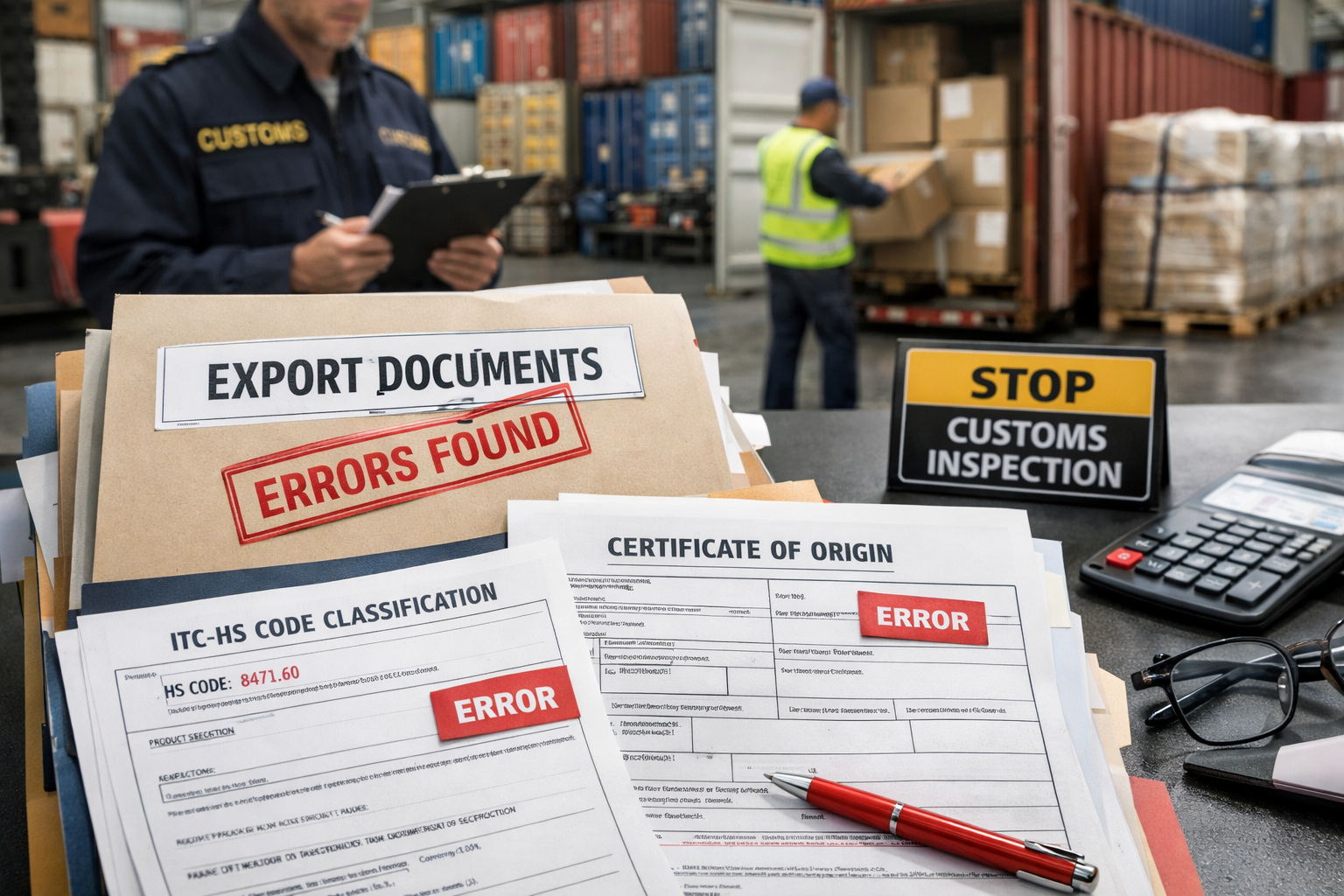
Common Export Compliance Mistakes That Can Stop Your Shipment
Exporting products through e-commerce or traditional channels offers vast global opportunities, but even small compliance errors can completely stop an export shipment. Many first-time exporters face delays, penalties, or shipment rejection due to avoidable regulatory mistakes.
This blog highlights the most common compliance mistakes exporters make and explains how these errors can disrupt or stop export shipments altogether. Businesses that take a structured approach with export compliance and eCommerce management services are far better positioned to avoid these issues.
1. Incorrect or Missing ITC-HS Code
One of the most frequent and serious mistakes exporters make is using an incorrect ITC (HS) classification or failing to verify it properly.
Why This Matters
The ITC-HS code determines:
- Export eligibility
- Licensing requirements
- Applicable certifications
Incorrect classification may result in:
- Wrong export policy application
- Customs objections
- Penalties or shipment detention
Exporters must always confirm the correct ITC-HS code before shipping goods. Many MSMEs rely on professional eCommerce export management services to ensure accurate classification and documentation.
2. Ignoring Export Policy Restrictions
A common misconception is that all products can be exported freely, which is not always the case.
Common Errors
- Exporting restricted goods without authorization
- Attempting to export prohibited items
- Not checking updated export policy conditions
Impact
- Shipment stopped at customs
- Goods confiscated
- Legal action or financial penalties
Understanding whether a product is Free, Restricted, or Prohibited is essential before initiating exports. Exporters often seek MSME export planning, registration & compliance support to avoid such policy-related risks.
3. Missing Mandatory Product Certifications
Certain products require certifications from designated government authorities before they can be exported.
Typical Mistakes
- Exporting regulated products without required certification
- Assuming certifications are optional
- Submitting incomplete or invalid certification documents
Consequences
- Customs clearance failure
- Rejection by importing country authorities
- Return of goods or financial loss
Exporters should verify certification requirements well in advance. Using end-to-end eCommerce management services helps integrate certification checks into the export workflow.
4. Non-Compliance with Importing Country Regulations
Even when a product meets Indian export regulations, it may still face issues in the destination country.
Common Oversights
- Ignoring buyer-country compliance norms
- Not checking destination-specific regulations
- Assuming Indian standards are universally accepted
Result
- Shipment rejection at destination
- Customs hold or destruction of goods
- Loss of buyer trust
Successful exporters align both domestic and international compliance requirements, often supported by strategic eCommerce management services.
5. Incomplete Regulatory Due Diligence
Many export disruptions occur due to insufficient regulatory research before shipping goods.
Examples
- Not verifying export eligibility
- Skipping compliance checks due to urgency
- Relying on assumptions instead of official classification
Risk
- Shipment delays
- Financial penalties
- Repeated customs queries
Proper regulatory due diligence is critical for smooth export operations and long-term credibility in global markets.
6. Assuming E-Commerce Exports Have Fewer Rules
A widespread myth is that small parcels or e-commerce exports are exempt from compliance requirements.
Reality
All exports—regardless of value or mode—must comply with:
- Export policy
- Classification rules
- Certification requirements
Courier and postal exports are also subject to customs scrutiny. Compliance rules apply equally across all export formats, making expert eCommerce export management services especially valuable for online sellers.
Conclusion
Most export shipment stoppages are not caused by logistics issues but by regulatory non-compliance. Errors related to ITC-HS classification, export policy, certifications, and regulatory awareness can easily derail an otherwise valid shipment.
By identifying and addressing these common compliance mistakes before exporting, businesses can ensure faster customs clearance, avoid penalties, and build a reliable export operation. Strong compliance is not just a requirement—it is the foundation of successful exports.
![[object Object]](/_next/image?url=https%3A%2F%2Fcms.msmestory.com%2Fwp-content%2Fuploads%2F2026%2F04%2Fog-6.webp&w=3840&q=75)
![[object Object]](/_next/image?url=https%3A%2F%2Fcms.msmestory.com%2Fwp-content%2Fuploads%2F2026%2F02%2Fog-13.jpg&w=3840&q=75)
![[object Object]](/_next/image?url=https%3A%2F%2Fcms.msmestory.com%2Fwp-content%2Fuploads%2F2026%2F01%2FMSME-export-roadmap.png&w=3840&q=75)
![[object Object]](/_next/image?url=https%3A%2F%2Fcms.msmestory.com%2Fwp-content%2Fuploads%2F2026%2F01%2Fsocial-media-for-export-orders-for-MSMEs.png&w=3840&q=75)
![[object Object]](/_next/image?url=https%3A%2F%2Fcms.msmestory.com%2Fwp-content%2Fuploads%2F2026%2F01%2Fcost-breakdown-of-selling-on-e-commerce-platforms.png&w=3840&q=75)
![[object Object]](/_next/image?url=https%3A%2F%2Fcms.msmestory.com%2Fwp-content%2Fuploads%2F2026%2F01%2Fsocial-commerce-exports-for-global-sales.png&w=3840&q=75)
![[object Object]](/_next/image?url=https%3A%2F%2Fcms.msmestory.com%2Fwp-content%2Fuploads%2F2026%2F01%2FHow-MSMEs-Can-Export-Using-Global-Marketplaces-1.png&w=3840&q=75)
![[object Object]](/_next/image?url=https%3A%2F%2Fcms.msmestory.com%2Fwp-content%2Fuploads%2F2026%2F01%2Fwrite-off-rules-for-unrealised-export-proceeds.png&w=3840&q=75)
![[object Object]](/_next/image?url=https%3A%2F%2Fcms.msmestory.com%2Fwp-content%2Fuploads%2F2026%2F01%2FHandling-Returns-And-Rejections-in-Global-E-Commerce.png&w=3840&q=75)
![[object Object]](/_next/image?url=https%3A%2F%2Fcms.msmestory.com%2Fwp-content%2Fuploads%2F2026%2F01%2FIGST-refund-process-for-e-commerce-exports.png&w=3840&q=75)
![[object Object]](/_next/image?url=https%3A%2F%2Fcms.msmestory.com%2Fwp-content%2Fuploads%2F2026%2F01%2FRBI-guidelines-for-export-payments.png&w=3840&q=75)
![[object Object]](/_next/image?url=https%3A%2F%2Fcms.msmestory.com%2Fwp-content%2Fuploads%2F2026%2F01%2Fhow-MSMEs-receive-payments-from-international-e-commerce-sales.png&w=3840&q=75)
![[object Object]](/_next/image?url=https%3A%2F%2Fcms.msmestory.com%2Fwp-content%2Fuploads%2F2026%2F01%2Fhow-to-reduce-logistics-cost-in-cross-border-e-commerce-1.png&w=3840&q=75)
![[object Object]](/_next/image?url=https%3A%2F%2Fcms.msmestory.com%2Fwp-content%2Fuploads%2F2026%2F01%2FPostal-and-courier-export-weight-limits-and-costs.png&w=3840&q=75)
![[object Object]](/_next/image?url=https%3A%2F%2Fcms.msmestory.com%2Fwp-content%2Fuploads%2F2026%2F01%2FDak-Niryat-Kendra.png&w=3840&q=75)
![[object Object]](/_next/image?url=https%3A%2F%2Fcms.msmestory.com%2Fwp-content%2Fuploads%2F2026%2F01%2FIndia-Post-vs-courier-services-for-e-commerce-exports.png&w=3840&q=75)
![[object Object]](/_next/image?url=https%3A%2F%2Fcms.msmestory.com%2Fwp-content%2Fuploads%2F2026%2F01%2FPackaging-Guidelines-for-E-Commerce-Exports-from-India.png&w=3840&q=75)
![[object Object]](/_next/image?url=https%3A%2F%2Fcms.msmestory.com%2Fwp-content%2Fuploads%2F2026%2F01%2FSEO-Friendly-Product-Descriptions-for-International-E-Commerce.png&w=3840&q=75)
![[object Object]](/_next/image?url=https%3A%2F%2Fcms.msmestory.com%2Fwp-content%2Fuploads%2F2026%2F01%2FProduct-Images-and-Descriptions-for-E-Commerce-Exports.png&w=3840&q=75)
![[object Object]](/_next/image?url=https%3A%2F%2Fcms.msmestory.com%2Fwp-content%2Fuploads%2F2026%2F01%2FHigh-converting-product-catalogue-for-global-buyers.png&w=3840&q=75)