




Best Countries for Indian MSME E-Commerce Exports
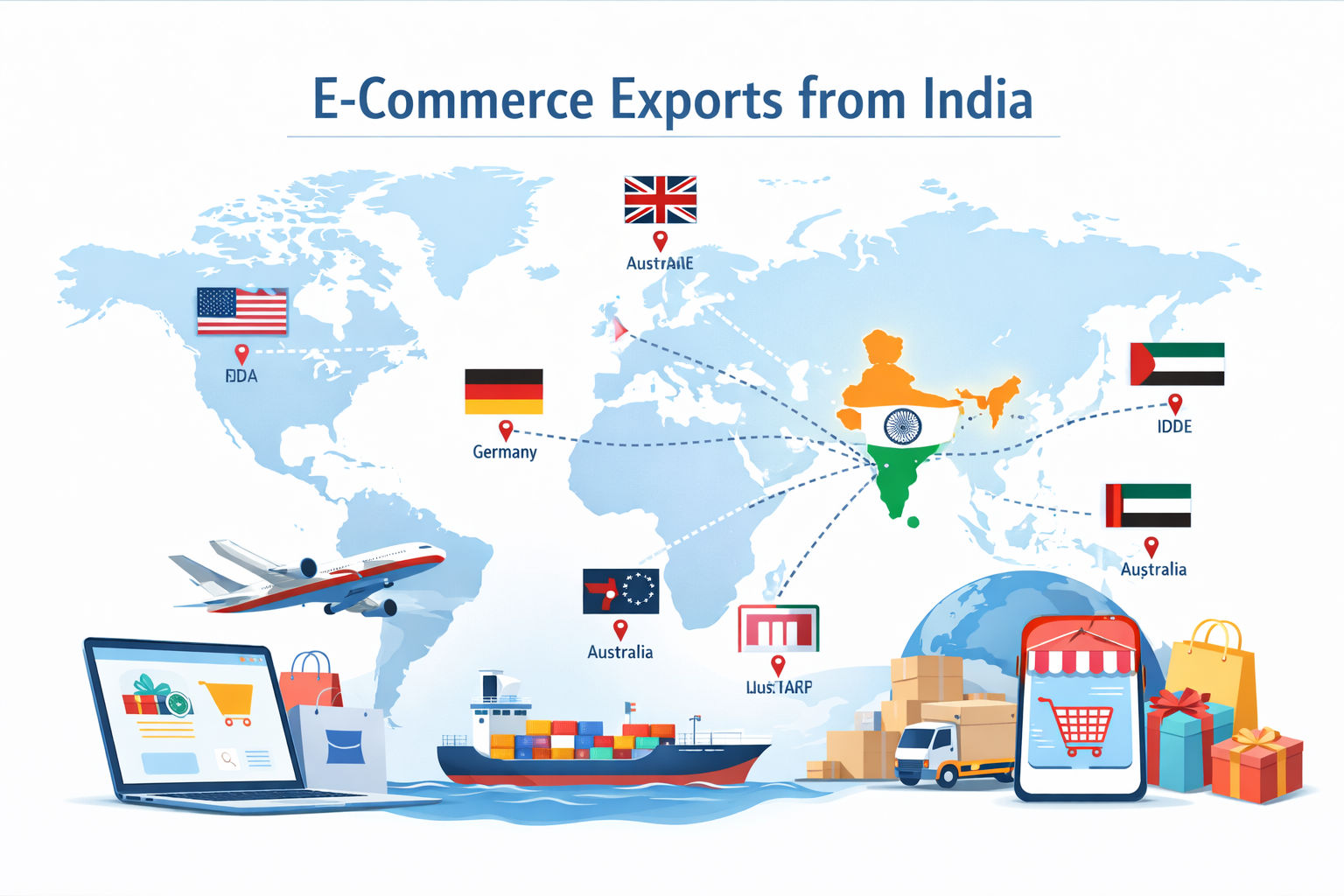
Choosing the best countries for Indian MSME e-commerce exports is one of the most important strategic decisions for businesses planning to sell internationally. Success in cross-border e-commerce depends not only on product quality, but also on selecting markets with strong online shopping behavior, consistent demand for Indian products, and favorable seasonal and cultural buying patterns.
This blog explains which countries offer the best potential for Indian MSME e-commerce exports and why they should be prioritized. MSMEs that combine smart market selection with professional eCommerce management services are more likely to scale successfully across borders.
1. United States: The Largest E-Commerce Opportunity
The United States remains one of the most attractive markets for Indian e-commerce exporters.
Why the USA Works Well for Indian MSMEs
- Large base of online shoppers
- High annual spending per customer
- Strong demand for:
- Indian handicrafts
- Apparel and textiles
- Wellness, herbal, and lifestyle products
- Religious and festive items
- Well-developed logistics and digital payment systems
The presence of a large Indian-origin population further strengthens demand for India-centric products. Many MSMEs entering the US market rely on end-to-end eCommerce management services to handle listings, compliance, and marketplace operations efficiently.
2. Europe: High-Value and Quality-Focused Markets
European countries offer consistent demand and high purchasing power, particularly:
- United Kingdom
- Germany
- France
Key Advantages
- Mature e-commerce ecosystem
- Strong preference for quality, sustainability, and craftsmanship
- Growing interest in:
- Handloom and home décor
- Organic and natural products
- Ethical and artisanal goods
European markets are especially suitable for MSMEs that focus on premium positioning and compliance-driven exports. Structured MSME export planning and compliance support plays a crucial role in entering these regulated markets.
3. Canada: A Strong Diaspora-Driven Market
Canada is a high-potential destination for Indian MSME e-commerce exports.
Why Canada Is Important
- Large and active Indian diaspora
- High acceptance of cross-border e-commerce
- Strong demand during Indian festivals
Popular categories include:
- Ethnic wear
- Festive décor
- Food and wellness products
Canada is often easier for first-time exporters due to cultural familiarity and stable demand patterns, especially when supported by strategic eCommerce export management services.
4. Middle East: UAE, Saudi Arabia & Kuwait
Middle Eastern countries are among the fastest-growing e-commerce markets for Indian sellers.
Key Strengths
- Significant Indian-origin population
- High purchasing power
- Strong demand for:
- Apparel and accessories
- Beauty and personal care products
- Religious and lifestyle items
- High sales during festivals and gifting seasons
Shorter delivery timelines and regional logistics hubs make these markets particularly attractive for MSMEs expanding through e-commerce channels.
5. Asia-Pacific: Australia, Japan & Southeast Asia
The Asia-Pacific region offers diverse opportunities for Indian exporters.
Market Highlights
- Australia: Strong online shopping culture and demand for Indian lifestyle products
- Japan: Quality-focused consumers with interest in unique and handcrafted goods
- Southeast Asia: Rapid growth in e-commerce adoption and festival-driven sales
These markets are ideal for MSMEs willing to adapt product presentation, pricing, and marketing strategies—often supported by professional eCommerce marketplace management services.
6. Latin America: Emerging but Promising Markets
Countries such as Brazil and Mexico are emerging as potential e-commerce destinations.
Opportunities
- Rapid growth in online shopping
- Increasing acceptance of international sellers
- Untapped demand for niche products
Challenges
- Limited payment mechanisms
- Logistics complexity
These markets are better suited for exporters willing to test demand gradually and scale with the right operational support.
7. Role of Indian Diaspora in Market Selection
Countries with a strong Indian-origin population consistently show higher demand for Indian products.
Why Diaspora Matters
- Emotional and cultural connection to Indian goods
- Strong demand for:
- Handicrafts
- Traditional clothing
- Religious and festive products
- Food and wellness items
Targeting diaspora-heavy countries helps MSMEs build more stable, year-round demand and faster market acceptance.
8. Leveraging Global Festivals & Sales Events
Aligning exports with global and regional festivals significantly improves sales performance.
Key Global Sales Events
- New Year
- Black Friday & Cyber Monday
- Valentine’s Day
- Christmas
- Mother’s Day & Father’s Day
Indian & Regional Festivals
- Diwali
- Raksha Bandhan
- Eid
- Christmas
- Chinese New Year
- Easter
MSMEs that plan inventory and promotions around these events—supported by eCommerce management services—can maximize visibility and conversions.
Conclusion
There is no single “best” country for e-commerce exports—success depends on aligning the right product with the right market. However, countries such as the USA, UK, Germany, Canada, UAE, Australia, and parts of Asia-Pacific offer the strongest starting points for Indian MSMEs.
By focusing on:
- Online shopping behavior
- Indian diaspora presence
- Festival-driven demand
- Regional market maturity
MSMEs can build a sustainable and scalable global e-commerce export strategy with the right planning and execution.
![[object Object]](/_next/image?url=https%3A%2F%2Fcms.msmestory.com%2Fwp-content%2Fuploads%2F2026%2F04%2Fog-6.webp&w=3840&q=75)
![[object Object]](/_next/image?url=https%3A%2F%2Fcms.msmestory.com%2Fwp-content%2Fuploads%2F2026%2F02%2Fog-13.jpg&w=3840&q=75)
![[object Object]](/_next/image?url=https%3A%2F%2Fcms.msmestory.com%2Fwp-content%2Fuploads%2F2026%2F01%2FMSME-export-roadmap.png&w=3840&q=75)
![[object Object]](/_next/image?url=https%3A%2F%2Fcms.msmestory.com%2Fwp-content%2Fuploads%2F2026%2F01%2Fsocial-media-for-export-orders-for-MSMEs.png&w=3840&q=75)
![[object Object]](/_next/image?url=https%3A%2F%2Fcms.msmestory.com%2Fwp-content%2Fuploads%2F2026%2F01%2Fcost-breakdown-of-selling-on-e-commerce-platforms.png&w=3840&q=75)
![[object Object]](/_next/image?url=https%3A%2F%2Fcms.msmestory.com%2Fwp-content%2Fuploads%2F2026%2F01%2Fsocial-commerce-exports-for-global-sales.png&w=3840&q=75)
![[object Object]](/_next/image?url=https%3A%2F%2Fcms.msmestory.com%2Fwp-content%2Fuploads%2F2026%2F01%2FHow-MSMEs-Can-Export-Using-Global-Marketplaces-1.png&w=3840&q=75)
![[object Object]](/_next/image?url=https%3A%2F%2Fcms.msmestory.com%2Fwp-content%2Fuploads%2F2026%2F01%2Fwrite-off-rules-for-unrealised-export-proceeds.png&w=3840&q=75)
![[object Object]](/_next/image?url=https%3A%2F%2Fcms.msmestory.com%2Fwp-content%2Fuploads%2F2026%2F01%2FHandling-Returns-And-Rejections-in-Global-E-Commerce.png&w=3840&q=75)
![[object Object]](/_next/image?url=https%3A%2F%2Fcms.msmestory.com%2Fwp-content%2Fuploads%2F2026%2F01%2FIGST-refund-process-for-e-commerce-exports.png&w=3840&q=75)
![[object Object]](/_next/image?url=https%3A%2F%2Fcms.msmestory.com%2Fwp-content%2Fuploads%2F2026%2F01%2FRBI-guidelines-for-export-payments.png&w=3840&q=75)
![[object Object]](/_next/image?url=https%3A%2F%2Fcms.msmestory.com%2Fwp-content%2Fuploads%2F2026%2F01%2Fhow-MSMEs-receive-payments-from-international-e-commerce-sales.png&w=3840&q=75)
![[object Object]](/_next/image?url=https%3A%2F%2Fcms.msmestory.com%2Fwp-content%2Fuploads%2F2026%2F01%2Fhow-to-reduce-logistics-cost-in-cross-border-e-commerce-1.png&w=3840&q=75)
![[object Object]](/_next/image?url=https%3A%2F%2Fcms.msmestory.com%2Fwp-content%2Fuploads%2F2026%2F01%2FPostal-and-courier-export-weight-limits-and-costs.png&w=3840&q=75)
![[object Object]](/_next/image?url=https%3A%2F%2Fcms.msmestory.com%2Fwp-content%2Fuploads%2F2026%2F01%2FDak-Niryat-Kendra.png&w=3840&q=75)
![[object Object]](/_next/image?url=https%3A%2F%2Fcms.msmestory.com%2Fwp-content%2Fuploads%2F2026%2F01%2FIndia-Post-vs-courier-services-for-e-commerce-exports.png&w=3840&q=75)
![[object Object]](/_next/image?url=https%3A%2F%2Fcms.msmestory.com%2Fwp-content%2Fuploads%2F2026%2F01%2FPackaging-Guidelines-for-E-Commerce-Exports-from-India.png&w=3840&q=75)
![[object Object]](/_next/image?url=https%3A%2F%2Fcms.msmestory.com%2Fwp-content%2Fuploads%2F2026%2F01%2FSEO-Friendly-Product-Descriptions-for-International-E-Commerce.png&w=3840&q=75)
![[object Object]](/_next/image?url=https%3A%2F%2Fcms.msmestory.com%2Fwp-content%2Fuploads%2F2026%2F01%2FProduct-Images-and-Descriptions-for-E-Commerce-Exports.png&w=3840&q=75)
![[object Object]](/_next/image?url=https%3A%2F%2Fcms.msmestory.com%2Fwp-content%2Fuploads%2F2026%2F01%2FHigh-converting-product-catalogue-for-global-buyers.png&w=3840&q=75)