









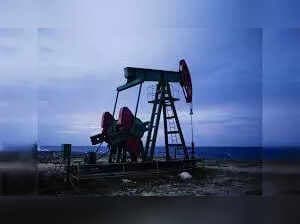
Oil prices gain 2% as market focuses on Venezuela and supply worries in Russia, Iraq and Iran
Oil prices rose about 2% on Thursday after two days of decline, driven by investor focus on developments in Venezuela and concerns over supply from Russia, Iraq, and Iran.
Oil price movements and market developments
At 11:17 a.m. EST (1617 GMT), Brent crude futures increased by $1.21, or 2%, reaching $61.17 per barrel, while U.S. West Texas Intermediate crude grew by $1.02, or 1.8%, to $57.01 per barrel.
The U.S. recently seized two oil tankers linked to Venezuela in the Atlantic Ocean, one flying under Russia’s flag. This action is part of President Donald Trump’s intensified efforts to control oil flows within the Americas and pressure Venezuela’s socialist government to align with U.S. interests.
Following a military raid targeting Venezuelan President Nicolas Maduro in Caracas on Saturday, the U.S. has heightened its blockade against vessels under sanctions coming to and from Venezuela, an OPEC member.
Analysts’ perspectives and U.S. government actions
Analysts at Ritterbusch and Associates noted that crude benchmarks have rebounded to levels seen before the U.S. military operation against Maduro. They commented that the limited immediate effect on the oil market is expected, given that significant volumes of Venezuelan crude reaching the U.S. Gulf coast may still be years away.
President Trump stated in a New York Times interview that the U.S. might supervise Venezuela’s oil revenue for an extended period.
Concurrently, the U.S. Senate began voting on a resolution intended to restrict Trump from further military actions in Venezuela without congressional approval.
U.S. Energy Secretary Chris Wright expressed that both the U.S. and China could have roles in Venezuela’s commerce, but Washington would not permit China to gain predominant control.
In a Fox Business Network interview, Wright also projected that Chevron would soon expand its operations in Venezuela, with ConocoPhillips and Exxon Mobil also aiming to engage constructively.
Global oil industry responses and incidents
India’s Reliance Industries, operator of the world’s largest refining complex, announced it would consider purchasing Venezuelan oil if allowed by regulations applicable to non-U.S. buyers.
Meanwhile, in the Black Sea, a Russia-bound oil tanker flagged by Palau was attacked by drones, damaging its engine room and forcing it to seek assistance from the Turkish Coast Guard and divert its course. No injuries or pollution were reported.
Geopolitical tensions impacting oil markets
Amid geopolitical tensions, Ukrainian President Volodymyr Zelenskiy stated that a bilateral security guarantee with the U.S. was nearly finalized.
Russia warned that any foreign troops deployed to Ukraine by Western governments would be legitimate military targets, following announcements by Britain and France about plans to send a multinational force there in the event of a ceasefire.
Potential removal of sanctions on Russia, the world’s second-largest oil producer, could lead to increased energy exports.
Developments in Iraq and Iran oil sectors
In Iraq, the government approved plans to nationalize operations at the West Qurna 2 oilfield, one of the largest globally, to prevent disruptions arising from U.S. sanctions on Russian stakeholder Lukoil. State-run Basra Oil Company will manage the field for 12 months.
In Iran, authorities cautioned domestic suppliers against stockpiling or inflating prices amid subsidy reforms and widespread protests triggered by economic hardships.
According to Raymond James analyst Pavel Molchanov, Iranian oil exports, which account for about 2% of global supply — double that of Venezuela — could be at risk depending on the situation’s progression.
Iraq and Iran remain major oil producers within OPEC, following Saudi Arabia.
Regional conflict and OPEC member relations
In Yemen, the Saudi-led coalition announced that the United Arab Emirates evacuated Aidarous al-Zubaidi, leader of a UAE-backed southern separatist group, by boat amid intensified conflict around the port city of Aden.
This incident may further strain relations between Saudi Arabia and the UAE, both notable OPEC members and close U.S. allies.
Key Takeaways
- Oil prices rose approximately 2%, recovering from two days of declines amid geopolitical concerns.
- U.S. actions against Venezuela have intensified, including tanker seizures and heightened maritime blockades.
- Major oil producers Russia, Iraq, and Iran face supply uncertainties impacting global markets.
- Global oil companies and nations are considering or expanding operations despite sanctions and tensions.
- Regional conflicts involving OPEC members may further influence oil supply and market dynamics.
![[object Object]](/_next/image?url=https%3A%2F%2Fcms.msmestory.com%2Fwp-content%2Fuploads%2F2026%2F06%2Fog-48.jpg&w=3840&q=75)
![[object Object]](/_next/image?url=https%3A%2F%2Fcms.msmestory.com%2Fwp-content%2Fuploads%2F2026%2F06%2Fog-49-scaled.jpg&w=3840&q=75)
![[object Object]](/_next/image?url=https%3A%2F%2Fcms.msmestory.com%2Fwp-content%2Fuploads%2F2026%2F06%2Fog-35.jpg&w=3840&q=75)
![[object Object]](/_next/image?url=https%3A%2F%2Fcms.msmestory.com%2Fwp-content%2Fuploads%2F2026%2F06%2Fog-32.jpg&w=3840&q=75)
![[object Object]](/_next/image?url=https%3A%2F%2Fcms.msmestory.com%2Fwp-content%2Fuploads%2F2026%2F06%2Fog-30.jpg&w=3840&q=75)