







India and Japan Target JPY 10 Trillion Investment as Semiconductor and Advanced Manufacturing Partnership Deepens
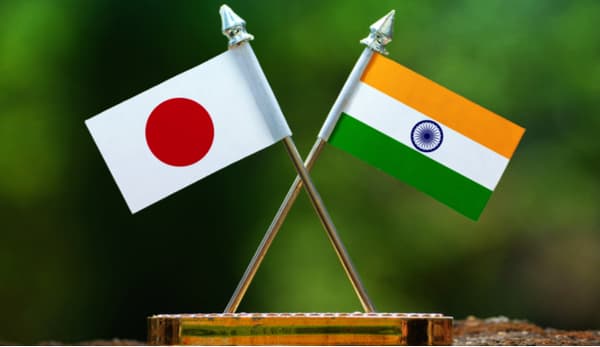
India and Japan are intensifying their collaboration in semiconductors and advanced manufacturing, aiming to attract JPY 10 trillion in Japanese private investment over the next ten years. This commitment was reinforced during Commerce and Industry Minister Piyush Goyal’s official visit to Japan, concluding on August 27, 2026.
During his visit, Minister Goyal met with government officials, financial institutions, and leaders from over 30 prominent Japanese companies across Tokyo, Nagoya, and Osaka. Discussions centered on enhancing industrial investments, technological cooperation, and deeper integration of the manufacturing sectors between the two nations.
India’s Strategic Focus on Manufacturing and Technology Partnership
A key theme was India’s ambition to establish itself as a long-term production and technology partner rather than solely a consumer market. Important sectors highlighted included semiconductors, artificial intelligence, automotive manufacturing, capital goods, aerospace, and clean energy.
Development of a Competitive Semiconductor Ecosystem
Semiconductors featured prominently in discussions, with Minister Goyal outlining India’s goal to build a competitive semiconductor ecosystem to meet projected domestic demand of $150 billion by 2032. India proposed a comprehensive six-pillar strategy supporting chip design; semiconductor machinery and materials; fabrication; assembly, testing, marking, and packaging; outsourced assembly and testing; research and development; and talent development.
The creation of a full semiconductor value chain was emphasized, recognizing the need for extensive infrastructure including chemicals, gases, equipment, substrates, packaging, testing, design tools, specialized engineering, and reliable utilities. Japan’s expertise in semiconductor materials, precision equipment, power electronics, and manufacturing machinery complements India’s growing electronics market, manufacturing capacity, and engineering workforce.
Japanese Investment and Infrastructure for Semiconductor Clusters
Japanese companies expressed strong interest in expanding their presence in India’s semiconductor and AI sectors, as well as in electronics and logistics technologies. The discussions also stressed the critical infrastructure requirements for globally competitive semiconductor clusters. These include continuous electricity supply, large volumes of ultra-pure water, advanced logistics, skilled labor, and supportive social infrastructure.
Emerging Indian industrial clusters such as Dholera and Sanand in Gujarat were highlighted as promising locations for development, benefiting from India’s growing renewable energy capacity and an integrated national grid—advantages crucial for energy-intensive industries like semiconductor fabrication and AI data centers.
Financial Sector Engagement and Investment Goals
The visit further advanced the shared goal set during Prime Minister Narendra Modi’s 2025 Japan visit: attracting JPY 10 trillion in Japanese private investments into India over the coming decade. This investment is expected to deepen Japan’s role in cutting-edge industry sectors within India.
Minister Goyal encouraged Japanese companies and institutional investors to participate actively in India’s infrastructure, manufacturing, financial services, semiconductor, AI, and clean energy sectors. Meetings with leading Japanese financial institutions—including MUFG, Mizuho, Nomura, Nippon Life, the Development Bank of Japan, and Morgan Stanley MUFG Securities—explored mechanisms to channel increased Japanese capital into India’s priority industries.
Efforts aim to enhance involvement from pension funds, insurers, and institutional investors, complementing direct manufacturer investments and creating a comprehensive financial framework to support India-Japan economic cooperation.
Strengthening Supplier Networks and Industrial Collaborations
Another area of focus was linking Japanese businesses with Indian Tier-II and Tier-III suppliers and MSMEs to build robust domestic supplier networks. This integration is vital for transferring best practices, quality control, and specialized production skills deeper into India’s industrial ecosystem.
The Nagoya roadshow connected over 80 companies from Japan’s Chubu industrial region with their Indian counterparts. This event spotlighted opportunities in automobiles, aerospace, machine tools, semiconductors, and electronics, envisioning collaboration that leverages India’s youthful engineering talent alongside the technological strengths of the Chubu region.
Advancing AI and Semiconductor Integration
The intersection of semiconductor development and artificial intelligence was underscored as a strategic priority. India aims to build robust domestic AI capabilities supported by necessary physical infrastructure such as data centers, power electronics, and advanced cooling systems. This integrated approach supports the development of holistic technology ecosystems rather than isolated industries.
Enhancing Supply Chain Resilience and Economic Security
Discussions also addressed supply chain resilience, including diversification to reduce dependency on singular production hubs for critical goods. The complementary interests of India and Japan may foster alternative supply chains for electronics, industrial equipment, and clean energy, strengthening economic security for both nations.
Broader Economic Cooperation and Future Growth
Engagement with Keidanren, the Japan Business Federation, highlighted the expanding scope of economic relations beyond traditional trade, encompassing advanced technologies, supply chain resilience, clean energy, and defense manufacturing. Japanese business leaders expressed confidence in India’s long-term growth prospects and interest in diversifying investments into emerging sectors and regions.
Minister Goyal emphasized India’s robust economic growth rate of 7.7 percent amid global challenges and the goal to achieve a $30 trillion economy by 2047. He highlighted India’s large domestic market, growing middle class, digital infrastructure, renewable energy expansion, and strong financial system as competitive advantages for investors targeting industries like electronics, automobiles, and industrial machinery.
Conclusion
The visit marks a strategic shift in India-Japan economic relations from traditional investment models to a comprehensive technology and industrial partnership. Japan seeks secure growth markets and resilient production networks amid global supply chain realignments, while India aims for capital inflows, advanced technology, and long-term industrial collaborations.
The planned JPY 10 trillion investment signals significant potential growth in semiconductor manufacturing, industrial hubs, supplier networks, research partnerships, and technology centers, establishing one of the Indo-Pacific region’s most important industrial collaborations.
Key Takeaways
- India and Japan target JPY 10 trillion Japanese private investment over the next decade to deepen collaboration in semiconductors and advanced manufacturing.
- India is focused on becoming a long-term manufacturing and technology partner in key sectors such as semiconductors, AI, automotive, aerospace, and clean energy.
- A comprehensive six-pillar semiconductor strategy aims to build a full domestic ecosystem backed by Japanese expertise and investment.
- Critical infrastructure and emerging industrial clusters in India support the development of globally competitive semiconductor production.
- Enhanced financial sector engagement seeks to mobilize Japanese institutional investments alongside corporate involvement.
- Strengthening supplier networks connecting Japanese firms with Indian MSMEs will improve quality and global competitiveness.
- The partnership includes advancing integrated semiconductor and AI capabilities to build holistic technology ecosystems.
- Supply chain diversification and economic security are key strategic objectives in the face of global realignments.
- Economic cooperation is expanding beyond trade into advanced technologies, clean energy, and defense sectors.
- India’s growth prospects and large market offer significant opportunities for Japanese investors targeting high-value industries.