









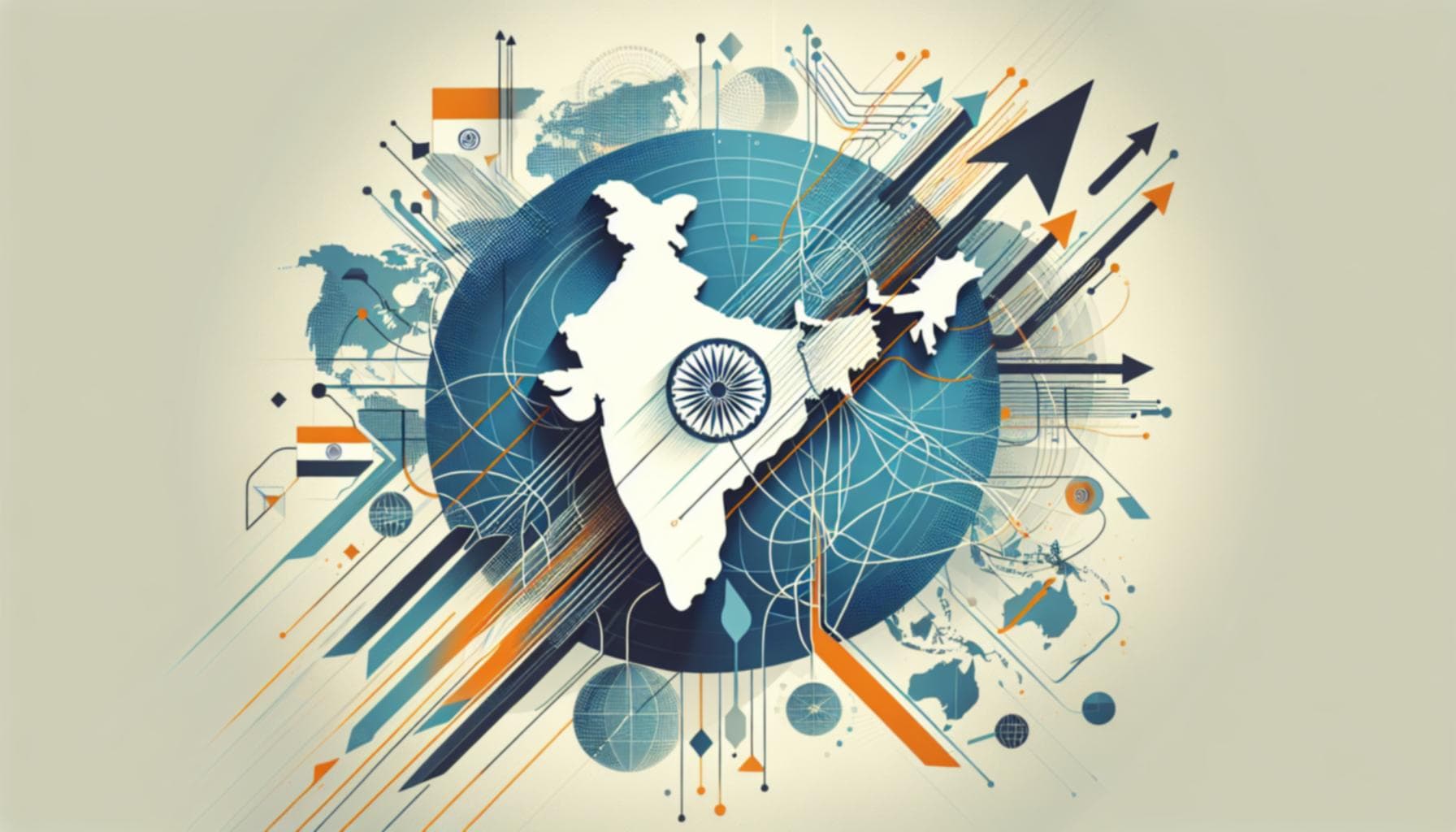
India has concluded nine free trade agreements covering 38 nations: Goyal
Mumbai, February 24 (PTI) – India has successfully signed nine free trade agreements (FTAs) involving 38 countries, granting Indian exports preferential access to almost two-thirds of the world’s markets, said Commerce and Industry Minister Piyush Goyal on Wednesday.
Expanding Market Access through FTAs
Speaking at the EY Entrepreneur Of The Year Awards in Mumbai, Goyal stated that these agreements will enable Indian products—including goods, services, agricultural and fisheries items, as well as labour-intensive sectors—to penetrate new markets, join global value chains, and improve the mobility of skilled workers.
He highlighted that many countries seek trade agreements with India. Notably, India is close to finalizing an FTA with Chile this week and plans to initiate FTA discussions with Canada during Canadian Prime Minister Mark Carney’s visit on Monday. Goyal expressed optimism about completing the Terms of Reference and commencing negotiations with Canada soon.
India’s Skilled Workforce and Innovation Ecosystem
Goyal emphasized that India’s youth and skilled workforce form the core of the country’s growth narrative. Reflecting on his engagements with entrepreneurs and business leaders, he mentioned that passion, innovation, and skilled talent constitute India’s key competitive strengths.
Regarding the recent AI Impact Summit in New Delhi, the minister noted that the global participation illustrated the maturity and depth of India’s innovation ecosystem and technological expertise.
AI and Employment Transformation
Addressing concerns about AI’s impact on employment, Goyal stated that AI will transform jobs instead of eliminating them. He pointed out that India produces approximately 2.3 million STEM (Science, Technology, Engineering, and Mathematics) graduates annually and has an unparalleled pool of young, adaptable, and ambitious talent.
Drawing a comparison to the Y2K period, he described AI as the next pivotal phase that will lead to improved job opportunities, higher-value work, increased exports, stronger global integration for Indian businesses, and heightened demand for skilled professionals in fields such as cybersecurity, data security, and system governance.
Self-Reliance through International Collaboration
Goyal also stressed that India’s goal of self-reliance (Atmanirbhar Bharat) does not imply isolation but entails developing resilient, trusted, and diversified supply chains through international collaboration.
He called upon entrepreneurs and industry leaders to extend global opportunities to micro, small and medium enterprises (MSMEs), farmers, exporters, and fishermen nationwide. He expressed confidence that India’s young population will steer the country during Amrit Kaal towards achieving developed-nation status by 2047.
Insights from Industry Leaders on AI and R&D
Earlier in the day, during a panel discussion, veteran banker and Gift City chairman Uday Kotak affirmed the tangible impact of AI, noting that while the timing and pace of change can be debated, AI’s influence is real.
He mentioned that software-as-a-service (SaaS) companies are in the ‘Vishnu phase’, whereas software application firms have advanced to the ‘Maheshwari phase’. Kotak also remarked that Indian banks incur an intermediary cost of 250 basis points and face high regulatory costs, such as Cash Reserve Ratio (CRR) requirements.
He urged vigilance to prevent domination by US and Chinese investments and recommended that Indian companies allocate 10 percent of their revenue to research and development (R&D).
JSW Group Chairman Sajjan Jindal stated that AI will enhance business productivity and reduce costs through improved efficiency. However, he concurred with Kotak that Indian companies currently underinvest in R&D and described their approach as short-term focused (‘Quarter se Quarter tak’).
Jindal highlighted the need to learn from China’s experience with rapid expansion, noting that while India is still 4 to 5 years away from launching its bullet train, China already operates thousands of kilometers of bullet trains. He called on the government to consider how to elevate India-China relations to facilitate such learning.
Key Takeaways
- India has signed nine FTAs covering 38 countries, providing preferential market access.
- FTAs aim to boost exports across goods, services, agriculture, fisheries, and labor-intensive sectors.
- India is progressing on FTAs with Chile and planning discussions with Canada.
- AI poised to transform jobs, with a large pool of STEM graduates supporting adaptation.
- Industry leaders emphasize increased investment in R&D and learning from global best practices.
- Self-reliance involves international collaboration for resilient and diversified supply chains.
![[object Object]](/_next/image?url=https%3A%2F%2Fcms.msmestory.com%2Fwp-content%2Fuploads%2F2026%2F02%2Fog-42.jpg&w=3840&q=75)
![[object Object]](/_next/image?url=https%3A%2F%2Fcms.msmestory.com%2Fwp-content%2Fuploads%2F2026%2F02%2Fog-41.jpg&w=3840&q=75)
![[object Object]](/_next/image?url=https%3A%2F%2Fcms.msmestory.com%2Fwp-content%2Fuploads%2F2026%2F02%2Fog-39.jpg&w=3840&q=75)
![[object Object]](/_next/image?url=https%3A%2F%2Fcms.msmestory.com%2Fwp-content%2Fuploads%2F2026%2F02%2Fog-17.webp&w=3840&q=75)