









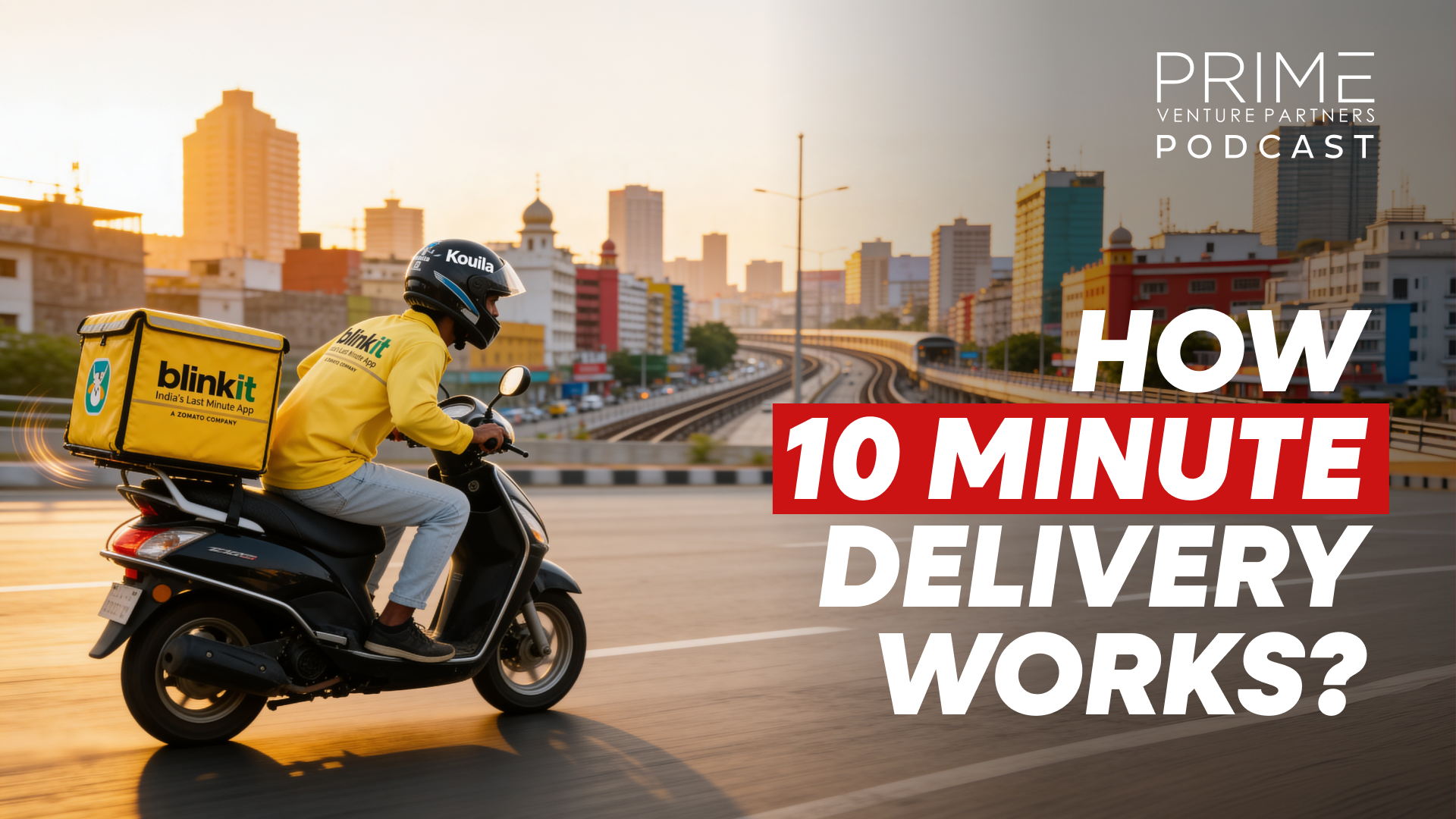
Quick commerce has revolutionized the way consumers receive their groceries and essentials with unprecedented speed. Behind the seemingly effortless experience of ordering and swift delivery lies an intricate logistics network designed for precision and efficiency. This article explores the operational backbone of quick commerce platforms like Blinkit and Zepto, focusing on the innovative concept of dark stores and the systems enabling 10-minute deliveries.
The Emergence of Quick Commerce
The initial encounter with quick commerce often feels almost magical: within minutes of ordering through a mobile app, customers have their necessities delivered to their doorstep. However, beneath this seamless experience is a highly complex setup that orchestrates timing, speed, and coordination to fulfill these rapid deliveries.
In a discussion moderated by Brij Bhushan, Managing Partner at Prime Venture Partners, Sumit Anand and Rupesh Thakare, Co-founders of Inamo, shared insights into the operational challenges and innovations underpinning quick commerce.
Spotting the Change Early in Online Shopping
Inamo was founded upon recognizing a significant shift in consumer shopping behavior. With seasoned experience in consumer internet and supply chain businesses, Sumit and Rupesh identified early signals indicating the potential growth of quick commerce.
Sumit Anand remarked, “We saw early signs. At least one platform was solving the hardest problem: growing the average order size and handling online pickup and delivery well. That made us think this could become a huge market.” Meanwhile, Rupesh highlighted the impact on customers and the opportunity to build robust systems to sustain this new shopping model.
Focusing on Operational Excellence
Unlike many entrepreneurs who concentrate on app development alone, Sumit and Rupesh directed their efforts towards refining the most challenging operational aspects.
“Most people build an app. We knew exactly how to make things better. We enjoy working on tough operations,” said Sumit. Their focus includes streamlining store operations, accelerating item picking, and staff training—critical components that uphold customer service promises.
Understanding the Role of Dark Stores
A pivotal element in quick commerce is the dark store, often mistaken for a conventional warehouse.
Sumit explains, “Think of a dark store as a mini fulfillment center placed near customers. A warehouse focuses on using space well. A dark store focuses on speed.” Every aspect, from layout to item placement, is designed to minimize delay and enable rapid order processing.
“You have to complete an order in 15 minutes,” Sumit states. “Inside the store, each step takes only 1.5 to 2.5 minutes.” Item picking is executed within 12 to 15 seconds, reflecting the strict operational standards essential for meeting tight delivery windows.
Rupesh adds that simulations are used rigorously to train staff before they engage with live orders, adapting to high workforce turnover and variation in skill levels.
Rapid Growth Driven by Changing Consumer Habits
The acceleration of quick commerce is attributed partly to external factors like the COVID-19 pandemic, which prompted businesses to reevaluate supply chains and familiarized consumers with convenient delivery options.
Sumit observes, “Covid forced businesses to rethink their supply chains.” Rupesh notes the lasting change in consumer preference: “Once people experience this ease, they don’t want to go back.”
Currently, quick commerce fulfills almost 10 million orders daily, yet it serves only about 10% of potential users compared to traditional e-commerce platforms, indicating substantial room for growth.
Financial Dynamics of Quick Commerce
While shopping appears straightforward, the business model encompasses multiple revenue streams, including product margins, convenience fees, delivery charges, and advertising.
Sumit highlights the significance of targeted advertising, explaining that it allows precise audience reach. On the cost side, infrastructure, personnel, and delivery represent major expenditures.
“Orders per hour is a key number,” Sumit states, emphasizing that maintaining a high hourly order volume reduces the necessity for additional incentives. Each dark store requires approximately 1,250 to 1,400 orders to achieve break-even, underscoring the importance of proximally clustered customers.
Managing a Complex Network of Stores
Contrary to common perceptions, quick commerce operations rarely maintain direct control over all stores. The model involves outsourcing many locations to vendors, complicating quality assurance.
Sumit observes, “Doing this smoothly every day, all day, is very hard.” With hundreds of vendors managing stores, maintaining consistent customer experiences across thousands of fulfillment centers is challenging.
Optimizing Inventory and Collaboration
A current inefficiency arises from redundant inventory stocking, where multiple dark stores in one area hold the same items, leading to higher costs and slower fulfillment.
Sumit suggests that sharing inventory across platforms could enhance efficiency: “Platforms showing the same inventory across the network allows faster sales. Pooling resources makes sense, as individual sellers may not have enough demand alone.” Such collaboration could reshape brand strategies within quick commerce, notably for niche products.
The Future Definition of ‘Quick’
Expectations around delivery speed will evolve. In grocery delivery, 10-minute fulfillment is standard, whereas other product categories may target different timelines.
“Anything less than same-day delivery might be called quick,” Sumit proposes, noting that appropriate speeds depend on product type, demand, and cost considerations. Excessively aggressive delivery goals inflate costs, while slower services risk customer attrition.
Navigating a Rapidly Changing Marketplace
Sumit shares the founders’ mindset in an unpredictable environment: “Every day is hard. Planning three months ahead feels like a big win.” Despite uncertainty, clarity in operations and agility remain essential.
He concludes, “Many customers will use quick commerce because of us, but they might never know we made it happen.” The hallmark of success in this sector lies in the invisible, reliable functioning of the system.