

Introduction
For over three decades, Vidyodaya School in Tamil Nadu’s Nilgiris district has pioneered an educational approach deeply rooted in local Adivasi culture and environmental knowledge. By integrating traditional practices and community involvement, the school nurtures both academic skills and cultural pride among tribal children, addressing challenges unique to these marginalized communities.
Classroom Learning Inspired by Nature
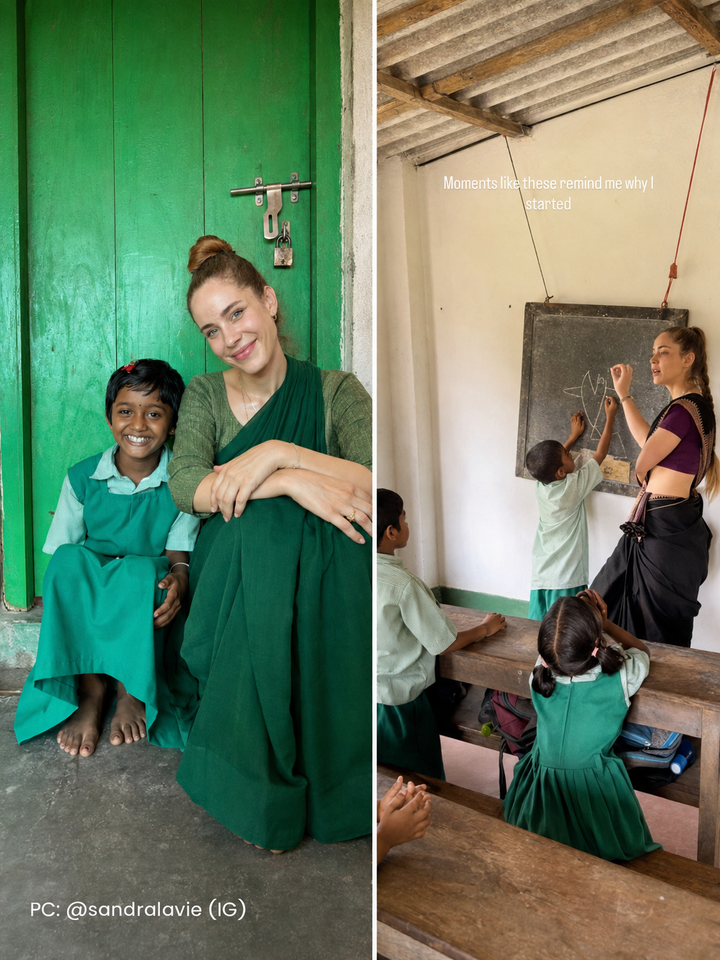
Every item in teacher Shanthi Kunjan’s classroom carries significance. Natural materials such as branches and sticks serve as measuring tools, forest leaves illustrate symmetry, and seeds act as currency in lessons. This approach connects learning directly to the children’s surroundings.
Situated in Gudalur taluk of the Nilgiris district, Vidyodaya School serves the Betta Kurumba, Kattunayakan, Mullu Kurumba, and Paniya Adivasi communities. These groups are recognised by the Government of India as Particularly Vulnerable Tribal Groups (PVTGs).
Integrating Forest Knowledge and Cultural Heritage
The school incorporates forest ecology into multiple subjects. Shanthi explains, “These children already know a lot about the forest, including its plants, trees, animals, and rivers. We use this knowledge to link school lessons to what they see every day.” Lessons on culture include teachings about Adivasi festivals, while arts and crafts classes involve creating baskets, chains, and wire bags from organic materials like coconut shells, beads, and bamboo.
Environmental studies utilise The Food Book, which documents the food culture of Adivasis in the Gudalur valley. Topics cover hunting, honey gathering, and the nutritional benefits of local tubers, greens, fruits, and berries.
Unique Weekly Activities Rooted in Tradition
The school’s daily assemblies further emphasize cultural and scientific learning:
- Monday: Viewing of science videos
- Tuesday: Storytelling sessions
- Wednesday: Practice of Adivasi songs
- Thursday: ‘Show and tell’ plus science experiments
- Friday: Adivasi dance performances
With 125 students from lower kindergarten through Class 5, Vidyodaya is state board-affiliated and centers culture at the heart of education.
Founding Vision and Community Ownership
Vidyodaya’s origins trace back to Ramdas Bhaskaran and Rama Sastry. Ramdas’ work since 1975 involved supporting marginalized groups in Chennai, including fisherfolk and women’s rights organizations. In 1980, the couple moved to Puducherry and helped initiate one of India’s first alternate schools focusing on activity-based learning tailored to children’s needs.
Encouraged by early successes, they relocated to Gudalur in 1990. What began as homeschooling soon grew into a community school. In 1995, local Adivasi elders, supported by the NGO ACCORD, requested to administer the school to ensure transmission of traditional knowledge. Subsequently, in 1996, the Viswa Bharati Vidyodaya Trust formalised the school as an Adivasi institution, starting with 36 children.
“The caste system has long controlled who gets learning and opportunities. For us, education is about giving our communities a voice.” – Shanthi Kunjan, Teacher at Vidyodaya School
Addressing Malnutrition and Educational Inequity
Students’ lunch boxes typically contain ragi porridge, eggs, and sprouts, reflecting the school’s efforts to combat malnutrition prevalent in tribal populations. According to UNICEF, 40% of tribal children under five in India suffer from stunting due to malnutrition, with an additional 16% severely affected.
Malnutrition is one factor behind the low private school enrollment of Scheduled Tribe children, which stands at only 12.7%. Education disparities are often shaped by caste-related social barriers, yet Vidyodaya strives to break these patterns by fostering inclusivity.
Community-Centric Educational Model
Staff and students predominantly come from the local Adivasi communities, many being the first in their families to attend school. Education at Vidyodaya is a collective effort; trustees are community members, while parents participate in maintaining the school and cultural events like Adivasi Day, held annually on December 5.
The school supports equity by providing free transportation and stationery and charging no fees. Operational costs average Rs 60,000 per student annually, funded through community donations, foundations, and corporate social responsibility initiatives.
Innovative Teaching Methods and Assessment
The school eschews traditional exams and single textbooks. Instead, multiple resources are used, lightening students’ bags and fostering a personalized educational experience. Teacher-student ratios of 1:10 allow individual attention.
Children maintain portfolios documenting their progress rather than ranking by scores. To date, over 500 tribal students have graduated from Vidyodaya.
Overcoming Language Barriers
Research by UNICEF and the Language and Learning Foundation reveals significant challenges in government schools where many students and teachers have limited proficiency in the instructional language.
Vidyodaya addresses this by employing teachers from the local community fluent in students’ mother tongues. Teachers unfamiliar with a child’s first language learn parts of it to bridge understanding. While the school is English medium with Tamil as another primary language, this linguistic sensitivity facilitates comprehension.
Teacher Development and Community Engagement
Finding qualified teachers within these communities required concerted efforts to encourage higher education and skill development. Currently, Vidyodaya employs six senior teachers and eight assistants earning Rs 15,000 monthly.
Elders from the community actively contribute by sharing knowledge and traditions, reinforcing children’s cultural identity and self-esteem.
Alumni Success and Wider Community Impact
One notable alumna, 20-year-old Sijithra from the Paniya tribe, is pursuing nursing after excelling academically with support from the Viswa Bharati Vidyodaya Trust scholarship program.
Thousands benefit from the broader Community Education Programme, which operates 320 village learning centers supporting 3,500 children with activities including camps, scholarships, counseling, and mentoring.
As Karalan, a program leader, explains, “Sessions happen in villages during evenings and weekends. We teach spoken English to all children. We also offer extra help in math for those who struggle.”
Fostering Cultural Pride and Academic Growth
On any given morning, Vidyodaya’s classrooms are filled with engaged students exploring educational concepts through the lens of their environment. For example, a lesson on geometric patterns includes a nature walk exploring shapes found in local flora.
Shanthi reflects on the school’s progress: “Being here, I have seen my community’s steady progress. Seeing the first batch finish school and move on to higher studies makes me want to keep helping future students.” Her 25-year tenure reflects deep commitment to this mission.
All photos used are courtesy of the Viswa Bharati Vidyodaya Trust.